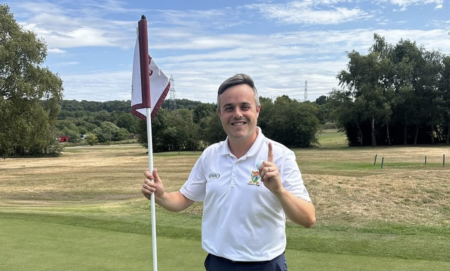




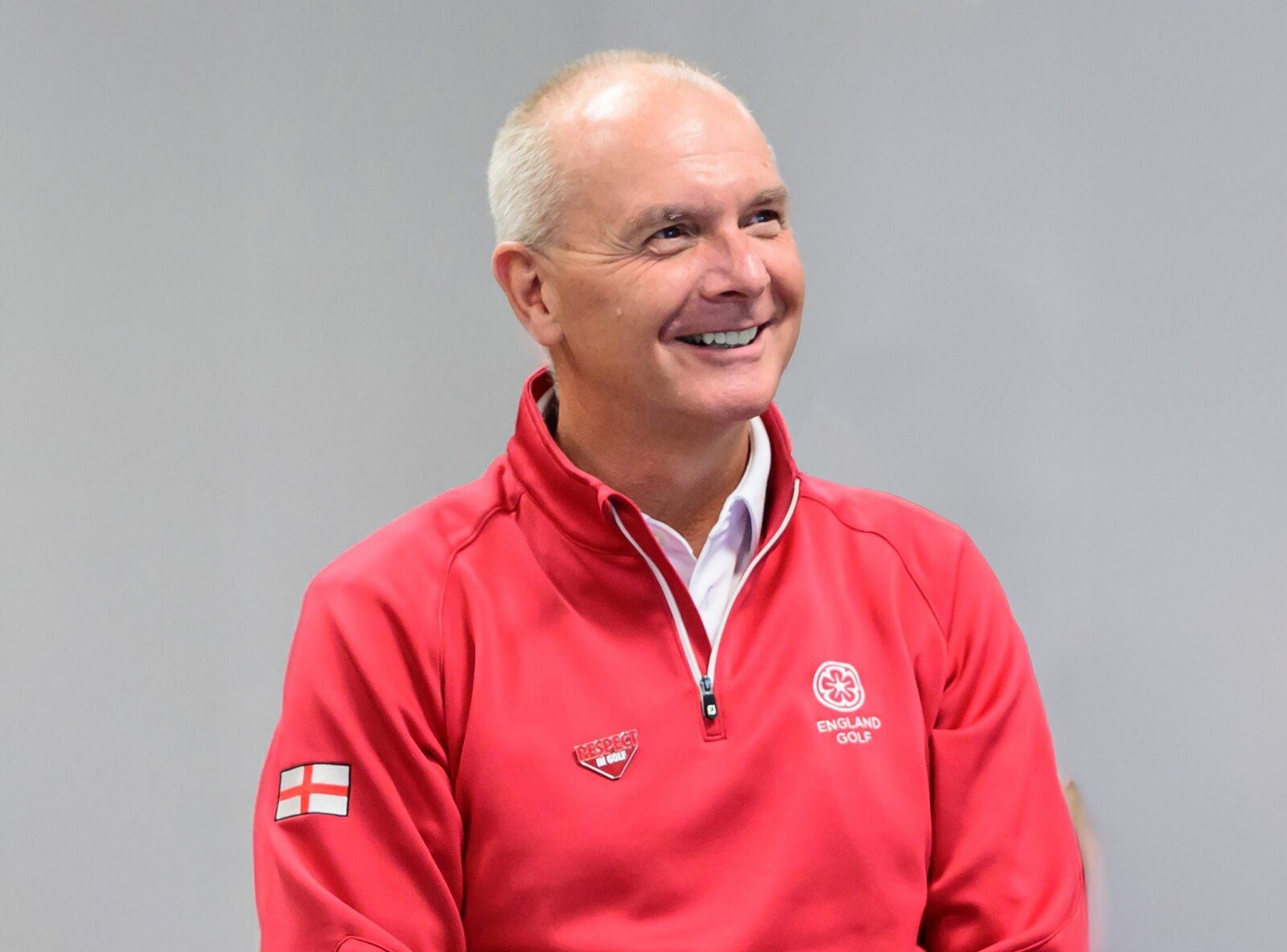
From discovering golf at the age of seven alongside his father to leading England Golf through one of the most challenging and transformative periods in the sport’s history, the journey of England Golf’s CEO has been shaped by competition, leadership and a deep belief in the game’s ability to bring people together.
In this wide-ranging interview with Matt Nicholson, he reflects on the experiences that prepared him for the role, the enormous pressures of the Covid lockdowns and the remarkable surge in participation that followed. He also looks at the changing face of golf, the impact of the World Handicap System™, the success of iGolf and the challenges facing clubs across England.
Perhaps most importantly, he explains why the future of the game depends on making golf feel more welcoming, accessible, and relevant to everyone – while respecting the traditions that have made it such a special sport for generations.
- How did your own journey into golf begin, and what was it about the game that first hooked you?
My entry into golf was an easy one. I had a father who was a consummate sportsman. He was a fencer, and a cricketer. He always used to participate in sport over his weekends, and as his knees started to give way playing cricket, he then wanted to find another sport.
So part of the deal with my mother when he presented golf as his next sport to her, was that he had to take at least one of the children with him.
Then one day, when I was seven, he returned home, presented me with a pair of golf shoes, a set of golf clubs, and a junior membership of Redhill & Reigate Golf Club, and stated that: “You’re going to come out and play golf with me.” So I did!
It was a sport that immediately got me hooked and I instantly took to, it was challenging and very competitive which I loved, and also something I could do with my dad.
- Was there a moment early on when you realised golf would play a major role in your professional life, not just personally?
Yes, it happened in my first job. I was working for an insurance broker called Lowndes Lambert.
Not long after joining the business, someone in management discovered that I played off a scratch handicap. Before long, the Managing Director reached out to me. Not only did he want to meet me, but he also invited me to play golf with him.
We played at Walton Heath, a magnificent course, and had a fantastic day. It made me feel incredibly valued. As you might expect, I came away thinking, “Wow, perhaps this sport can have a positive impact on my career as well.” Little did I know just how far that would take me.
Golf has a remarkable way of opening doors. For an ambitious young person at the start of their career, it creates opportunities to build relationships, learn from experienced leaders, and gain exposure to people you might not otherwise meet. Looking back, that round at Walton Heath was the first glimpse of the role golf would go on to play throughout my professional life.
- Before becoming CEO of England Golf, what experiences best prepared you for leading the national governing body?
There have been several defining experiences, really.
Professionally, I have worked in the golf industry since 1990 and was fortunate, in a previous role, to lead an important part of the world for the Titleist and FootJoy brands. It was a phenomenal opportunity and provided me with a first-class education in leadership, brand management, and the disciplines required to build and sustain world-class organisations.
Away from my professional career, I have always loved competitive golf. Over the years, I have had the privilege of representing my home county, Wiltshire, at junior, colts, first-team and senior levels, a journey that has now spanned 44 years and counting.
I have also represented my region at both first-team and senior level, which gave me a deep understanding of amateur representative golf across almost every stage of the game.
Alongside playing, I became increasingly involved in the administration and governance of the sport. I served on my golf club committee, captained both Wiltshire and the South West region, and sat on their respective committees.
These experiences provided valuable insight into how golf clubs operate, how counties and regions are managed, and the challenges and opportunities involved in growing the game.
When I look back, it is the combination of these professional, playing, leadership and governance experiences that has shaped my perspective and stood me in good stead throughout my career
- The Covid period was one of the most challenging times golf has faced, what were the pressures like when courses were forced to close?
To be honest, the impact was enormous.
I had been in post for only around two and a half months when the first national lockdown was announced. On 23 March 2020, I signed and sent a letter to every golf club in England directing them to close for the foreseeable future.
At that moment, the health of the nation had to take priority. Looking back, those were extraordinary times, and you do not fully appreciate the magnitude of what you are writing and communicating in the moment.
Within a week or two of lockdown beginning, England Golf was receiving calls and emails from many clubs across the country, expressing concern about their financial future.
There was genuine uncertainty. Golf clubs wanted to know how they would survive, how long restrictions would last, and what support might be available to them.
During that period, we held weekly Zoom calls with the Minister for Sport alongside the leaders of other national governing bodies.
Together, we were seeking answers, sharing information, and exploring how sport could safely return when restrictions were eventually lifted. Much of our focus was on developing practical and responsible ways for people to get back to playing while protecting public health.
What I remember most was the incredible sense of unity and camaraderie across the sporting landscape. Everyone was facing the same challenge and working towards the same goal.
What happened next was remarkable. In the early weeks of lockdown, I was genuinely concerned that many golf clubs could face severe financial difficulties.
Yet within a matter of weeks, the narrative began to change dramatically. We started receiving dozens of calls and emails from clubs reporting unprecedented levels of interest from prospective members. Even during lockdown, demand for golf was growing.
A powerful shift in attitudes towards health, wellbeing and outdoor recreation had begun to emerge. Former members who had not belonged to a club for years wanted to return.
Footballers, cricketers, rugby players and tennis players were all discovering, or rediscovering, golf. As many team sports remained restricted, golf offered an opportunity to be active, social and outdoors.
The demand came from people of all ages and backgrounds. Golf clubs across England quickly began filling their membership and, in many cases, developing waiting lists.
The turnaround was extraordinary. In fact, on some of the later governing body calls, I almost felt uncomfortable talking about the growth golf was experiencing when so many other sports were still facing significant hardship.
For golf, it was a period of unexpected resurgence. At a time when there was so much uncertainty, the game demonstrated just how valuable it could be to people’s physical health, mental wellbeing and sense of community.
- Did the responsibility of those decisions affect you personally, away from the job title?
If you genuinely care about what you do, it is difficult for it not to affect you personally.
I was still relatively new in the role and having to learn at an extraordinary pace about the responsibilities that came with it. I brought a broad range of experience to the position, but governance was a new environment for me, so there was a great deal to absorb and understand in a very short space of time.
I can honestly say that the role has changed me as a person. One of the biggest lessons has been the importance of bringing people with you when making decisions. In a membership organisation, that means listening, engaging and seeking to build consensus wherever possible.
The pressures were significant and, at times, stressful, but I count myself as one of the fortunate few who gets to do a job they genuinely love.
Every day, I have the privilege of promoting and standing up for a sport that has given me so much throughout my life. It becomes more than just a job, it becomes a vocation.
When setbacks come, they can be hard to take personally, but you quickly learn that resilience is vital. You have to dust yourself off, support one another as a team, and keep moving forward.
One of the most important lessons from the pandemic was that golf needed to present itself differently.
For too long, the sport had often spoken to itself rather than to new audiences. Many people still held outdated perceptions of golf, seeing it as exclusive or inaccessible.
The pandemic highlighted the need for the game to communicate with greater openness, humility and relevance if it was to continue growing.
While nobody would ever wish to experience another pandemic, it did create an opportunity for golf to challenge perceptions and rethink how it engaged with the wider public.
That work continues today, and we remain committed to showing that golf is a modern, welcoming and enjoyable sport for people from all backgrounds.
As we emerged from the pandemic, there were many influential voices who questioned golf’s place and were unhappy that the sport was able to reopen as early as it did. At times, that was difficult to hear and harder still to accept.
However, those challenges encouraged us to think differently and helped inspire initiatives such as Respect in Golf, which reflects our belief that golf should be a sport for everyone.
Our aim is simple: to ensure people see golf for what it truly is, an inclusive, accessible and welcoming game that can be enjoyed by all.
- Looking back now, what lessons did England Golf learn from navigating the pandemic?
As already noted, there were many lessons and opportunities that emerged from that period.
Perhaps the most important was the need to rethink how we present golf and ensure that it is seen as the inclusive and welcoming sport it truly is.
We had to challenge outdated perceptions that golf was a sport only for older people or a select few. The reality is very different.
Golf is a game that can be enjoyed by anyone, regardless of age, gender, ethnicity, sexual orientation, ability or disability. These are the sport’s greatest strengths and things we should celebrate far more confidently.
We learned that we needed to tell that story more effectively. Promoting golf positively could no longer be left to chance; it required a disciplined and structured approach.
We needed to highlight the breadth of our membership, showcase the many pathways into the sport, and demonstrate the physical, mental and social benefits that golf can provide. Most importantly, we had to help people see that there is far more to the game than many of its traditional stereotypes suggest.
Those challenges became a catalyst for change. They directly influenced the development of our 2025 strategic plan, Let’s Inspire More Golfers, and helped shape the Respect in Golf movement.
Together, they have informed our approach to some of the most important priorities facing the game today, including safeguarding, sustainability, inclusivity and participation.
Looking back, I believe the pandemic accelerated our thinking and challenged us to become a better, more outward-looking organisation. It encouraged us to communicate more effectively, engage with a broader audience and take a more modern approach to growing the game.
Of course, with growth comes responsibility.
The post-pandemic surge in participation brought many new people into golf, and our focus now is on ensuring they remain part of the sport for years to come. We want every golfer to have a positive experience, because people who enjoy the game become its greatest advocates.
Ultimately, our ambition is simple: to create an environment where more people feel able to say, “Golf is a game for me.” And even better to have young people stating that “golf is cool!” If we can achieve that, those golfers will, in turn, inspire the next generation to pick up a club and discover everything the sport has to offer.
- Post-Covid, the game has experienced a remarkable participation boom, why do you think golf resonated so strongly at that time?
There are no two ways about it. Coming out of the pandemic, people began thinking much more seriously about their health and wellbeing, and golf answered that need admirably.
Golf is a wonderful sport because it offers so much more than competition alone. It gets people outdoors, provides gentle but meaningful physical exercise, and presents a constant mental challenge. It is one of the few activities that benefits both body and mind in equal measure.
There is a saying that when you’re playing golf, you cannot think about anything else. The game demands your full attention.
In a world that often feels busy and distracting, that makes golf a great escape. To play well, you have to focus completely on the shot in front of you, and that combination of challenge, concentration and enjoyment is one of the reasons people keep coming back to it.
The post-pandemic period also saw renewed investment across the sport. Whether from established golf clubs or new entrepreneurs, golf once again became an attractive proposition.
New facilities emerged, offering a wider variety of formats and experiences for golfers of different ages, abilities and interests. That innovation has helped broaden the game’s appeal and sustain its growth.
We also saw a significant influx of participants from other sports. Many activities remained restricted for longer than golf, and people who may never previously have considered playing the game decided to give it a try.
What many discovered was that golf complements other sports exceptionally well. As a result, golf has become the second sport of choice for countless footballers, cricketers, rugby players, tennis players and athletes from many other disciplines.
That is one of golf’s unique strengths. It does not have to take over your life. You can continue to play your primary sport while enjoying golf alongside it.
In many ways, golf is as much a lifestyle activity as it is a sport, offering flexibility, enjoyment, friendship, competition and personal challenge throughout every stage of life.
As a sport, and alongside many valued stakeholders, our responsibility is to build on that momentum.
We are committed to creating opportunities for everyone who wants to play, ensuring that golf remains accessible, welcoming and relevant to future generations.
- How important is it to convert those new and returning golfers into long-term participants, and how is England Golf supporting that?
It is hugely important that every golfer, whether new to the game, returning after time away, or already actively involved, feels welcome, valued and part of a sport that is relevant to them.
That principle sits at the heart of everything we do, and we continue to develop and strengthen the ways in which we communicate with golfers and prospective golfers across the country.
One of the most encouraging developments in recent years has been the response from golf clubs themselves.
Clubs across England have embraced the influx of new members and, importantly, have recognised the value that greater diversity brings to their communities.
More younger people and more women are choosing to take up the game, and clubs are increasingly seeing the benefits of creating environments that are welcoming and attractive to a broader audience.
Our role is to support clubs as they continue to evolve. That includes helping them develop progressive membership models, providing greater flexibility, and ensuring their offer appeals to the widest possible demographic. The goal is simple: to make it easier for more people to discover, enjoy and remain connected to the game.
This is where a strong strategy with a clear purpose becomes so important. Our approach is built around four fundamental principles: ensuring golf is safe, inclusive, sustainable and inspiring. Together, these pillars provide a framework for the long-term growth of the sport and help ensure that golf remains relevant, accessible and enjoyable for generations to come.
Ultimately, if we can create a sport where people feel welcomed, respected and inspired, then golf will continue to thrive, attracting new players while retaining those who already love the game.
- The introduction of the World Handicap System™ was a major shift, how do you assess its impact so far?
The simple reality is that the facts continue to show that the World Handicap System™ (WHS™) has been extremely positive for the game.
It is easy to forget that, in the decade leading up to the introduction of WHS™, golf clubs in England experienced year-on-year declines in membership. At the same time, the number of golfers returning competition scores and submitting scores for handicap purposes also fell consistently over that period.
The launch of WHS™ changed that landscape significantly. It reignited interest in handicapping and encouraged more golfers to engage with the process of measuring and tracking their performance.
Suddenly, more players wanted to submit scores, maintain an accurate handicap, and better understand how their game compared over time.
Is WHS™ perfect? No. Like any major initiative, there are aspects that can be refined and improved.
That is why we continue to work closely with The R&A and the USGA to review feedback, address concerns and explore ways to enhance the system. Continuous improvement is an important part of ensuring the handicap system remains fair, relevant and fit for purpose.
However, the underlying trends are clear. We have never seen more scores being submitted by golfers who want to hold and maintain a handicap. That reflects a growing desire among players to challenge themselves, track their progress and measure their performance in one of the most demanding and rewarding sports there is.
At its heart, golf remains a game built on integrity. Whether scores are returned in competition or through general play, the system relies on honesty and trust from every golfer. That principle has always existed and remains fundamental to the sport today.
While debate about the finer points of WHS™ will undoubtedly continue, the overall impact has been overwhelmingly positive. It has increased engagement, encouraged more score submissions, and helped more golfers participate in handicapping than ever before. In doing so, it has played an important role in supporting the continued growth and popularity of the game.
- What would you say to golfers who were initially sceptical of WHS but are now using it week in, week out?
To any golfers who were sceptical of the World Handicap System™ when it was introduced, or who remain frustrated by aspects of it today, I would encourage them to keep an open mind and consider the bigger picture.
Before WHS™, the handicapping landscape was facing significant challenges. Participation levels were declining, fewer golfers were returning scores, and engagement with the handicap system was falling year after year. The introduction of WHS™ was designed to address those issues and create a more modern, accessible, and globally aligned approach to handicapping.
WHS™ is now firmly established as the future of handicapping and is here to stay. While no system is perfect, the overall trends are undoubtedly encouraging. More people are playing golf than ever before, more golfers are maintaining handicaps, and more scores are being submitted throughout the year. Those are all positive indicators for the long-term health of the game.
Of course, with any significant change, there will be aspects that work well and others that require ongoing review and refinement. Listening to golfers and continuing to improve the system remains an important part of the journey. Constructive feedback has a valuable role to play in helping the game evolve.
However, when viewed holistically, the evidence suggests that WHS™ has delivered meaningful benefits for golf. It has increased engagement, encouraged greater participation, and helped more golfers connect with the challenge and enjoyment of measuring their progress through handicapping.
My hope is that those who still have reservations will continue to judge WHS™ not only on individual frustrations or experiences, but on its broader impact on the game. The statistics tell a compelling story, and they point to a system that has played an important role in supporting the growth, accessibility, and continued popularity of golf.
- iGolf has been a significant step in widening access to the game, how proud are you of its success?
We are incredibly proud of the success of the iGolf platform and the positive impact it has already had on the game.
Often, the hardest part of any innovation is making the decision to act. Once we had established how best to support and serve independent golfers, and launched iGolf, the programme quickly exceeded expectations and has gone from strength to strength.
At the outset, some stakeholders were understandably concerned that thousands of golfers might leave their clubs and choose to become iGolf subscribers instead. In reality, that simply did not happen. Golf club membership offers far more than just the ability to hold a handicap. It provides a sense of belonging, regular competition, social connection and access to a golfing community, all of which remain highly valued by golfers.
In fact, rather than undermining club membership, iGolf has helped strengthen the overall golfing ecosystem. To date, in excess of 30,000 iGolf subscribers have gone on to join affiliated golf clubs, demonstrating that iGolf can act as a gateway into club membership rather than an alternative to it. With around 83,000 registered iGolfers currently participating, that represents a remarkable success story for the sport.
Perhaps most importantly, iGolf has given thousands of independent golfers the opportunity to obtain and maintain an official handicap, enabling them to track their progress and measure their performance wherever they choose to play. In doing so, it has made the game more accessible and inclusive, opening the door to people whose lifestyles or circumstances may not suit traditional club membership.
That is why we see iGolf as such an important development for the future of the game. It provides greater flexibility, broadens participation and creates new pathways into golf, all while supporting the long-term growth of clubs and the wider sport. Ultimately, it reinforces a simple but important principle: there should be a place in golf for everyone.
- Do you see iGolf as a gateway into club membership, or as a long-term alternative in its own right?
Absolutely. iGolf has proven to be an excellent gateway into golf club membership, although it is important to stress that England Golf does not place any pressure on iGolf subscribers to join a golf club.
What iGolf has demonstrated is something many of us in golf already understood, once people obtain a handicap, they become more engaged with the game and increasingly motivated to test themselves. As golfers begin measuring their progress and comparing their performances, a natural desire for greater competition often follows.
For many, the most rewarding and straightforward way to satisfy that ambition is through golf club membership. That is borne out by the fact that over 30,000 iGolf subscribers have already transitioned into club membership, and I have every confidence that many more will do so in the years ahead.
Of course, joining a golf club offers far more than access to organised competition. It provides a social environment, a sense of belonging, lasting friendships and the unique camaraderie that exists within golf communities across the country. Those experiences are at the heart of what makes club membership so valuable and enjoyable.
At the same time, iGolf continues to thrive in its own right. It has given thousands of independent golfers the opportunity to enjoy the game on their own terms while maintaining an official handicap and feeling connected to the wider golfing community. In doing so, it has become a powerful example of how greater flexibility and inclusivity can benefit both golfers and golf clubs alike.
Ultimately, iGolf is helping more people engage with the game, whether they choose to remain independent golfers or eventually join a club. Either outcome is positive for the sport, and together they are contributing to a stronger, more welcoming and more inclusive future for golf.
- What are the biggest challenges currently facing golf clubs in England?
Golf clubs are, of course, independent businesses in their own right, whether they operate as proprietary facilities or member-owned organisations. While many clubs face similar issues, each has its own circumstances, priorities and challenges, meaning there is no single solution that fits every club.
If I were to highlight some of the most significant challenges currently facing the sector, ongoing financial pressures would certainly be among them. Rising payroll costs, increasing business rates and broader economic uncertainty continue to place considerable strain on many golf clubs as they seek to balance investment, service standards and long-term sustainability.
Another increasingly important issue is water security. Access to reliable water resources is fundamental to maintaining golf courses and ensuring that members and visitors can continue to enjoy quality playing conditions. As environmental pressures grow and regulations evolve, water management is becoming a critical strategic consideration for many clubs across the country.
England Golf works closely with clubs to help them navigate these challenges, providing guidance, support and advocacy where appropriate. We also continue to represent the interests of the game with government and other key stakeholders, ensuring that the voice of golf is heard clearly on issues that have a direct impact on clubs and their future sustainability.
While the challenges are real, the resilience of golf clubs should not be underestimated. Across England, clubs continue to adapt, innovate and invest in their futures, and we remain committed to supporting them as they do so.
- How does England Golf balance protecting the traditions of the game while ensuring it evolves for modern players?
Personally, I believe there is room in golf for both tradition and innovation. The game’s rich heritage is one of its greatest strengths, but it is equally important that we remain open to new ideas, formats and ways of participating. Golf is currently enjoying an extraordinary period of popularity, and with that comes an exciting opportunity to embrace the many different ways people choose to engage with the sport.
Whether someone is a dedicated competitive golfer, a casual fair-weather player, a driving range enthusiast, or enjoys playing on simulators, they are all part of the wider golfing community. The sport has evolved significantly in recent years, and that evolution should be welcomed. As long as we continue to prioritise inclusivity and accessibility, there is every reason why historical traditions can exist alongside new ones, enriching the game for everyone.
The key is ensuring that golf remains relevant, welcoming and enjoyable for people from all backgrounds and at every stage of their golfing journey. By broadening opportunities to participate, we can continue to attract new audiences while preserving the values that have made the game so special for generations.
Above all, Respect in Golf must remain central to everything we do. There should be no place for discrimination of any kind within our sport. Golf should be a game where everyone feels welcome, respected and able to participate with confidence. If we can continue to uphold those principles, the future of the game is incredibly bright.
- Looking ahead, what does success look like for England Golf over the next five to ten years?
We’re on a really positive path, guided by a clear and simple compass: “Let’s Inspire More Golfers.”
That clarity of purpose makes success easier to define. For me, success is ensuring that golf is a safe, inclusive, sustainable and inspiring sport for everyone who wants to play. If we continue to focus on those principles and communicate them effectively, the future of the game will remain incredibly bright.
Our responsibility is to create an environment where people feel welcome, valued and able to participate in whatever way suits them best. Whether they are taking their first steps into the game, returning after many years away, or are lifelong golfers, everyone should have the opportunity to enjoy the many benefits that golf can offer.
If we continue to make the sport accessible, relevant and enjoyable, while supporting clubs, facilities and golfers across the country, I am confident that participation will continue to grow.
Ultimately, the ambition is simple: to inspire more people to discover, enjoy and stay involved in the game we all love. If we can achieve that, then golf will continue to thrive for generations to come.
Read the full article here