


The excitement surrounding KTM’s signing of Johann Zarco ahead of the 2019 MotoGP season was matched only by the shock created by his abrupt dismissal just a few months later, with the championship already underway, after the Frenchman accepted he could not adapt either to the RC16 or to the way the company operated.
The Zarco episode was the first clear indication of KTM’s distinctive approach to rider management. The Mattighofen manufacturer regards its riders as its highest-profile employees and expects complete commitment in return. That conflict proved to be only the beginning in a series of difficult break-ups over the following six years. The latest involves Maverick Vinales, who is now likely to be contesting the final races of his MotoGP career.
The Spaniard waited until the German Grand Prix, the final race before the summer break, to publicly question the way he had been treated, criticising what he described as a lack of humanity after finding himself without a ride despite previously being led to believe he would graduate to the factory team for 2027.
A shoulder injury suffered last year has compromised his competitiveness throughout the first half of the season – precisely the period during which most of the 2027 rider market was settled.
KTM has completed its factory line-up, with Alex Marquez and Fabio Di Giannantonio replacing Pedro Acosta and Brad Binder, while Tech3 appears set to field Senna Agius alongside Luca Marini. Those moves leave Enea Bastianini heading to Trackhouse and Vinales resigned to leaving the championship altogether.
Should that happen, it would bring to an end a 15-year MotoGP career highlighted by the 2013 Moto3 world title and 10 premier-class victories with three different manufacturers – Suzuki, Yamaha and Aprilia.
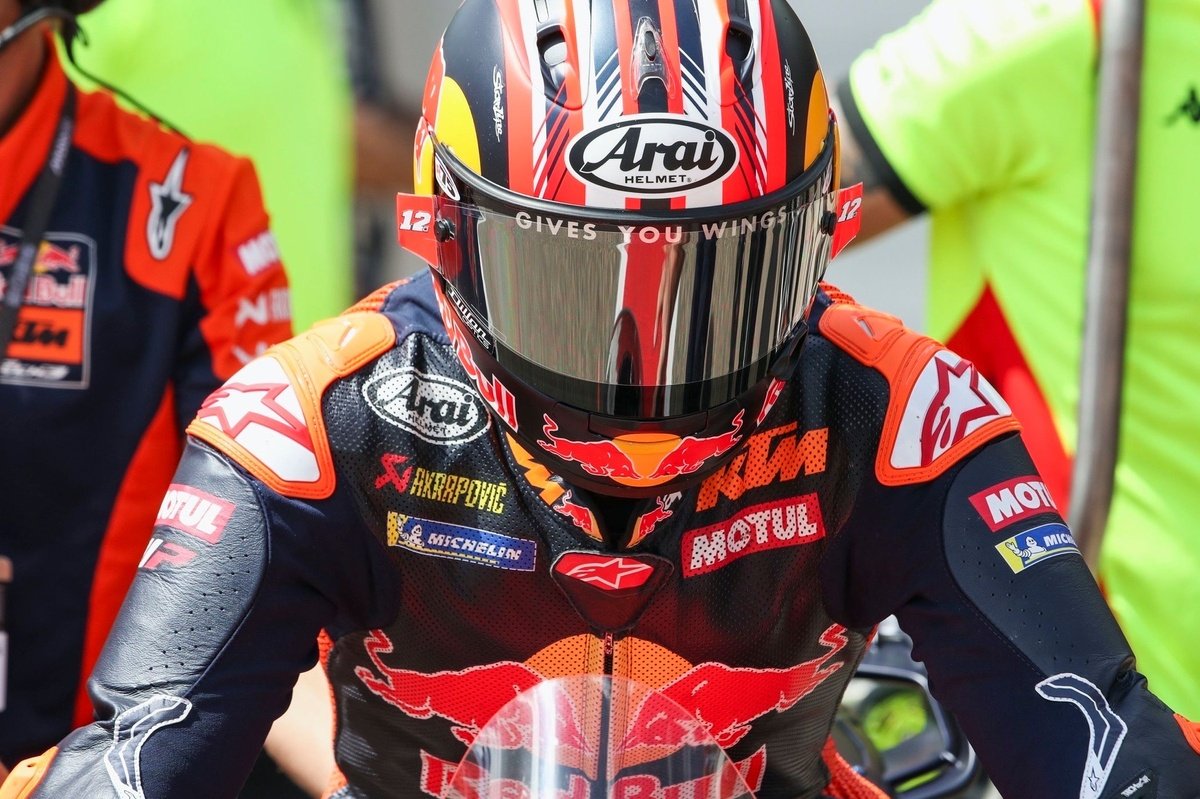
Maverick Vinales, Red Bull KTM Tech 3
Photo by: Gold and Goose Photography / Getty Images
Among the lowest points would be his controversial split from his Moto3 team during the 2012 Malaysian Grand Prix, the extraordinary incident at the 2021 Austrian Grand Prix that ultimately led to his dismissal by Yamaha, and now his increasingly bitter dispute with KTM.
According to Vinales, the signals he received from KTM over the winter convinced him that he would be promoted to the factory team for 2027. But as his shoulder problems affected his results and KTM focused on emerging from the financial crisis that almost pushed the company into collapse, communication gradually disappeared.
He learned through the media that Marquez and Di Giannantonio had been signed, and when he sought clarification, the new Tech3 management, led by Guenther Steiner, presented him with what Vinales himself described as a contract “very damaging to my interests” during the Italian Grand Prix weekend.
The clearest confirmation came when he was not invited to participate in the post-Czech Grand Prix test of KTM’s 2027 prototype.
“I’ve already accepted that I’ll probably be out of MotoGP. I don’t want to stay here at KTM. They sent me a contract, I signed it, and two weeks later they told me it wasn’t valid,” Vinales said at Sachsenring before the summer break.
Regardless of the specifics of Vinales’ situation, no MotoGP manufacturer has accumulated as many painful rider separations as KTM.
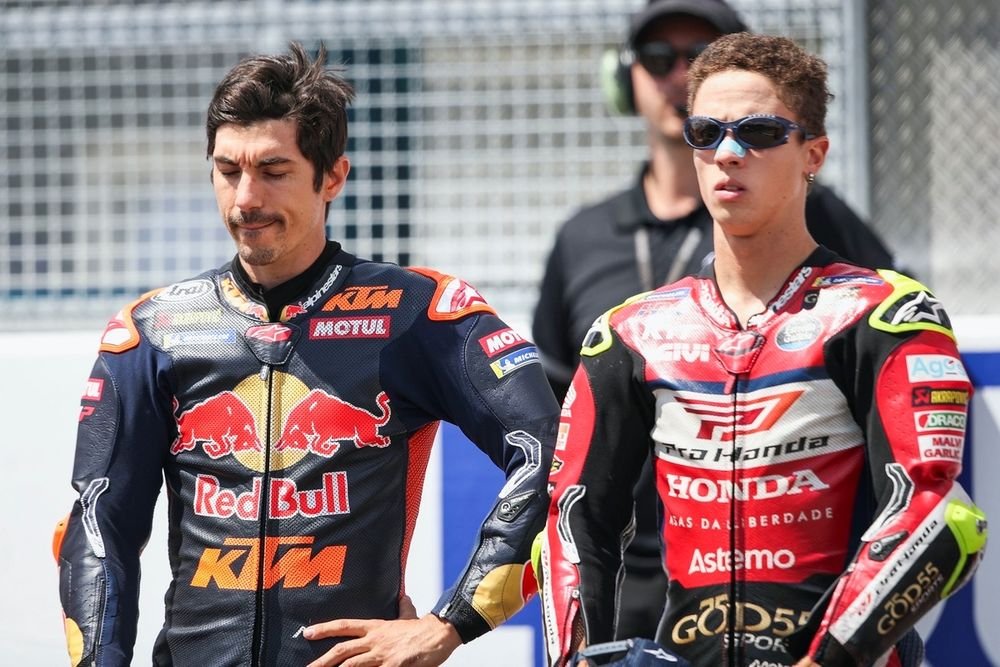
Maverick Vinales, Red Bull KTM Tech 3, Diogo Moreira, Team LCR Honda
Photo by: Gold and Goose Photography / Getty Images
Between the Zarco and Vinales disputes came similar fallouts involving Remy Gardner, Iker Lecuona and Raul Fernandez, with managers who have negotiated with KTM repeatedly identifying the same underlying issue.
“A lack of empathy,” several of them tell Autosport.
“The problem is that KTM always wants every card in its favour when dealing with riders. It’s excessive. That inevitably leaves the other side in a very weak position,” one rider representative said.
That apparent lack of consideration for the human side of negotiations has also led to unusual situations. In 2024, KTM signed five riders despite having only four MotoGP bikes available. The decision ultimately accelerated Pol Espargaro’s transition away from a full-time race seat after the serious injuries he suffered in his Portimao crash in 2023, allowing Acosta to make his premier-class debut.
“It was a complete management mistake by KTM,” Espargaro admitted at the time. “I don’t like criticising the manufacturer I work for, the one that pays me and looks after me. But what happened exposed a lot of shortcomings in the way contracts and riders are managed.”
When speaking to managers who have negotiated with KTM, one individual and two contractual clauses dominate the conversation.
The first is Pit Beirer, the company’s motorsport director. The former motocross rider, who was left paralysed after a crash in the 2003 Bulgarian Grand Prix, is widely respected for the resilience that allowed him to rebuild his life. Those who have negotiated with him, however, also describe him as uncompromising at the bargaining table.
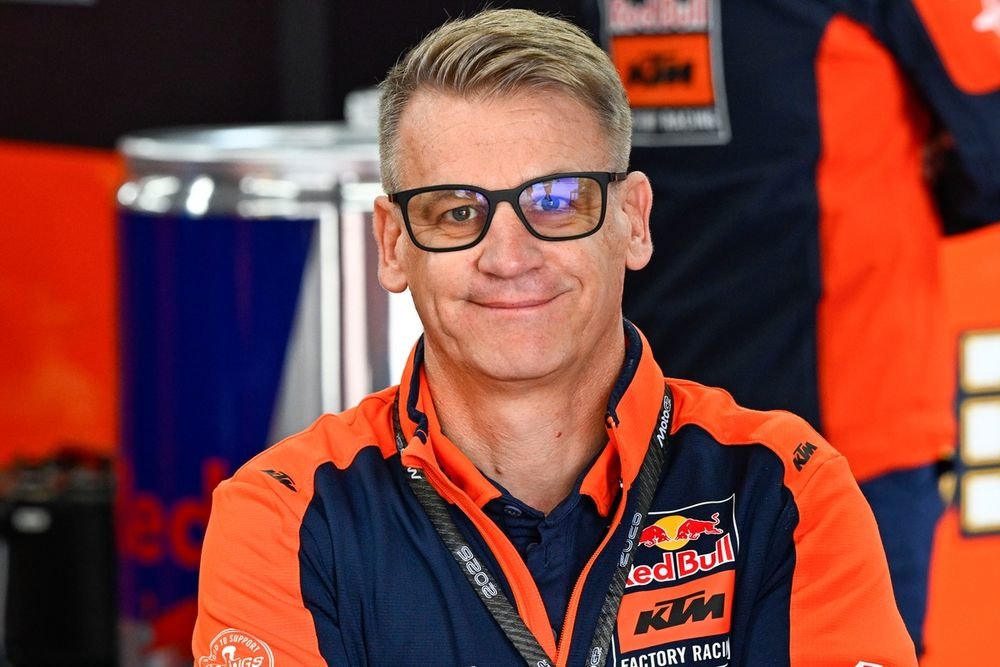
Pit Beirer, Sporting Director of KTM
Photo by: Gold and Goose Photography / LAT Images / via Getty Images
KTM’s standard MotoGP contracts also reflect that philosophy.
Typically structured as a two-year agreement with a third-year option that can only be exercised by the manufacturer before a fixed deadline, they allowed KTM to keep both Bastianini and Vinales tied to the company until 30 June before ultimately deciding not to activate the extension in either case.
With the 2027 rider market moving unusually quickly, that timing effectively left Vinales without realistic alternatives.
On top of that, KTM generally retains the right to match any outside offer received by one of its riders unless that clause has been specifically removed during negotiations. Autosport understands Acosta succeeded in eliminating that provision when agreeing his latest contract extension, paving the way for his move to Ducati in 2027.
With all that in mind, KTM may need to rethink its approach and rebuild bridges with its leading riders if it wants to avoid making recruitment even more difficult in the future.
We want to hear from you!
Let us know what you would like to see from us in the future.
Take our survey
– The Autosport.com Team
Read the full article here