


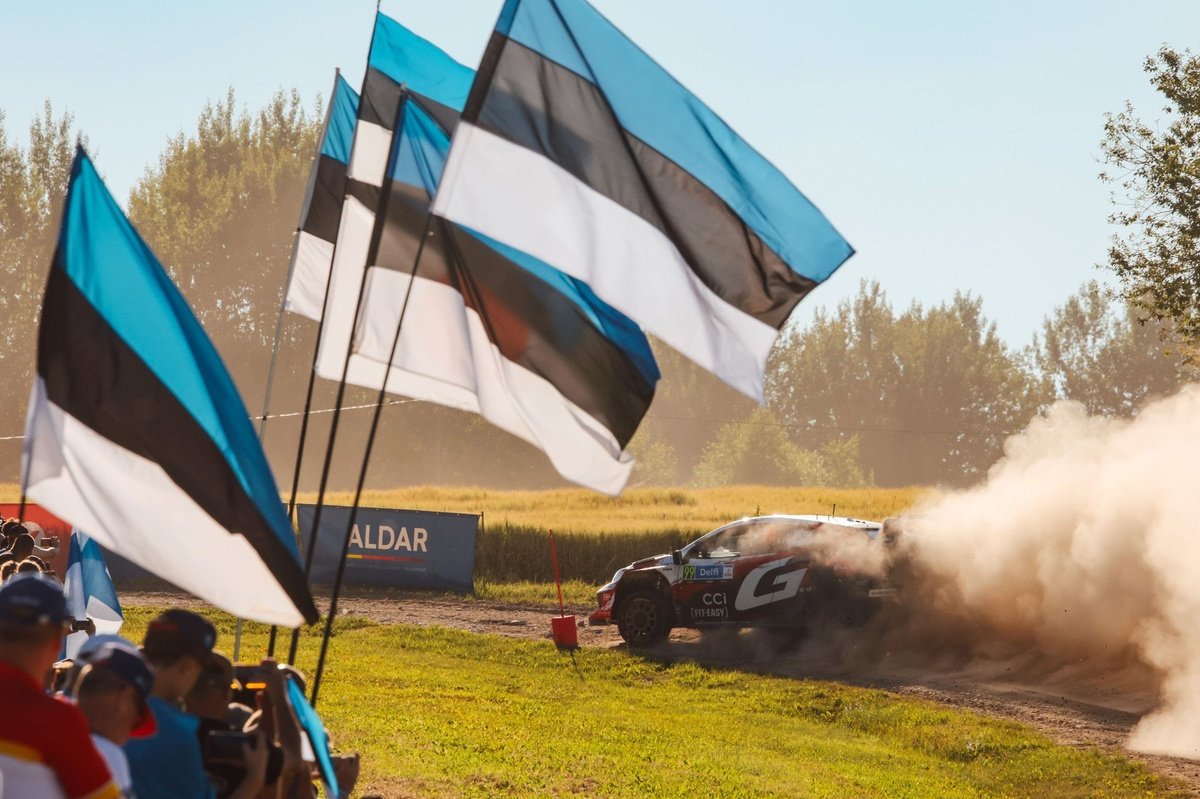
World Rally Championship drivers have thrown their support behind the implementation of a condensed 50-hour format at future events following a successful debut at Rally Estonia.
Rally Estonia organisers rolled out an all-new format that aimed to offer a more compact event that should reduce operational costs for both the event organisers and the teams.
The typical 300km of stages was maintained, but this was fitted into a new event structure that allowed crews to arrive in Estonia’s host city Tartu later in the week. It therefore meant recce was pushed back to Wednesday and Thursday. It also afforded time for a WRC promotional demonstration for fans in Tartu city centre, on Thursday evening, which was extremely well received.
Shakedown was brought forward to Friday morning ahead of six stages across the afternoon and evening punctuated by a tyre fitting zone. In accordance with the FIA’s mandated minimum 10-hour rest periods between legs, the action resumed later on Saturday, which featured nine stages and concluded late on Saturday night. Sunday featured two passes of the 24.39km Kaariku stage, which kicked off at the later time of 11am, some two and half hours later than Sunday’s start time in Greece.
Estonia’s revised format was made possible by the fact the stages are located much closer to the service park compared to other rallies, but it has provided a blueprint for similar events to follow in the future.
“Fantastic, I loved it,” nine-time world champion Sebastien Ogier told Autosport. “It is good to have some rounds in the championship like this. It is a bit less load for everybody involved in the championship.
“The race was a bit intense for us, but it was nothing too bad, we still had time to rest overnight. We spent much less time on the road sections so overall it has been good. I think some rallies like this in the championship should be like this.”
Hyundai’s 2024 world rally champion Thierry Neuville, added: “I like when it is changing formats and different adventures and every rally should have its own storytelling. In the end we were able to do 300km, it is not possible everywhere with this format but here it is a very compact format and the stages are not so far away. It worked out fine for me.”
The format was well received by drivers including Thierry Neuville
Photo by: Hyundai
While the format was well received, some drivers suggested that reducing the length of Saturday and adding an extra stage onto Sunday’s itinerary would improve the format, given there are 10 bonus points available for the final leg of the rally.
“Personally, I would condense it even more [on Saturday] to have a longer Sunday because with this Super Sunday points system it makes sense. The 10 points you can gain from two stages is a little bit too much. When you see Oliver Solberg [who took the maximum 10 Sunday points] taking one less point than [rally winner] Sami [Pajari] it is a bit unfair I would say,” said Hyundai’s Adrien Fourmaux.
“I think maybe there is a bit too much crammed into one day. It is OK for this event with the notes we had and the stages we knew. Maybe we could start earlier, but I like the demo we did, so there are things to take out of it,” said M-Sport-Ford’s Josh McErlean.
The FIA believes the format also achieved the cost saving target for the organisers and improved the welfare for competitors and staff working at the rally.
“I think it is not only the drivers and teams that like it. I can see it from the organiser side, and I can see marshals on the stages and people in rally control. The length of the days is becoming reasonable with reasonable rest hours for everyone. You don’t finish the rally on Sunday thinking the only thing you want is to go to bed,” FIA road sport director Emilia Abel told Autosport.
“Every day that you are not running a stage is helping for [cost saving], and this is the case in any championship.”
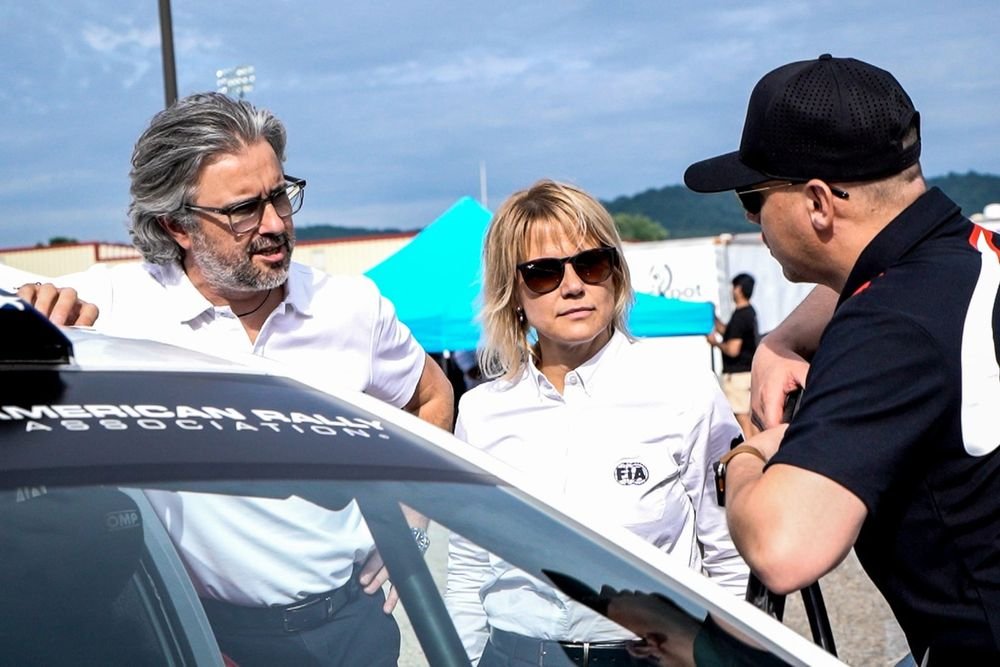
Emilia Abel: “You don’t finish the rally on Sunday thinking the only thing you want is to go to bed”
Photo by: FIA
What does the future hold for Rally Estonia?
Since making its WRC competitive debut in 2021, Rally Estonia has proved to be a hit among competitors, teams and fans thanks to its high-speed gravel stages, innovative format and meticulous organisation.
However, its future on the WRC calendar is yet to be secured with this year’s edition the last of its current contract. Estonia has hosted a round of the WRC every year since 2021, apart from 2024, when it hosted the European Rally Championship as neighbouring Latvia took its WRC slot.
Next year the WRC is likely to welcome three new events to its schedule with a three-year deal already signed that will allow Rally Scotland to join the 2027 calendar. It is also anticipated that Rome will host Italy’s round instead of Sardinia, while the USA underwent a successful candidate event in June as its bid to host a WRC round next year gathers momentum.
When asked about Estonia’s future on the WRC in 2027, Abel added: “The WRC promoter is currently having discussions about the 2027 calendar and is aiming to have it approved at the August FIA world motor sport council and will be announced in September.
“They [the promoter] are discussing and I have seen plenty of discussions between the promoter and Rally Estonia organisers this weekend.
“It [the event] is very popular and it is great to see many spectators coming from Latvia, Lithuania, Poland and Czechia.”
We want to hear from you!
Let us know what you would like to see from us in the future.
Take our survey
– The Autosport.com Team
Read the full article here