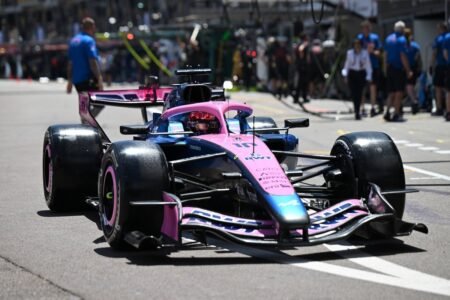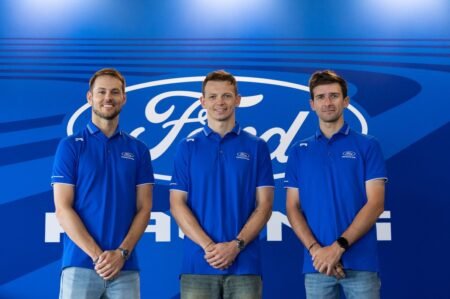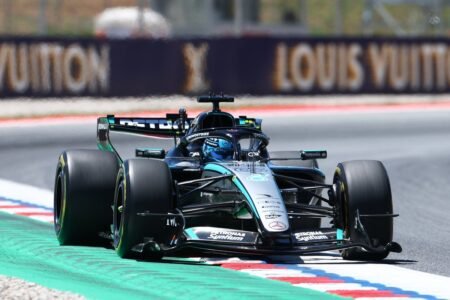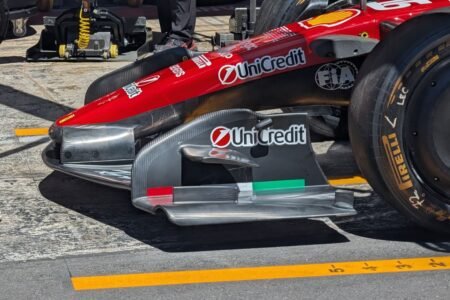




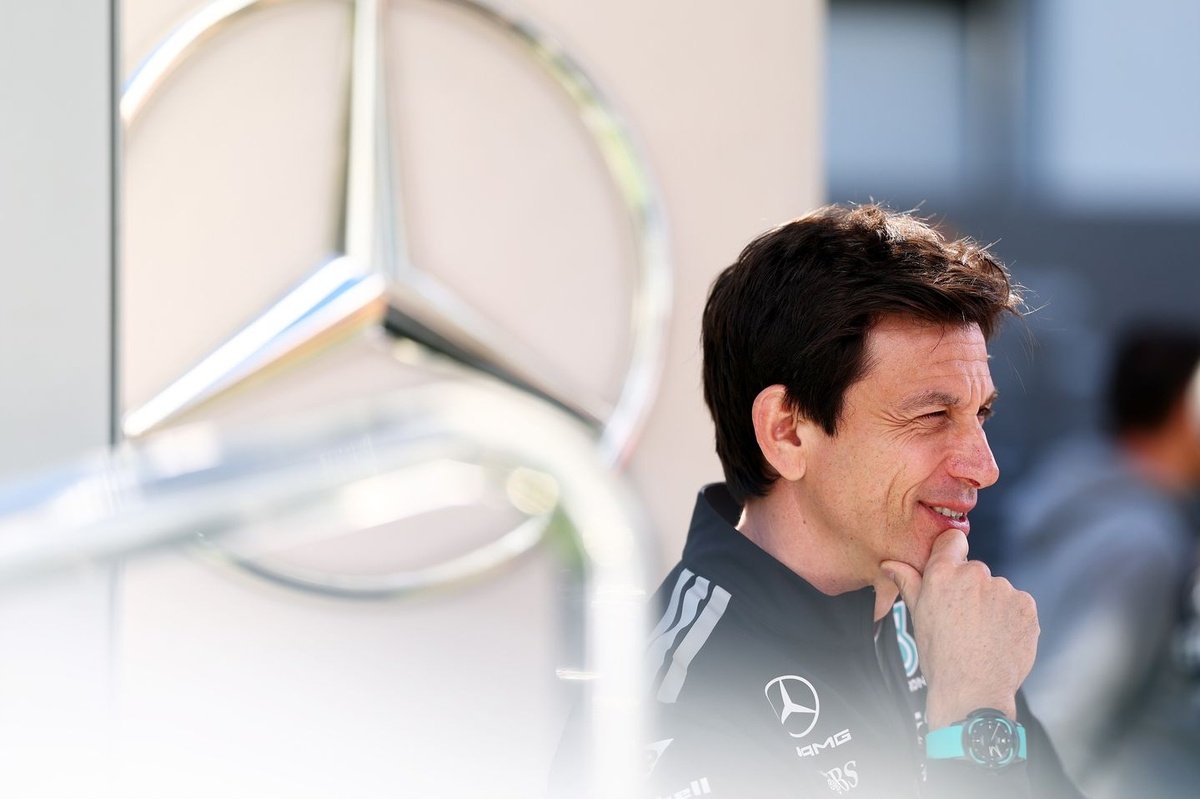
The surprising ADUO outcome that teams received in Monaco remains one of the main talking points in the Barcelona paddock. Rather than Mercedes, it was Red Bull-Ford Powertrains that was placed at the top of the rankings, meaning the newcomer is the only manufacturer not entitled to Formula 1’s Additional Development and Upgrade Opportunities.
A public confirmation from the FIA is still pending, as Red Bull has asked the governing body to review the results once again.
That process is a factual check of the data and sensors, although the outcome appears to expose some more fundamental issues as well. Only the power of the internal combustion engine is measured, yet the permitted upgrades extend beyond that. Manufacturers are allowed to use an ADUO token to improve components such as the battery and MGU-K as well.
For Mercedes, qualifying for ADUO is naturally a welcome opportunity, although team principal Toto Wolff joked in Barcelona: “The first thing I heard was Flavio [Briatore, Alpine] calling me, saying the deal was that he’s buying the strongest engine, and he’s found out that it’s not the strongest engine! So what can I say?
“But a new homologation is definitely something that is helpful. Because if you don’t get that, there is quite a possibility of being leapfrogged by somebody else who is able to do this.”
That raises an important question: is ADUO working as intended? While Wolff speaks about the risk “of being leapfrogged”, he said during the April break that this was precisely what ADUO should not be about.
At the time, Wolff said that only one manufacturer – Honda – needed assistance, when the consensus in the paddock was still that Mercedes would be ranked at the top by the FIA.
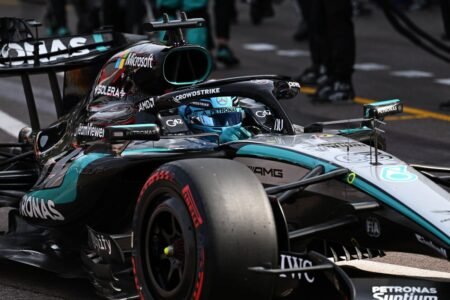
Mercedes was expected to have the benchmark power unit, but the FIA ruled Red Bull’s is better
Photo by: Andy Hone/ LAT Images via Getty Images
In Barcelona, Wolff argued that the system – despite this surprising outcome – is still doing exactly what it was designed to do.
“I think it was a protection mechanism, how it was intended to be, to avoid the 2014 situation that one engine manufacturer was having such an advantage and was running away with engine, with testing mileage and race results,” Wolff said when asked by Autosport.
“We were on the good end of that, but this is what we wanted to avoid, especially newcomers coming in like Audi and to a certain degree Honda with Aston Martin, and Red Bull of course. That’s what it is, and that’s how it should be.”
Should the FIA consider more than just ICE power?
There still appears to be a discrepancy between the measurement method and the upgrade opportunities linked to it. Wolff stresses, however, that basing it purely on data is the most objective way of doing it.
“In my opinion, when you speak to Nikolas [Tombazis], it’s data that they have measured and collected,” Wolff said. “There is no political background, there are no favours, but it’s the outcome of their analysis of their torque sensors. That’s the way it’s being done and that is the result.”
Tombazis acknowledged in April that the FIA is open to considering additional parameters, but that the teams and manufacturers themselves agreed last year to keep the system as simple as possible.
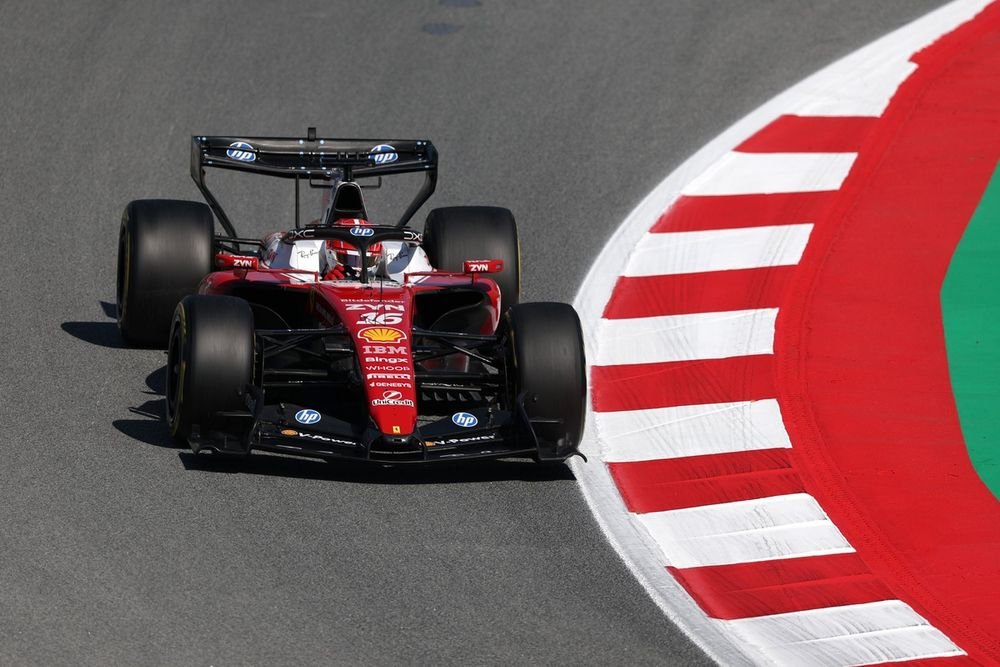
Ferrari uses a smaller turbocharger, which gives it an advantage off the line
Photo by: Sam Bloxham / LAT Images via Getty Images
The downside, however, is that factors such as Ferrari’s smaller turbo are not taken into account. The Scuderia benefits from that choice at the start, but it also affects the overall power output. Does that justify receiving ADUO, or should the FIA take such factors into account?
Tombazis was willing to include factors such as turbo size in the calculations, but Wolff defended the decision to keep the system simple and base it purely on data. According to the Mercedes boss, F1 should stay away from subjective factors – or, in the worst case, a Balance of Performance system.
“This is something that we should stay far away from in Formula 1. It’s a political mess in all the other series, it makes manufacturers go out of the sport also,” he warned.
“And I’ve been very close to that as you can imagine in DTM, in GTs, in Le Mans, and we should never be tempted to have someone agree on how the Balance of Performance should fall out.
“If there is a mechanism that consists of fine-tuning in order to make sure that nobody is embarrassed on the power unit side, I think that’s the right way to go.”
We want to hear from you!
Let us know what you would like to see from us in the future.
Take our survey
– The Autosport.com Team
Read the full article here