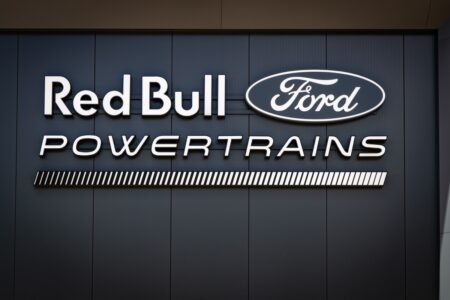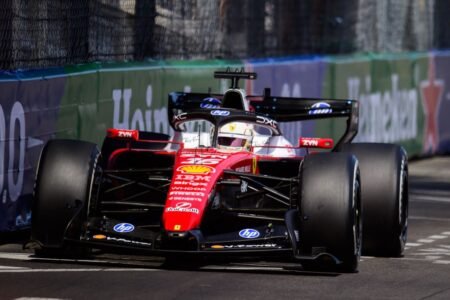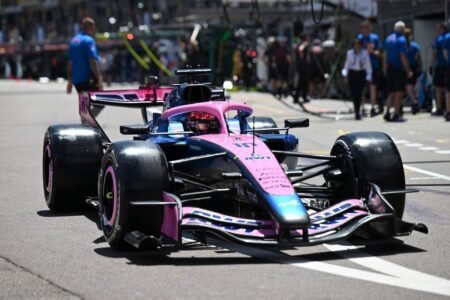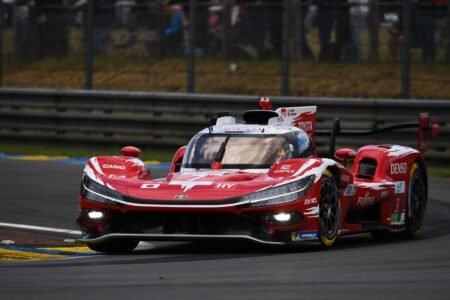




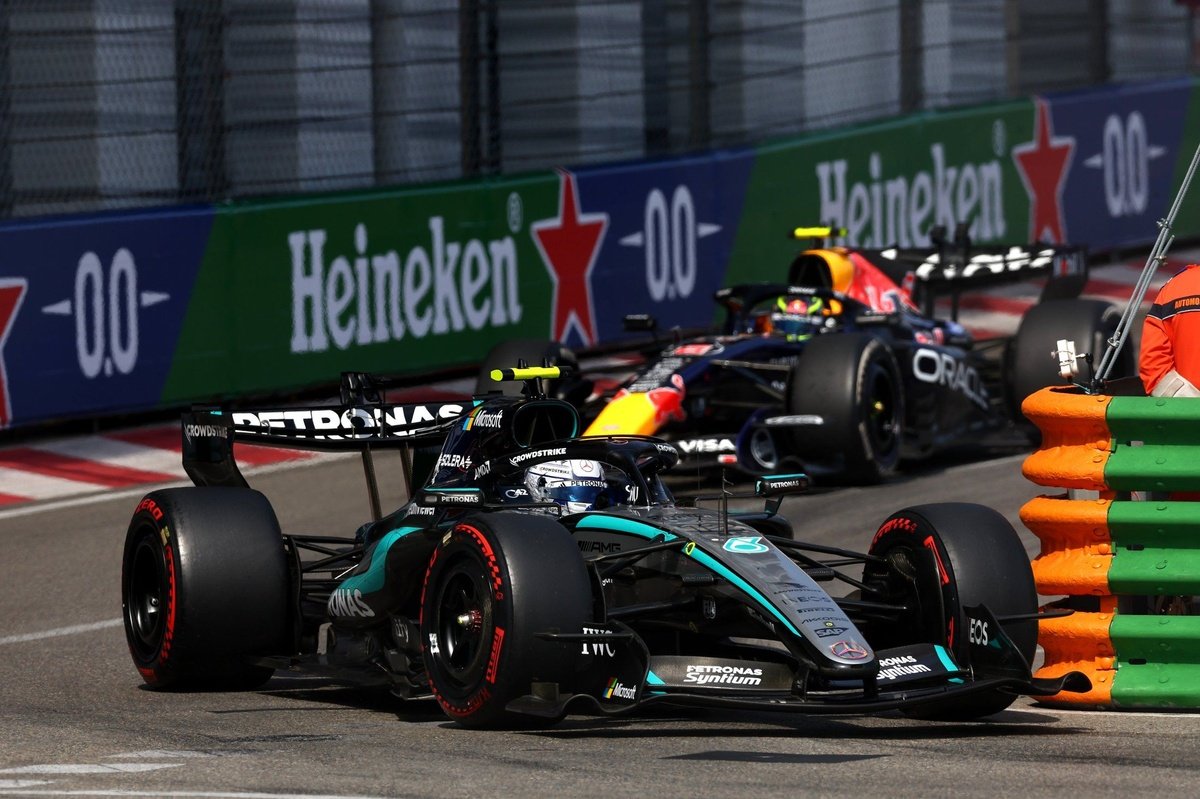
The FIA is yet to officially reveal which Formula 1 manufacturers qualify for additional help developing their internal combustion engines. But news emerged over the Monaco weekend that Red Bull is surprisingly leading the field in V6 performance and all other OEMs, including Mercedes, qualify for an additional upgrade.
As part of the ADUO system (Additional Development and Upgrade Opportunities), the V6 engine performance of all units is measured after every quarter of the season. Manufacturers lagging behind on performance are granted extra opportunities to improve their engines during the campaign.
On Sunday, governing body the FIA sent a letter to F1 power unit manufacturers with the basic conclusion of its findings, announcing which engines qualified for the catch-up mechanic.
Ferrari’s Lewis Hamilton let slip on Sunday night that Red Bull was found to have the best V6 engine, followed by Mercedes and Ferrari. Autosport was then able to confirm that Mercedes would qualify for one upgrade token because its V6 performance is between 2-4% behind the Red Bull DM01. All other manufacturers are over 4% behind and receive two tokens, with the details of what they are now allowed to do explained in detail below.
How ADUO really works
ADUO was introduced for this year’s new power unit regulations as a way for F1’s governing body to prevent power units from becoming a huge performance differentiator without resorting to a full Balance of Performance system.
The specific scenario the governing body wanted to avoid is Honda’s struggles at the start of the previous rules cycle a decade ago, when it was languishing well of the pace and it took years for the company to become competitive.
McLaren MP4-30 Honda
Photo by: Steven Tee / Motorsport Images
Every quarter of the season, the FIA will create a ranking of 2026’s five V6 combustion engines, using real world data from previous races to measure their performance. Quite how it does this is a closely guarded secret, because the FIA doesn’t want manufacturers to know which parameters it is taking into account. If they did, they could potentially manipulate those parts of their engine to appear further behind than they actually are to try and get a more favourable outcome.
Based on the results of its findings, manufacturers are then afforded extra development opportunities, or tokens, based on how far behind they are compared with the benchmark engine on a sliding scale for every 2%. The tokens allow OEMs to develop parts of the power unit that would otherwise have been frozen, and it affords them additional dyno hours and cost cap allowance to do so.
Manufacturers who are between 2-4% behind can spend up to $3million in additional development. If the deficit is between 4-6%, this rises to $4.65m and for 6-8% it is around $6.35m. Finally, for 8-10%, that goes up to $8m. Manufacturers with a deficit of more than 10% may even invest up to $11m additionally.
For the 2026 season, the FIA added an additional allowance in severe cases, as a gesture to help struggling Honda. Extremely underperforming manufacturers may additionally pull forward up to $8m from future budget periods. However, it is believed Honda’s deficit isn’t severe enough to qualify for this additional lever after all.
What manufactures qualifying for ADUO can do
Along with the additional cost cap and dyno hours, the upgrade opportunity opens up various parts of the engines that would have otherwise been frozen until 2028 or beyond
As the spirit of the ADUO idea was to avoid another Honda 2017 disaster, there have been misgivings in certain quarters of the paddock over the wisdom of giving manufacturers extra opportunities for performance deficits as little as 2%, as it inevitably opens the system up to political games.
“The principle of the ADUO was to allow teams that were on the back foot, in terms of the power unit, to catch up, but not to leapfrog,” said Toto Wolff.
Whether Wolff was making those comments because he genuinely believed Mercedes was going to be vulnerable at top of the pile, or whether he was playing 4D chess, is something only he is able to answer.
Race start
Photo by: Andrew Caballero-Reynolds / AFP via Getty Images
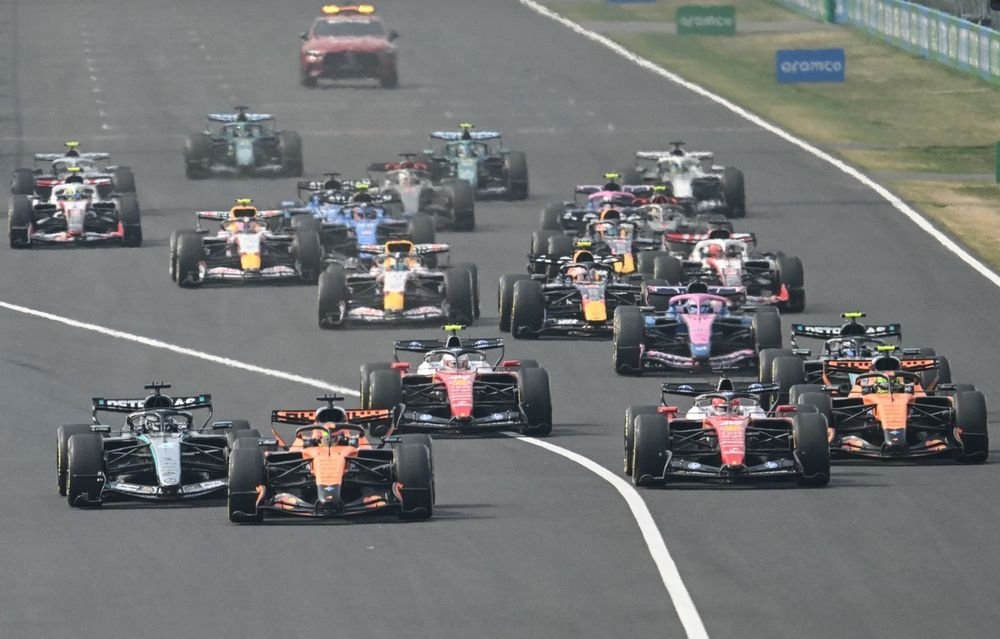
“Today we think the pecking order is Mercedes, in terms of the powertrain, ahead of the field. And that means eight cars, so it is very significant,” said Red Bull boss Laurent Mekies in Montreal.
That explains why Mercedes can be behind on raw V6 horsepower but still have the overall best and most efficient hybrid package. On one hand, that also highlights how the strength of the Mercedes W17 chassis and its aero performance has been underrated due to the huge focus on power units.
That’s why Sunday’s bombshell news is certain to kick off a political storm, calling the suitability of the entire system into question. Red Bull is known to have asked for the FIA to review its finding, having been so surprised by its first-ever V6 engine being put at the top of the list.
Mercedes also has no obligation to improve its V6 engine while it works on other areas opened up by ADUO, so there could be a situation where Red Bull Ford Powertrains remains over 2% ahead as the benchmark.
But ADUO is not a silver bullet or handout
Engine development involves long lead times, so don’t expect the likes of Mercedes, Ferrari, Audi and Honda to suddenly turn up over the next few races with a beefier engine.
At the bottom of the engine pecking order, Honda’s Shintaro Orihara has already explained the Japanese marque ‘s ADUO upgrade plan. Honda will be working on speeding up its combustion phase and reducing the internal friction of the engine.
We want to hear from you!
Let us know what you would like to see from us in the future.
Take our survey
– The Autosport.com Team
Read the full article here