

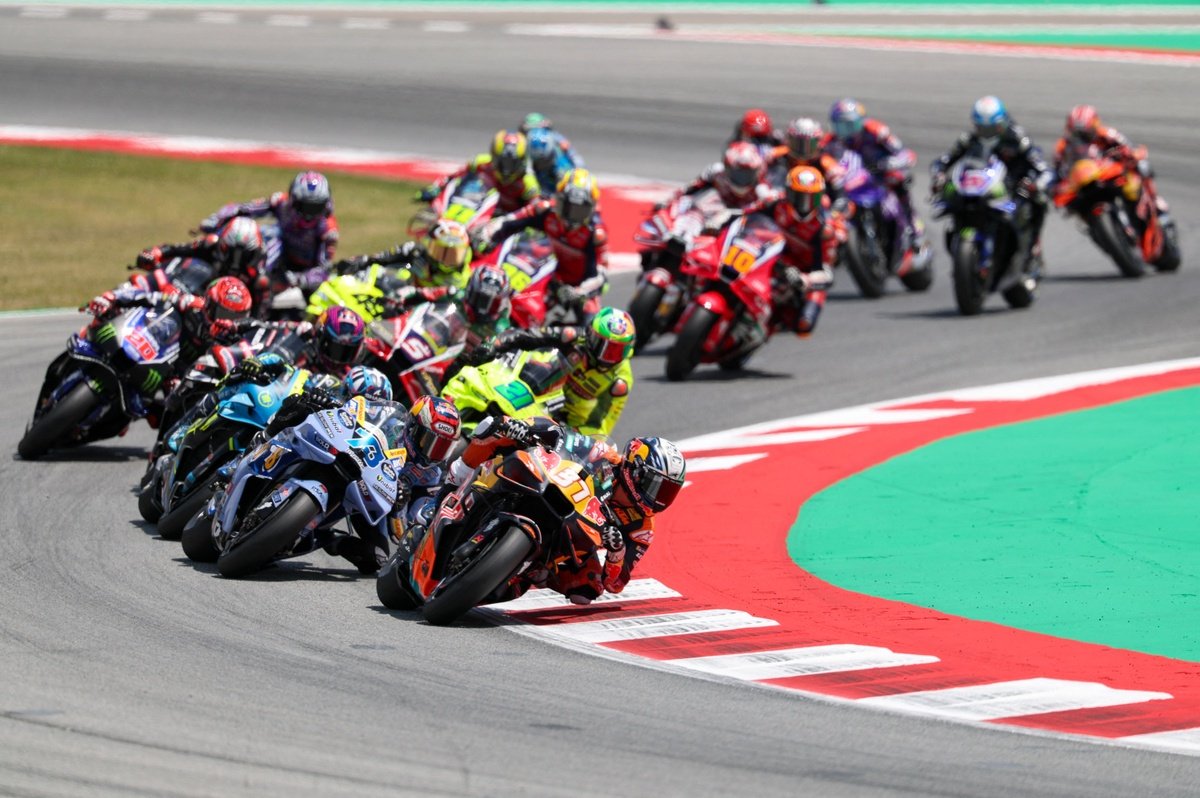
MotoGP is taking action following the two major crashes at the Catalan Grand Prix, in which Alex Marquez and Johann Zarco were injured.
The first crash, in which Marquez was unable to avoid Pedro Acosta after the KTM rider experienced a technical issue, and the second, which occurred at the second restart when Zarco’s leg became trapped between the wheel and the exhaust of Pecco Bagnaia’s bike, were quite unusual, but the championship aims to prevent such situations from recurring.
On Thursday at Mugello, MotoGP sporting director Carlos Ezpeleta and members of the race management team held a meeting with the team principals to explore ways to improve safety.
“The most important thing is that both Alex and Johann are well and are recovering, and we hope that they’re back with us as soon as possible,” Ezpeleta said during the official MotoGP feed.
“Thanking also both Michele and Cal [Crutchlow] for filling in in what is an incredibly demanding weekend here at Mugello.
“After Barcelona, race direction and us wanted to align with the teams as soon as possible, to see if there’s anything to improve on and really speak to the teams. We’ll of course be speaking to the riders this afternoon in the Safety Commission. We have to try to learn from every incident and try to see what things we can improve.
Carlos Ezpeleta made proposals to the teams.
Photo by: Mirco Lazzari GP / Getty Images
“There’s consensus among the teams that the regulations and the process that was followed in Barcelona was correct, and that’s an important starting point.”
Specifically, Ezpeleta and race control proposed four solutions designed to prevent the incidents seen in Barcelona: “There are things to improve on that we’ve started to consider with the teams.
“One being of course the grid itself, if there’s a chance or a consideration to be taken over leaving more spaces between the riders so they have more space to manauver going into Turn 1.
“The other one is holeshots in general. Then just two things on the bikes that we really want to look into. One is protection around that rear wheel, the swingarm area following Johann’s crash.
“The other one is, if there’s a bike failure like Pedro had, giving some warning to the bikes that are approaching that area.”
Ezpeleta provided details on each of the four proposals.
Increasing the space between riders on the grid
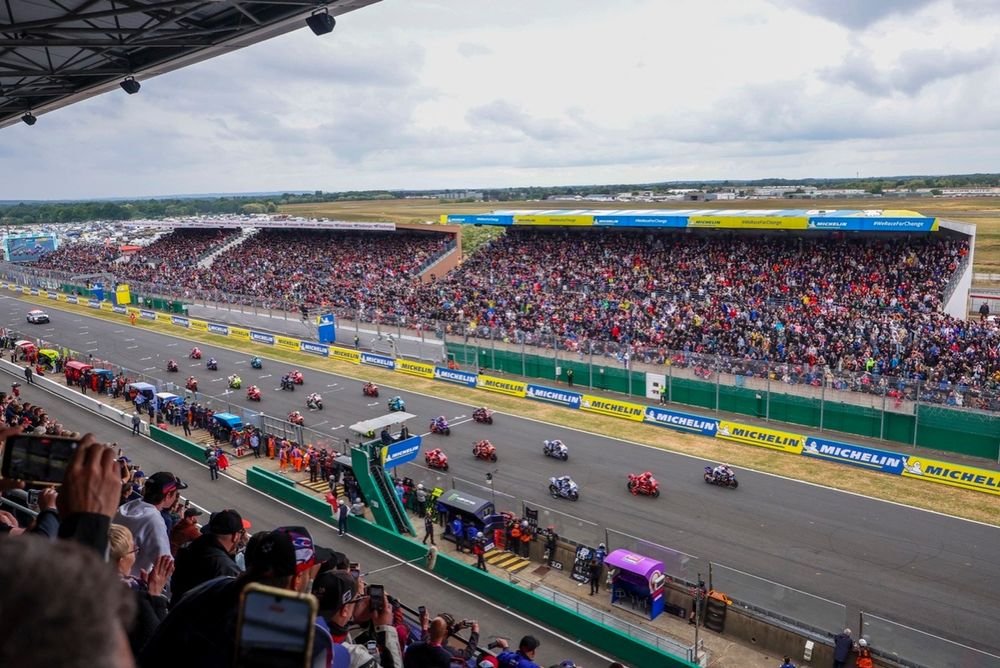
The grid positions could be spaced further apart on the starting grid.
Photo by: Dorna
The first proposal involves changing the grid layout by spacing the riders further apart, in order to prevent a bunch-up at the first corner — the sequence in which and Zarco crashed. The most obvious idea would be to space each row further apart, but this won’t be easy to implement at every circuit.
‘There’s been consensus that we should consider that, and that’s unanimous with all 11 teams,” Ezpeleta explained.
“There is sort of the thought that we should try to do this as soon as possible but no later than 2027. Of course, changing the grid is a major change to the sport, and in some occasions given the space from the start line to the last turn, we might have to actually consider changing some bigger things in the circuits.”
Banning ride-height devices at the start
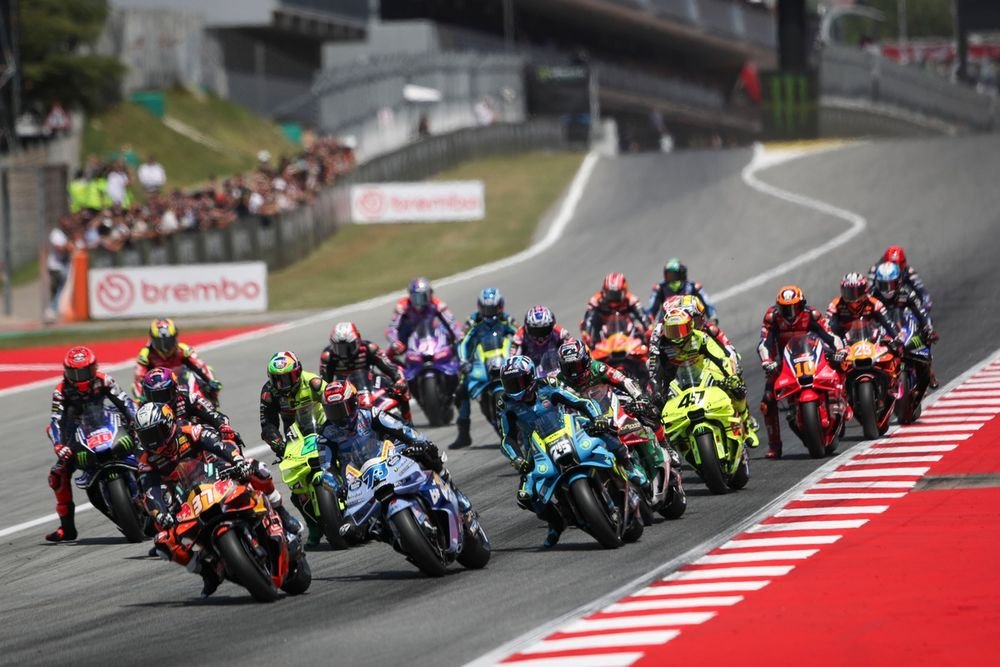
Riders have to brake hard to get the bike back into its normal position.
Photo by: Gold and Goose Photography / Getty Images
The second proposal is to ban the use of the ride-height devices, also known as the holeshot device, at the start. The system lowers the bike, providing a better launch by preventing it from wheelieing, but riders must brake hard to disengage it. Banning it had already been considered at Silverstone and Phillip Island, where the first corner is fast and doesn’t allow for such heavy braking. The debate has evolved.
“So the proposal and the consideration is around all tracks in general. It’s obvious to us that there’s two of the remaining circuits where basically the energy the braking into Turn 1 is not that great that you might have that risk of not disengaging the holeshot device, but the consideration that it’s now on the manufacturers table and they’re up to consider is around all of the circuits.”
The device will be banned in 2027 regardless, but MotoGP is considering doing so sooner than planned.
Add rear protection
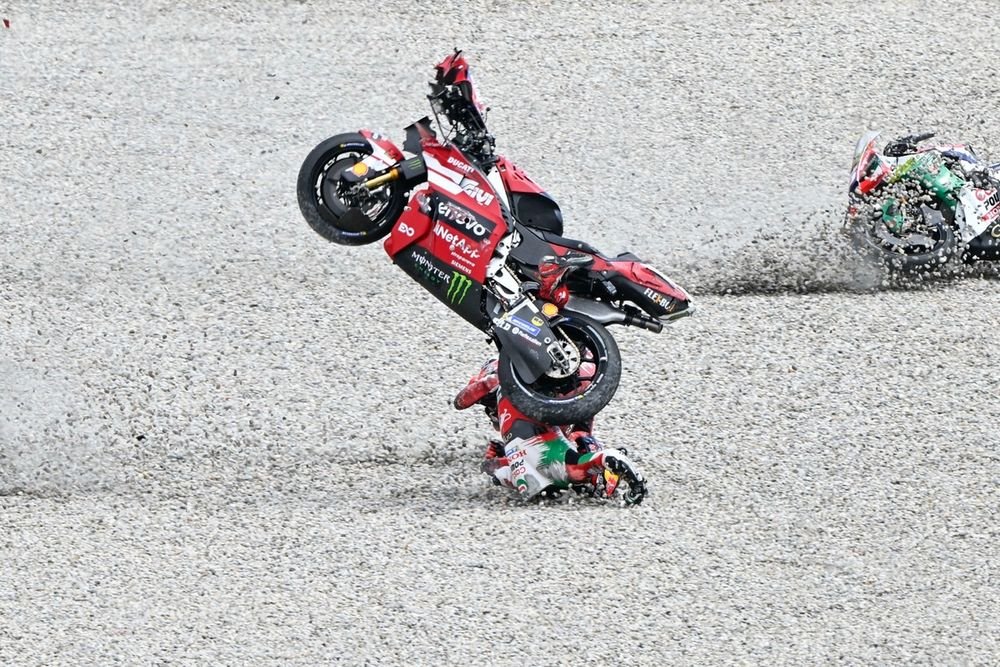
Johann Zarco’s leg was caught between the wheel and the exhaust of Pecco Bagnaia’s Ducati during his crash.
Photo by: Gold and Goose Photography / Getty Images
The last two measures aim to improve safety on the motorcycles themselves. Zarco’s leg got caught in Bagnaia’s bike, and Ezpeleta wants to explore solutions to prevent this type of situation.
“Unfortunately, Zarco’s incident is probably the most graphic one that we’ve had, but not the only time that an incident like that has happened in the sport, so it’s something that we do want to give consideration to,” he said.
“Again, it’s on the manufacturers’ table now, but from what we understood yesterday, it doesn’t seem like it’s not that far-fetched to really come up with a solution, so positive conversation.”
Reporting a problem on a motorcycle
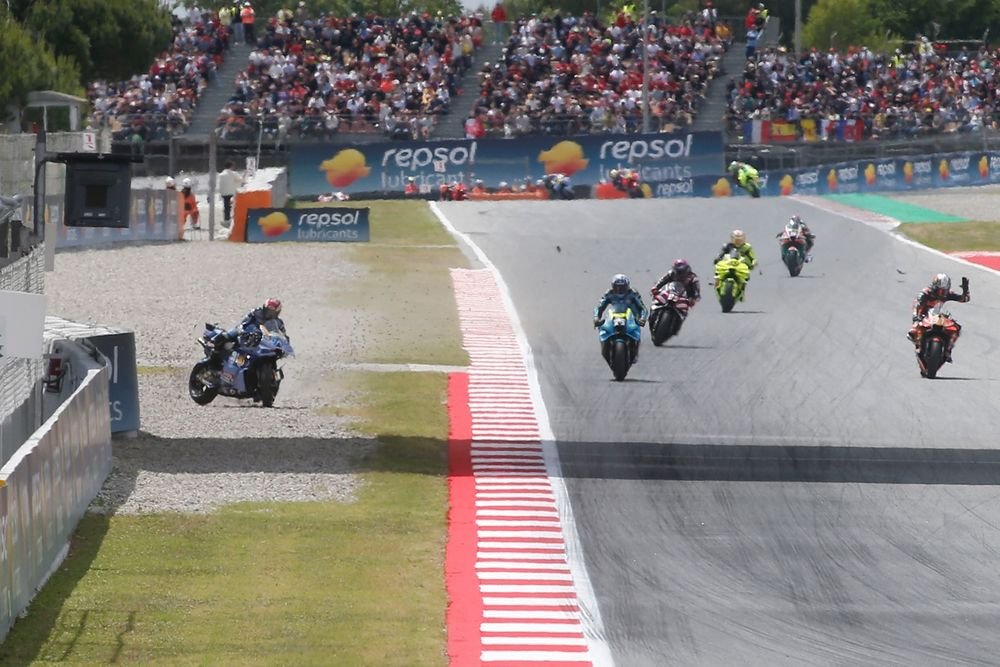
Álex Márquez was unable to react to Pedro Acosta’s problem in Barcelona.
Photo by: Gold and Goose Photography / Getty Images
The last idea is to alert riders if a bike suddenly slows down by means of a flashing light. Ezpeleta acknowledges that this is an imperfect solution if riders are racing side-by-side, but it could still be useful.
“Probably in Alex’s case, it wouldn’t have changed much because Alex was so close to Pedro, but maybe on other occasions that could actually make a difference,” he said. So four areas that we’re looking into.”
We want to hear from you!
Let us know what you would like to see from us in the future.
Take our survey
– The Autosport.com Team
Read the full article here