



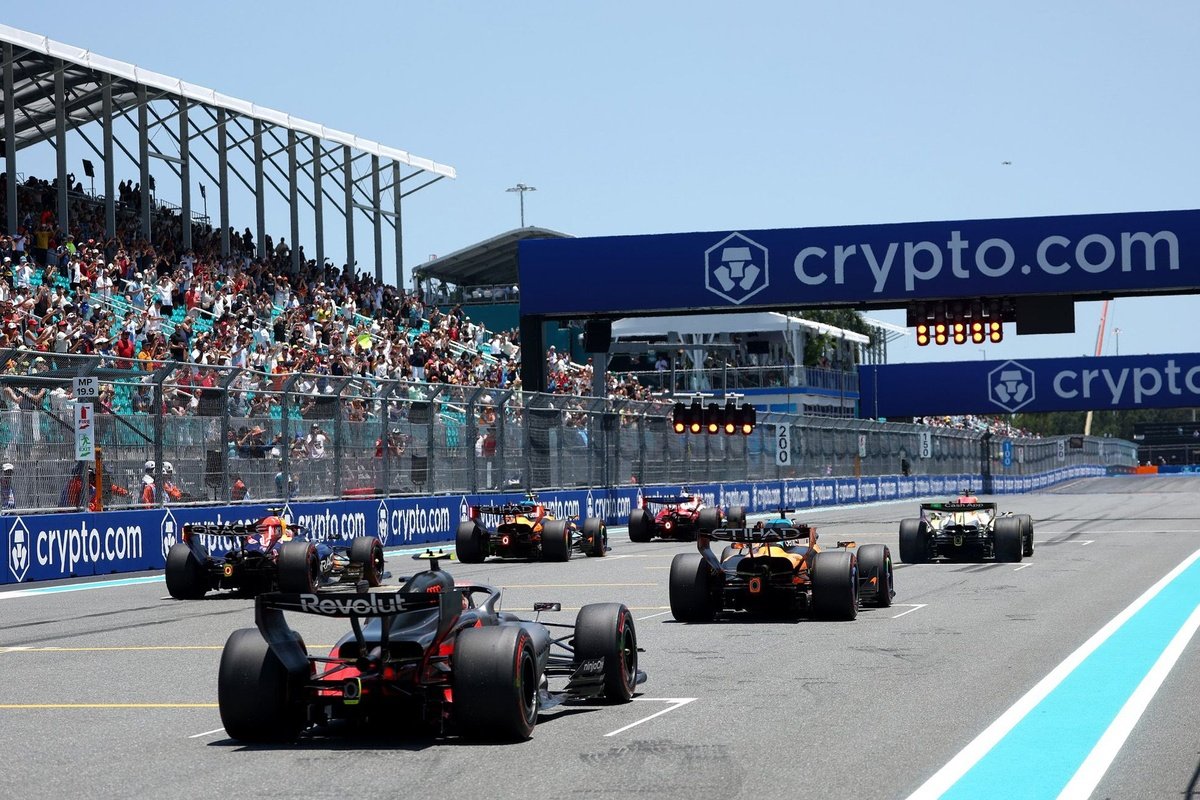
Formula 1 stakeholders will hold an additional round of talks on the proposed 2027 power unit changes over the Canadian Grand Prix weekend as manufacturers still disagree on how to achieve them.
The new power unit regulations are an ongoing point of discussion because they introduced many undesirable side-effects to the racing in 2026. The near-50:50 split between the V6 turbo engine and the powerful MGU-K has added a huge amount of complexity, with energy harvesting requirements making it tough for drivers to push on the limit, even in qualifying, and adding to their workload managing its various quirks.
And because cars don’t have enough energy to race flat out over an entire lap, the huge closing speeds between different battery levels have led to unusual, battery driven wheel-to-wheel racing, while also raising safety concerns.
The series has already introduced a first batch of changes at the recent Miami Grand Prix aimed at mitigating some of the most pressing issues, like removing the need for drivers to aggressively lift and coast on a qualifying lap. But there is a general understanding that more fundamental hardware changes are required to move the current ruleset in the right direction.
Earlier this month governing body the FIA announced that the power unit manufacturers, the FIA and F1 management had come to an “agreement in principle” on moving towards a 60-40 split between combustion power and electric energy, largely achieved by increasing the fuel flow and reducing energy deployment.
But it has gradually emerged that while all parties agree a move to 60-40 is a good idea, they are less aligned on how exactly to achieve it, and by when.
Four out of F1’s six power unit manufacturers would have to agree for the FIA’s proposal to go through, but it is understood Audi, Ferrari and Honda all voted against it, prompting the need for additional talks this weekend in the Canadian Grand Prix paddock to iron out the finer details.
Among the topics up for further debate are the different avenues the series could take to achieve said required fuel flow necessary to increase the V6 power output by 50kW. But the biggest hurdle appears to be the timing of the change, rather than the proposed tweaks themselves.
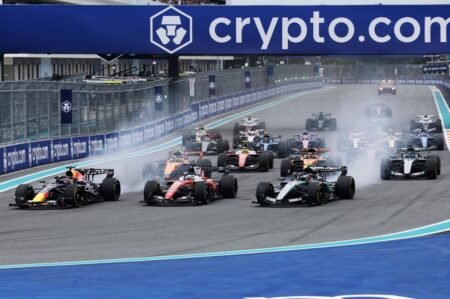
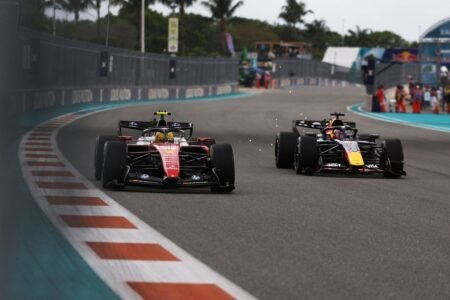
The 2026 cars currently rely on a near-50:50 split between engine and electrical power
Photo by: Jay Hirano / SOPA Images / LightRocket via Getty Images
With 2027 car projects well under way, increased fuel flow and therefore fuel tank capacity may force several teams to change their chassis for next year when they were planning to re-use the current design to save resources.
Then, there is the so-called ADUO system [additional development and upgrade opportunities], a catch-up mechanic for underperforming manufacturers to get additional dyno and cost cap allowance to improve their V6 engines. A first round is expected to be announced after this weekend’s race.
The FIA is keen to keep ADUO completely separate from the discussions around a 60-40 split, but if physical hardware changes are going to be required for 2027, then it remains to be agreed how that would interfere with any existing ADUO allowances.
The other issue is the strain on human resources. The power unit engineers tasked with tweaking the engines based on ADUO concessions would also be the same ones having to implement any hardware changes for 2027. It is believed that this is the main reason why the likes of Ferrari do support the FIA’s changes themselves, but feel a delay until 2028 is much more achievable.
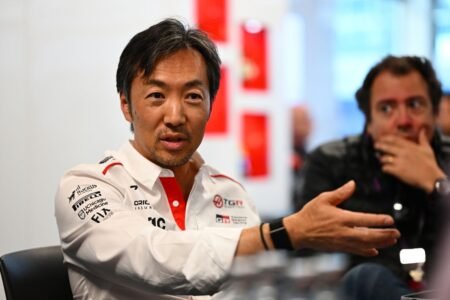
And while some manufacturers may relish an unexpected opportunity to further tinker with their engines beyond the original homologation schedule, the side-effects on the teams themselves are also causing unease, especially on smaller outfits who are trying to allocate their resources as efficiently as possible. Haas team boss Ayao Komatsu said making changes that will cost the teams more money is not the right way to go, even if there is an increased cost cap allowance as planned.
“The thing I’d like the FIA and F1 management to hear about the team’s point is about the cost,” Komatsu said. “It’s ridiculously expensive. These PU regulations are already so expensive, so to then do certain things for next year’s regulations, the cost only going up by a significant amount, then I don’t think that’s the right direction to go.
“So, even though we really don’t have much say in terms of exactly what, let’s say, the fuel flow rate should be or how much electrical energy needs to be available, if this is going to cost every team an extra 5 million, 10 million, that’s certainly not the right direction for us.”
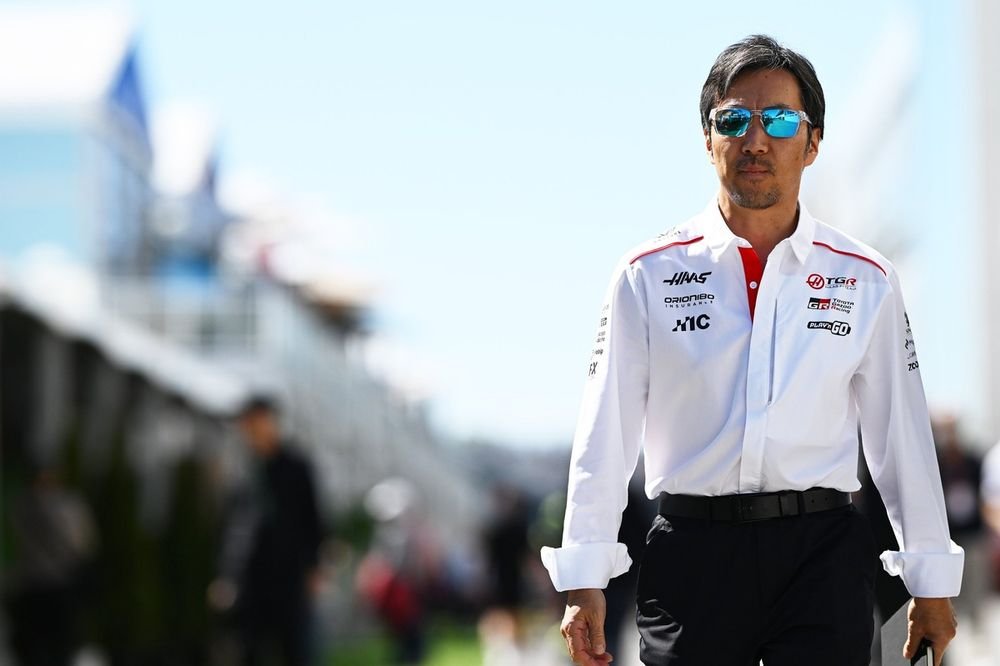
Ayao Komatsu warned that extra costs are “not the right direction” for Haas
Photo by: Guido De Bortoli / LAT Images via Getty Images
Will drivers get their wish?
On Thursday, many drivers said the proposed changes for 2027 were a step in the right direction, if not enough to fundamentally fix the regulations once and for all. But with different political agendas at play, whether they will get their wish or not remains to be seen. In any case, the clock keeps ticking and any further delays will gradually make meaningful change harder to pull off.
“There’s a very interesting proposal for 2027, a proposal that I think goes exactly in line to where the sport I think should go,” Williams driver Carlos Sainz said on Thursday. “Unfortunately, like always in this sport, there will be politics involved and different interests involved across the main manufacturers that will push back and push forward depending on what they’re looking for.
“That’s why I can just ask the FIA and FOM to be tough with what they believe is the right thing for the sport and even if you need to vote, that they can still stand firm and believe in what’s right for the sport.”
Four-time world champion Max Verstappen, who has been disillusioned with F1 2026’s battery driven “anti-racing”, said the amendments would change his outlook on staying in the series.
“Yes, definitely,” he said. “I just want a good product in Formula 1 and that will for sure improve the product.
He added: “I think it’s like the minimum I was hoping for, and I think it’s really nice that that’s what they want to do. That’s definitely what I think the sport needs.”
Whether or not Verstappen and his colleagues will actually get their wish remains to be seen.
We want to hear from you!
Let us know what you would like to see from us in the future.
Take our survey
– The Autosport.com Team
Read the full article here