



This is the lab. In the lab we do experiments. Sometimes it is the moral and ethical equivalent of shining a magnifying glass on an ant. In other times, it is a little more serious. I should note that when I put things like this in the lab, it is not proceeded by “the Astros should…” or “the Astros should not….” This is not a hot take. If it were a hot take I certainly would not put it in a lab.
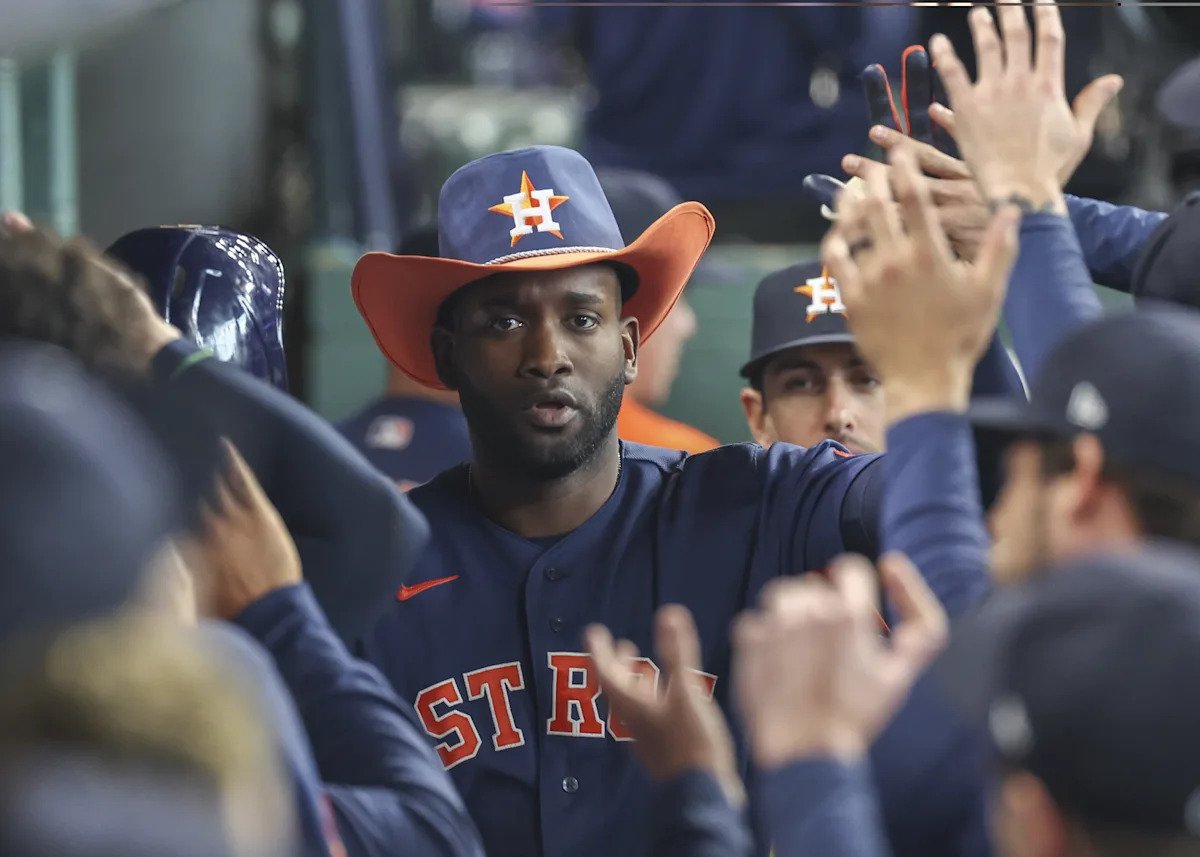
What we are looking at here is ultimately the value of a superstar. Branch Rickey is obviously known as the executive that broke the color barrier. He was also an executive with the St. Louis Cardinals and Pittsburgh Pirates. He infamously told Ralph Kiner that he could finish in last with him or without him. We have obviously seen the huge numbers that Yordan Alvarez has put up and I have spent the last two labs comparing those numbers with the rest of the team and the best hitters in baseball history.
Obviously, if the Astros were shopping Alvarez it would be big news. There have been a few superstar level moves in baseball over the last several years. Heck, Juan Soto was involved in two of those deals as the teams that held him cashed in with prospects. I shouldn’t have to tell anyone that if Yordan became available, there would be at least a half dozen teams waiting in line to make their offer. So, what would a Yordan Alvarez trade even look like?
We should start by accurately pegging his value. Last time, we saw that he is on pace to get close to 12 wins at the pace he is currently at. However, that is not horribly realistic. The best thing we can do is look at what he has done and project from there. There are two ways to do this. We can look at the WAR numbers and project those over 150 games or we can look at the traditional hitting numbers and do the same.
Yordan Alvarez: 25.8 FWAR in 703 career games through Thursday, 5.5 FWAR per 150 games
Yordan Alvarez: .298/.392/.580, 39 HR, 96 Runs, 111 RBI, 2 SB, 78 BB
Those are pretty sparkling numbers. We could surmise that this is a career season for Yordan and he might be closer to a seven or eight win player. This is where things get more dicey than what we might think. It would be simplistic to suggest that you want something equivalent to seven or eight wins to break even on the exchange. However, that misunderstands the designation of a replacement level player. The players coming up to replace injured bench players are replacement level players. Most teams are not employing those players as regulars and the Astros are no different.
I hate to pick sides in a debate over metrics because that would taint the lab and its purpose. However, most sabermetricians seem to prefer Fangraph’s WAR over baseball-reference.com’s WAR. Again, I use both because I like getting a cross-section of thought on a player. In this case, we will use FWAR just to keep everything simple. Below would be the Astros regular lineup according to their 2025 FWAR numbers when Yordan Alvarez is removed from the equation.
Asterisk: Joey Loperfido’s 2024 and 2025 FWARs were combined to simulate the number of plate appearances he would likely get in a full season.
So, as you can see, none of the regulars would be a replacement level player, so you are not starting at zero. The effective difference between Loperfido and Yordan would be an average of five wins and maybe closer to six or seven wins this season alone. I have to emphasize again that we are not simply looking for six or seven wins. We are looking for players that would be six or seven wins better than the players they are replacing.
For instance, if you wanted to upgrade at catcher then you would take the wins above 1.6 as the net improvement. So, a three win catcher is not a net three wins. It would be a net 1.4 wins. As you might imagine, it would be a group of players (likely three or four) that you would hope would combine to add six or seven wins of value to make up for the six or seven wins you are losing. One could easily look at the lineup and pitching staff and identify the spots where an upgrade would be nice. I’d surmise at least one of the players would be a pitcher if not two. The thinner outfield would also be a place where they would likely add.
Unfortunately, that would not be the end of the ledger on any such trade. A look at the wins added would also have to include the element of time. Yordan would have considerable value this season as someone under contract through the 2028 season on a pretty friendly hometown discount (6 years, 115 million). So, we are not only talking about the seven or eight wins he would produce this season, but also those same wins in 2027 and 2028. If we assume Loperfido is fixed at about a win then the Astros would need to recuperate conservatively 18 wins total.
The good news is that they wouldn’t have to do this only through 2028. The players they would likely get back with have more club control than Yordan. If those players were on the younger side then you would be talking five or six seasons of club control remaining for each player. So, three or four players with an average of five seasons of club control each would need to add 18 net wins over the span of those five seasons.
For instance, the tale of the tape on the Kyle Tucker trade is still ongoing. The Cubs got 4.5 wins out of Tucker last season which is probably three to 3.5 wins more than a marginal starter would have gotten. However, the Astros get the services of Cam Smith for six seasons, Isaac Paredes for this year and next year, and Hayden Wesneski for three additional seasons after this year. The Astros have not recouped the four wins yet, but they have through 2030 to recoup a grand total of four wins.
Obviously, the downside is bringing in prospects that produce zero wins. That is always the chance you take with these kinds of deals. However, while it seems foolish to think that you could get bang for your buck when you trade a superstar, the math actually works out more often than not. Naturally, math is not making these trades and it is a lot harder to do because you have to pick the right prospects and accept the fallout of trading a superstar player. Keep in mind, this is a lab experiment where we explain the math behind a theoretical deal. I am not advocating trading Yordan and I’m certainly not predicting it. What do you think? Could we ever recoup that value back?
Read the full article here