


When the media gathered at Red Bull’s hospitality unit during the first week of winter testing in Bahrain, most colleagues were wondering how Max Verstappen would respond to the new regulations. After all, the Dutchman had already warned about this engine formula in the summer of 2023 and had openly stated that, in his view, it was heading in the wrong direction.
In the Middle East, Verstappen did not hold back, using characterisations such as “Formula E on steroids” and “anti-racing”. He voiced similar criticism in Australia and China, after which the approach changed. Following some encouragement from higher up, the message now is that it may be more constructive to discuss the main issues behind the scenes.
These discussions have taken place not only with the FIA, but also with F1 CEO Stefano Domenicali, as the latter explained in an exclusive interview with Autosport.
“You know me, I respect Max a lot. I speak with him a lot and of course he is quite opinionated in that respect,” Domenicali said. “But I think that he will understand that there is a bigger picture. I can like certain things or not, or like certain things more or less, but in a way everyone needs to understand that [there are] certain reasons [behind it].”
Those reasons go back to how the current regulations came about. When discussions started five years ago, the automotive industry seemed to be heavily committed to electrification. F1 felt compelled to move in a similar direction, partly to attract Audi and Honda.
Since then, the picture has changed in several respects. First, the push towards pure electrification has somewhat diminished. Regulations from the European Union have changed, and Ford told this publication that it has reversed its earlier decision to stop producing road cars powered solely by internal combustion engines.
Watch: Autosport’s Exclusive Interview with F1 CEO Stefano Domenicali
Moreover, it has once again been shown that manufacturers can change their commercial strategy – including F1 participation – from one moment to the next, depending on external factors.
“Look what they did at Renault,” Domenicali rightly points out. “Renault was part of the table in deciding this kind of engine. And then they took a decision to leave. That’s what I’m saying. We cannot be in a situation where the crisis of the market can bring certain difficult decisions for the manufacturer to give priority to other initiatives. Therefore, we have to protect that.”
A different direction for the next regulations?
It means that the next regulatory cycle will likely look different. Personally, Domenicali expects less emphasis on electrification and more on sustainable fuels and the internal combustion engine.
“I definitely see, personally, but it’s up to the FIA of course to propose that, a sort of sustainable fuel at the centre of the future, with a different balance of what could be the electrification in the future with a strong internal combustion engine,” he said.
Where Domenicali speaks of a ‘different balance’, the mood in the paddock seems to be shifting in the same direction – potentially even towards a return to V8 with a smaller electrical component. It is a formula that, among others, Ford – as Mark Rushbrook told Autosport last year – could live with.
Ford logo
Photo by: Motorsport Images
The appetite for such a change appears greater than it was a few years ago, both in the automotive industry and the F1 paddock. It is no coincidence that Domenicali added that the FIA and F1 must work with a certain framework that is not entirely dependent on OEMs.
“Manufacturers are a vital piece of what we are doing. We need to thank them every day and every night because without them it would be impossible,” Domenicali stressed.
“But we cannot be any more in a corner where manufacturers can dictate the pace to the sport. That’s a lesson learned that I think that will enable us, together with the FIA that is the regulator, to find the right package that allows the two worlds to live, to co-exist, because we want the manufacturers to be in, with no doubt.”
Intervening years crucial for Verstappen’s decision
If the future does indeed move more towards an internal combustion engine with sustainable fuels, then two things are clear about Verstappen’s outlook in F1.
First, that he will have to bite the bullet this year, as the product – even after tweaks ahead of the Miami Grand Prix – will not fully meet his preferences. And second, that the longer-term picture aligns more closely with what he would like to see.
He reiterated the latter this week during a Viaplay event in Amsterdam, where he indicated that a V8 or V10 would be his preference for the next cycle. The latter option, despite Mohammed Ben Sulayem advocating for it last year, seems too ambitious, but a V8 may not be so far-fetched.
With that in mind, two questions remain regarding Verstappen’s future and that of F1 as a whole. First: if the next cycle takes a different direction, when will it be introduced? And second: can a compromise be found for the intervening years that the most outspoken drivers can live with?
Regarding the first question, it is a balancing act between various factors. Formally, the current cycle runs until 2030, meaning new power unit regulations would come into effect in 2031. But with a supermajority, it could theoretically be brought forward. However, this must be weighed against the enormous investments teams and manufacturers have made in the current rules, and their depreciation.
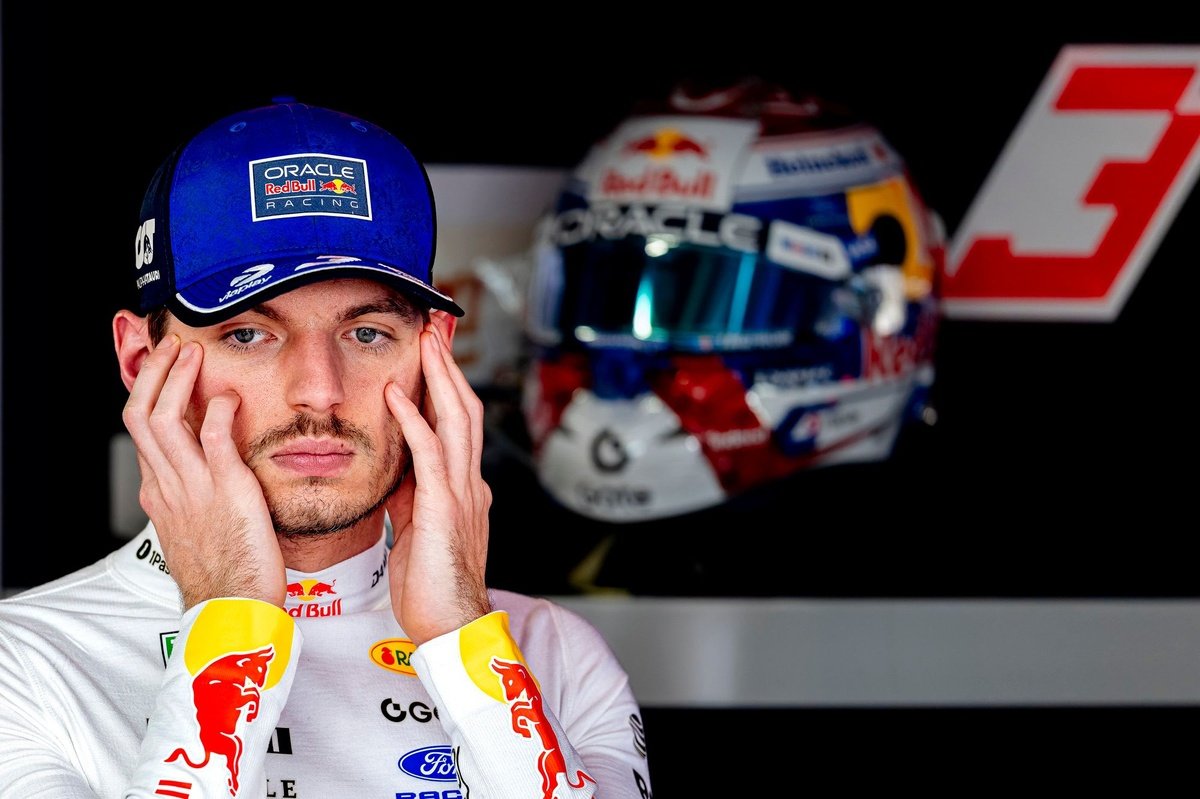
Max Verstappen, Red Bull Racing
Photo by: Alastair Staley / LAT Images via Getty Images
Precisely because these are major topics, Domenicali explained that, in his view, a path must be chosen this year.
“We cannot lose too much time because time is passing so quickly. We need to be robust enough to allow us not to be in a corner, we need to decide as soon as possible,” the F1 CEO made clear.
As for the second question – what can be done in the intervening years – Verstappen has pinned his hopes on ‘bigger changes’ towards 2027. When the constructive conversations with Domenicali were brought up in Amsterdam, the Red Bull driver called it positive that those talks are now taking place, but stressed that more still needs to happen.
“We have certainly spoken and that is already progress. But the problem is that you can tweak these regulations somewhat, but fundamentally there is something wrong. Not everyone will publicly admit that, but it is simply the case,” Verstappen said.
“Some people naturally see an advantage in that at the moment and are trying to exploit it. And that is completely logical, I have no problem with that. But I love real Formula 1, and right now in many ways, that is not the case.”
Verstappen added that he is not saying it just for himself: “I’m trying to improve it. Even if I might stop in two or three years, it’s still for the future. For other drivers, I hope it remains a proper sport.”
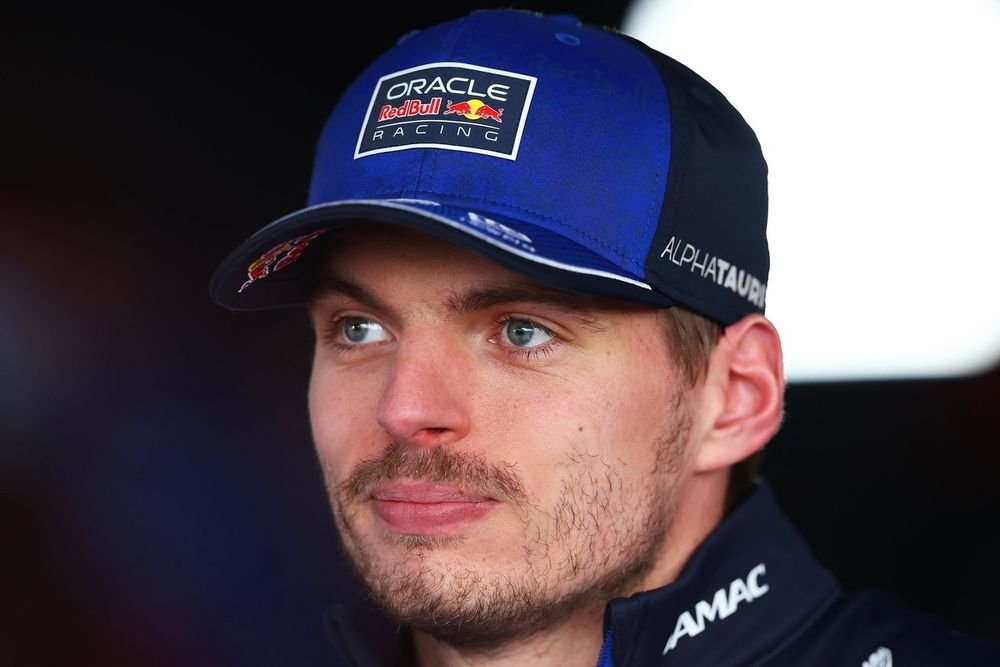
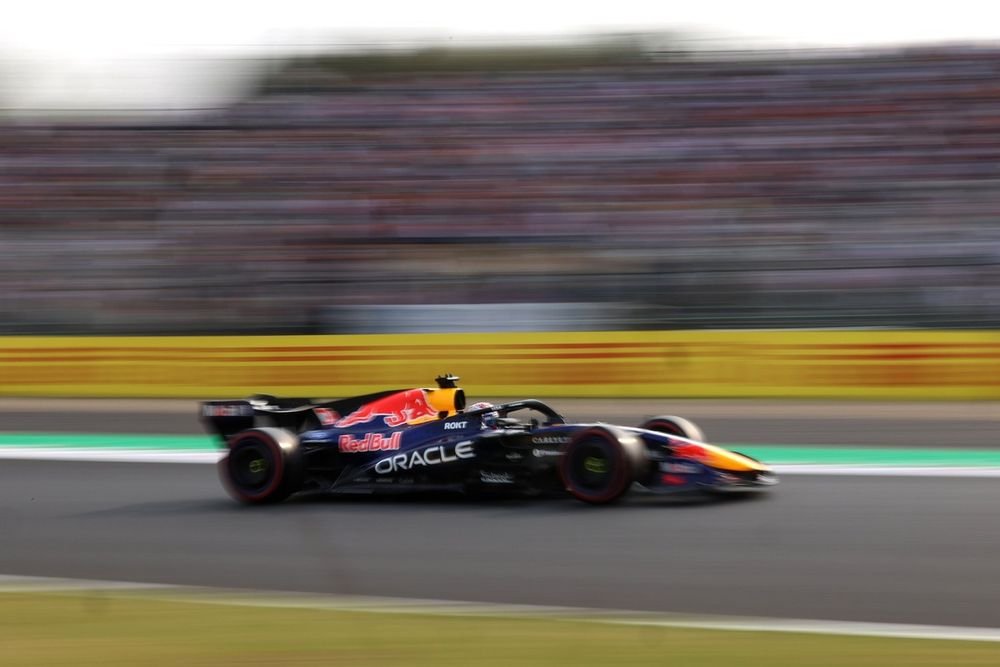
Max Verstappen, Red Bull Racing
Photo by: Simon Galloway / LAT Images via Getty Images
There are also calls in the paddock for the internal combustion engine to be made somewhat more prominent in 2027. It could theoretically be achieved in several ways, for example by looking at the fuel flow. In Verstappen’s view, it would still not be ideal, as a solution that satisfies him is only possible in the next cycle, but it might at least ease the pain in certain areas.
The overall picture means that, from Verstappen’s perspective, 2026 may no longer be salvageable, but that the longer-term outlook, especially for towards 2030, could actually be quite appealing.
The question remains whether he is willing to stay that long, and the four-time world champion can only answer that himself. It depends on his private life – as he has already said he does not want to continue into his forties – and on the interim solutions that F1 can find for the coming years. And those are exactly the topics that will be discussed once the Miami tweaks have been finalised.
We want to hear from you!
Let us know what you would like to see from us in the future.
Take our survey
– The Autosport.com Team
Read the full article here