



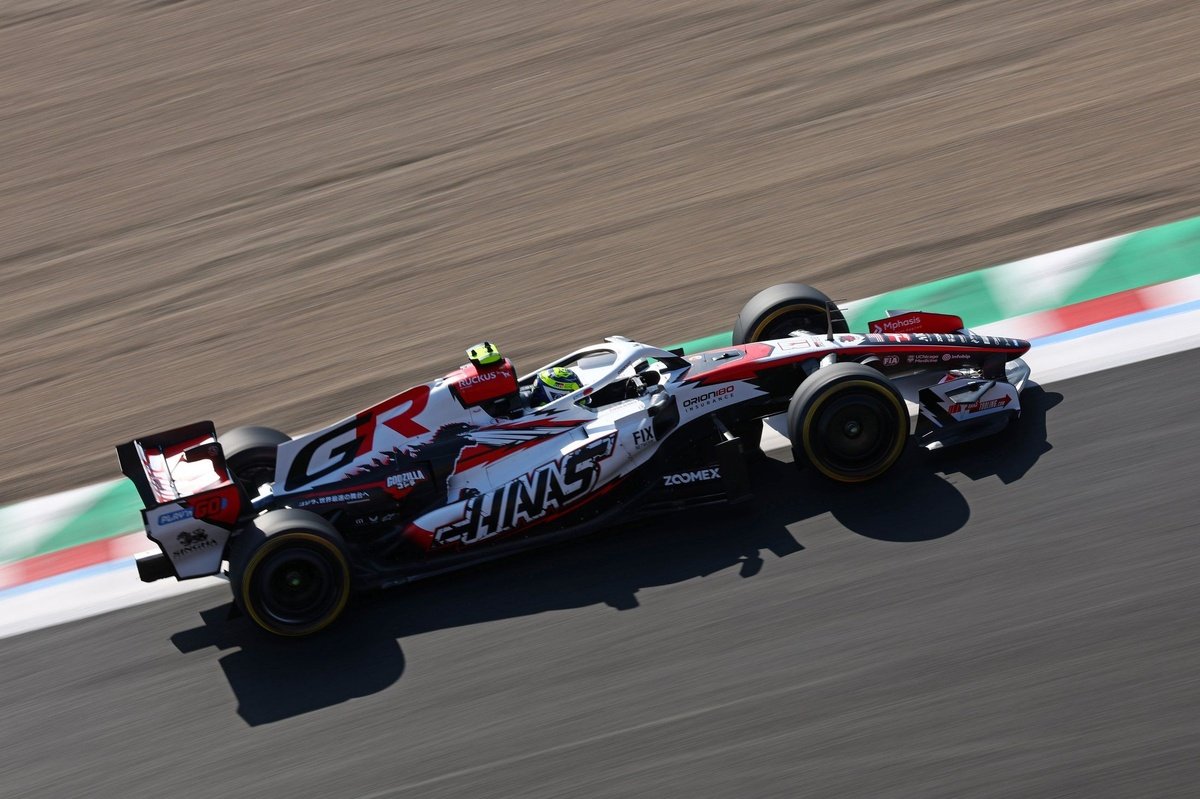
You would have been forgiven for not putting too much stock in Haas as an early midfield force of 2026. The team took an eighth-place finish in 2025, the result of a close season-long battle with Racing Bulls, Aston Martin and Sauber.
Just like storms on the open sea are a much bigger threat for smaller boats, a smaller race team is also significantly more vulnerable to a complete regulatory overhaul.
But after a sample size of three very different circuits, Haas has caught favourable winds and manoeuvred itself in fourth in the constructors’ table, heading its usual midfield rivals as well as Red Bull. That’s especially impressive given that Mercedes customers Williams and Alpine put all of their eggs in 2026’s basket. Whether Haas will stay there is another matter, but the early 2026 snapshot shows that F1’s smallest team has a strong foundation to build upon.
Haas was under no illusions of the challenge it was facing, so as team principal Ayao Komatsu explains, the team has had to make some radical calls on where to focus its relatively limited resources, especially given the additional headaches related to the complex new power units. “In terms of people on the car, the numbers don’t really change on our side,” Komatsu says. “But it just has to be a clear distribution of who looks after what, which is very different to last year.
Ayao Komatsu, Haas F1 Team
Photo by: Simon Galloway / LAT Images via Getty Images
“You’ve got to prioritise. You cannot just ask people to do 10 more things without sacrificing anything, right? So it’s a capacity bandwidth that’s limited. It’s much easier said than done, but you’ve got to focus on the basics. If you forget the basics, trying to get focused on certain things, go on tunnel vision, you will miss something big. And by the time you realise your mistake, qualifying is over. It’s too late. You lost half a second. Seriously, yeah. That’s the scary bit.”
Haas had to shake off the cobwebs in Australia with a slow start in Friday practice, but was able to respond in qualifying. What doesn’t help is that the squad still doesn’t have access to its own simulator until the middle of the year, which shifts more of the workload to the trackside team.
But what Haas did prove is being able to react to problems with some agility, as seen last year when it came to Australia with a fundamental floor issue in high-speed corners, which it was rapidly able to mitigate for the next few races. Komatsu is seeing a lot of that efficient problem-solving mentality through how the team identified and solved issues in pre-season testing, and how it recovered from a slow start in Melbourne Friday practice.
After a seventh-place finish for Bearman down under, the Ferrari prospect then took fifth in China, catapulting Haas up the order. Japan was more difficult, with Esteban Ocon taking one point while Bearman suffered a scary accident in the race. But the overall mood at the team is one of encouragement, having avoided a lot of the potential pitfalls of the new regulations.
“Yeah, it’s extremely encouraging,” Komatsu says. “This new regulation is a huge, huge challenge for everyone, as you can see across the pitlane. We are the smallest team and then we really pushed on the development towards the end of last year as well. Even to get the car ready for Barcelona’s shakedown week was a huge challenge.
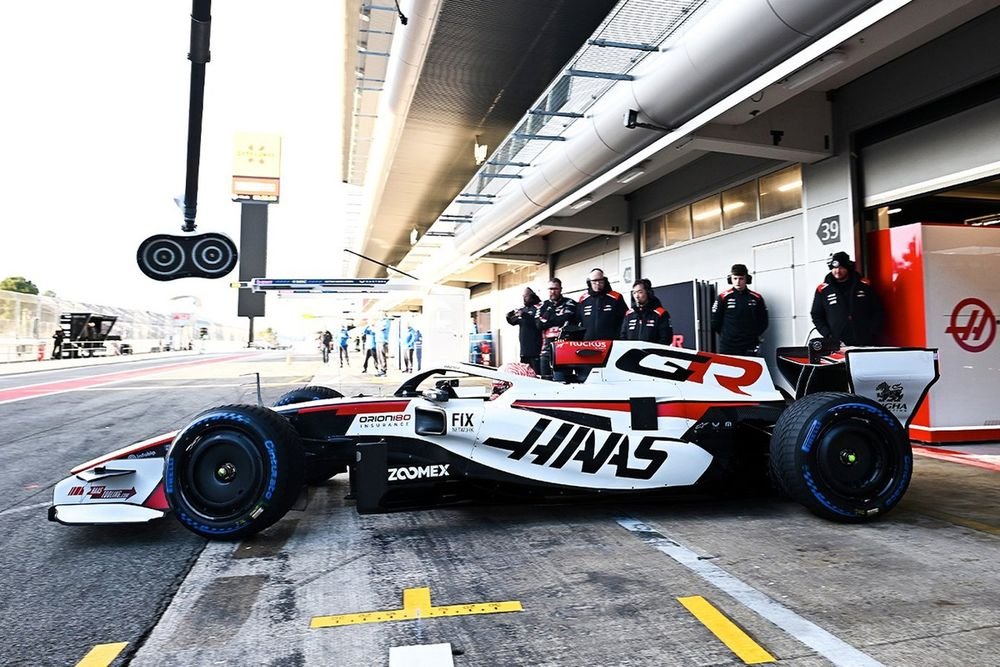
Esteban Ocon, Haas
Photo by: Haas F1 Team
“Every single year we’re working better as a team, we’re learning from the mistakes from the previous years. The way you produce this car, the VF-26, it is far from perfect, but it’s got coherent characteristics. Again, that doesn’t happen overnight.
“I don’t think we could have imagined a better start to the season, but now the real challenge is this development war. Again, being the smallest team, we’re up against it, but as long as we keep our focus, keep working together, and have those open dialogues and transparency, I think we can develop the car.”
The 2026 car’s strong foundation helps mitigate some of Haas’ baked-in limitations, including the restricted amount of driver simulation time. It also allows the trackside team to focus on the biggest performance differentiator so far – how teams optimise their power unit deployment.
“When we put the car out on the track there’s still fine-tuning to do, but it’s not like in FP1 the drivers are saying the car is undriveable or unstable,” Komatsu points out. “Imagine if it was like that, then it would have been very, very difficult to deal with everything for us – aero characteristics, set-up on deployment side, and tyres.
“That’s not the case. Because the car’s got a strong foundation, we can really focus on what we are still playing catch-up on, which is getting the best out of our power unit with our deployment strategy.
“We are actually fighting against four power unit manufacturers, right? We fought a Racing Bulls with a Red Bull-Ford [engine], an Audi, and then Pierre Gasly’s Alpine with the Mercedes. When we are racing against those guys, we see clearly different deployment capabilities and strategy, so we had to learn that very, very quickly.”
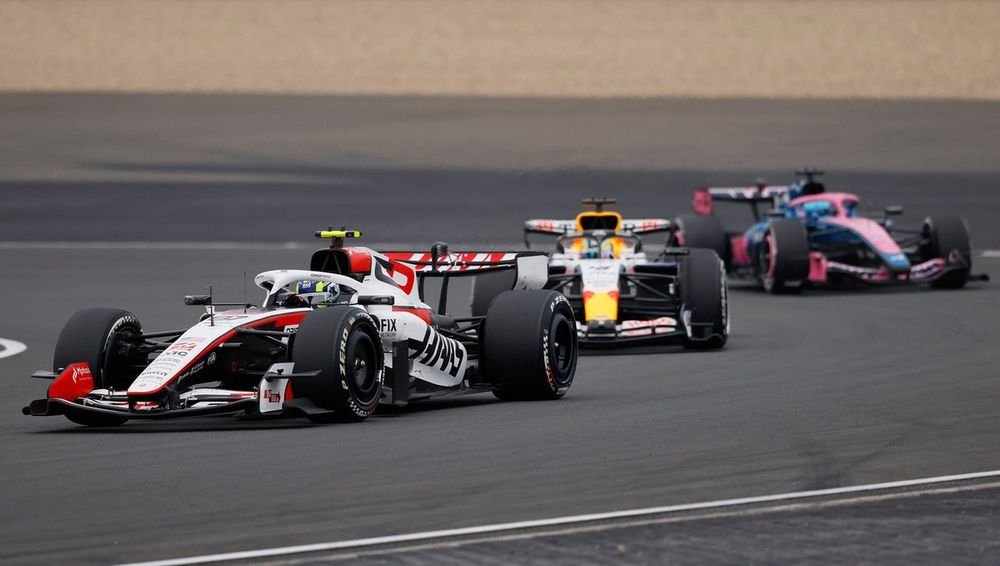
Oliver Bearman, Haas F1 Team, Arvid Lindblad, Racing Bulls
Photo by: Lintao Zhang / LAT Images via Getty Images
Ferrari’s power unit is clearly not on the level of Mercedes yet, but it appears to have been more of an open book with its customers compared to the Silver Arrows, perhaps because it feels less threatened by its customers than Mercedes does by defending world champion McLaren.
“I must say that Ferrari has been incredibly open and incredibly helpful with us in terms of the deployment strategy and giving us as much info as they can to help us,” Bearman says. “I think it’s a different situation that we have with Ferrari relative to McLaren and Mercedes.”
Has that difference in approach flattered Haas’s results? After a rocky start in Australia with its Mercedes power unit, Alpine has made huge strides and is now much closer to optimising what appears to be an inherently good car.
According to Komatsu, however, the differences between cars and power units will continue to fluctuate from circuit to circuit, so the pecking order in Miami, where cars will be less energy-starved, may well look very different to Suzuka’s reality. It is also the site of the first major upgrade push up and down the grid.
“I think it’s really circuit-dependent,” he says. “It’s all very close between us, Alpine, Audi and Racing Bulls. We’re very, very close. So I think whoever has a better preparation coming to every race weekend, whoever hits the ground running in FP1, can swing between the top of the midfield there to the bottom very, very easily. So, I don’t think anyone is ahead – including us.”
We want to hear from you!
Let us know what you would like to see from us in the future.
Take our survey
– The Autosport.com Team
Read the full article here