



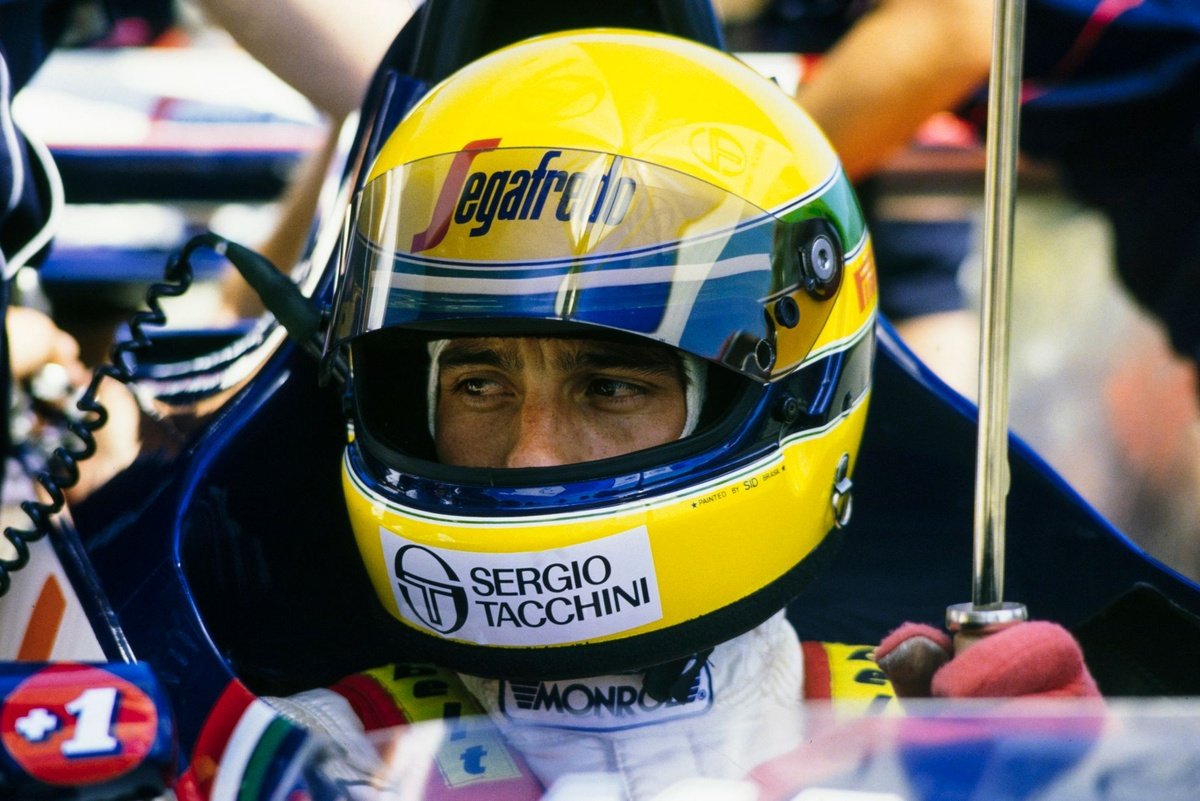
On March 25, 1984, at the Jacarepagua circuit in Rio de Janeiro, a Formula 1 career began that would go on to become one of the most iconic in the sport’s history. The 24-year-old Ayrton Senna lined up for his first grand prix, driving for the modest Toleman team. But what started as a special moment for the Brazilian crowd – a home driver debuting on home soil – unfortunately had an anticlimactic conclusion.
The newcomer had already made a strong impression, as Senna caught the eye of many in the paddock during his time in the junior categories – including strong performances in British Formula 3 – with multiple teams showing interest in the young star.
The second Brabham seat seemed the most obvious contender, but that ultimately went to (alternating) brothers Corrado and Teo Fabi, after sponsor Parmalat pushed for an Italian driver.
Ayrton Senna, Toleman TG183B Hart
Photo by: Motorsport Images
According to Bernie Ecclestone, Nelson Piquet – then Brazil’s leading star – also played a role, allegedly opposing the arrival of his compatriot. However, Senna’s camp offered a more nuanced view, suggesting Piquet simply did not actively support the move. Ecclestone then offered Senna an interim step with ATS in 1984, with the intention of placing him in a Brabham-BMW the following year.
Ultimately, Senna chose Toleman instead – convinced it would provide the platform to start his Formula 1 journey and prove himself at his own pace.
That confidence proved well-founded, though it didn’t seem so initially. On his debut, Senna qualified 17th, a modest but respectable result given the limitations of Toleman’s machinery. Due to a high rate of retirements on this track, there seemed to be an opportunity for a surprise result.
That hope was dashed early, however, as after just eight laps, the turbo on his Hart engine failed – making Senna the first retirement of the season.
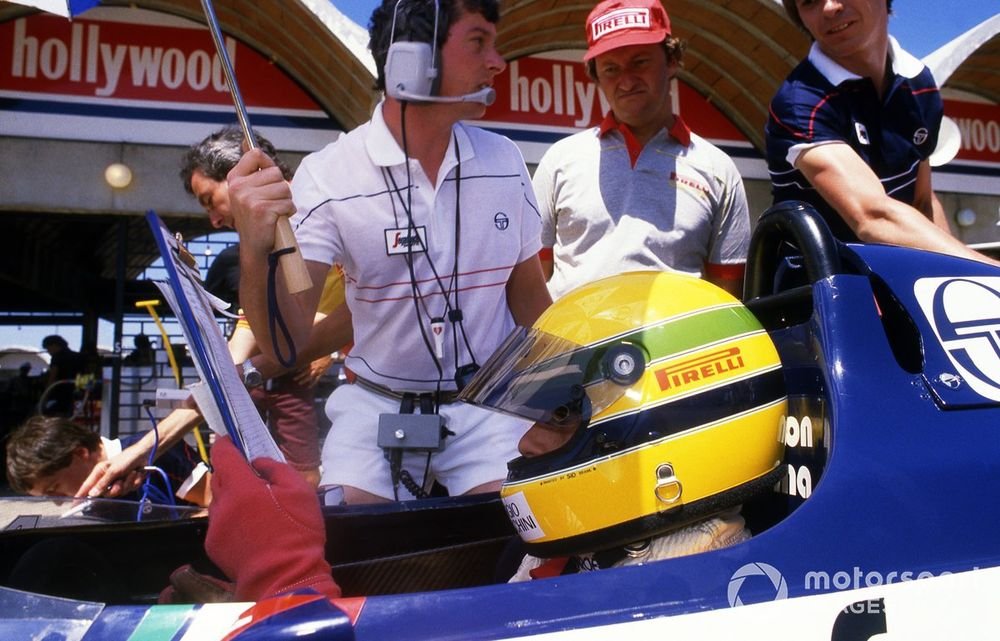
Ayrton Senna with engineer Pat Symonds in Brazil: a race that, unfortunately, ended too soon, just like his career.
Photo by: Sutton Images
The Brazilian Grand Prix was won by Alain Prost, ahead of Keke Rosberg and Elio de Angelis. It was a race in which strategy and reliability were key, mainly due to strict fuel limits and the heat in Rio. For Senna, none of that mattered after his early retirement, but his name had appeared on a Formula 1 starting grid for the first time.
Although his debut yielded no points, Senna immediately demonstrated his potential in the races that followed. In South Africa and Belgium, he scored his first world championship points with two sixth-place finishes, despite physical issues and the limitations of his car. These were the early signs of a driver capable of far more than his machinery allowed.
What was not yet visible on that day in 1984 became clear just months later. In Monaco, Senna drove to a sensational second place in torrential rain, a performance that instantly put him on the map. His debut in Rio was therefore not an endpoint, but rather the starting point of a career that would change Formula 1 forever.
We want to hear from you!
Let us know what you would like to see from us in the future.
Take our survey
– The Autosport.com Team
Read the full article here