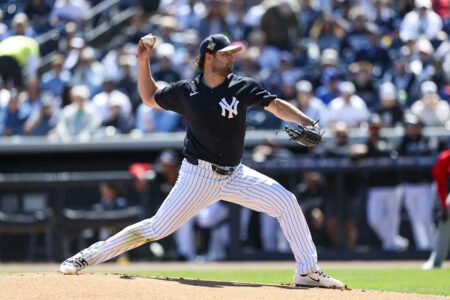




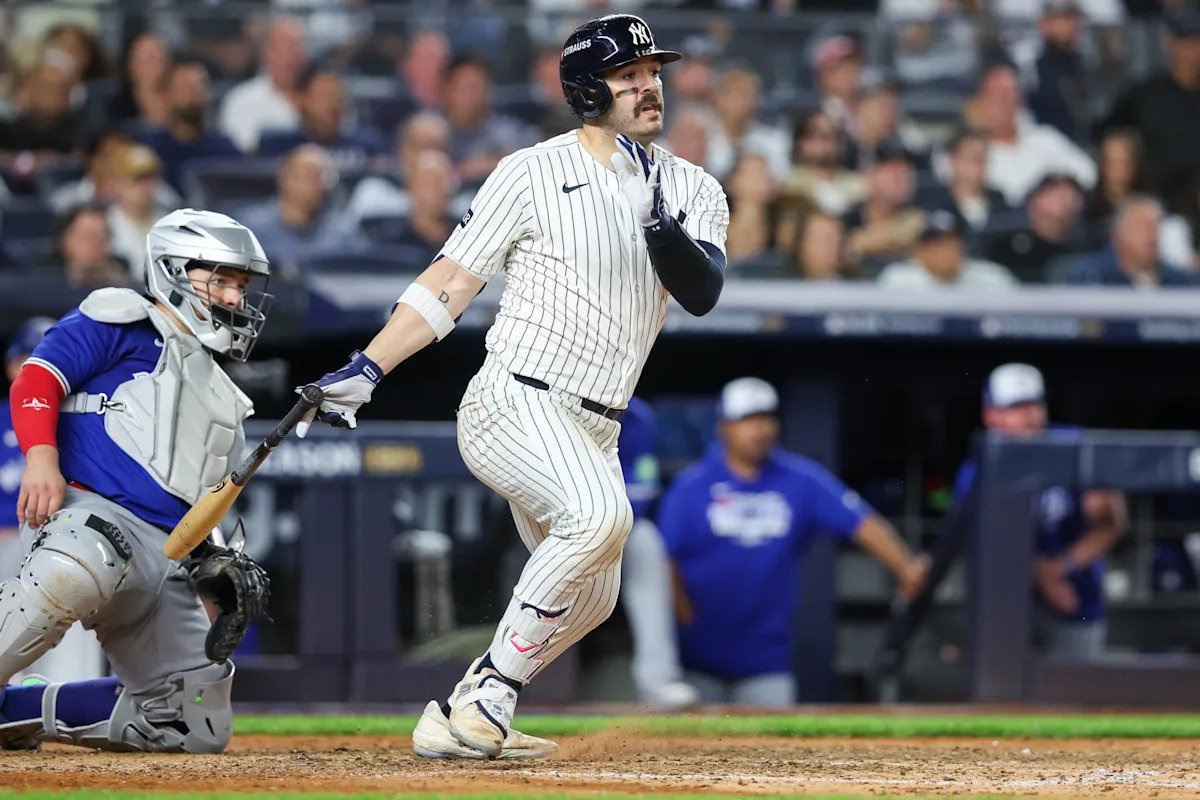
Many fans in the Yankeeverse aren’t too pleased with Austin Wells after his 2025 campaign. Count this site among them, as Jeremy gave him a C+ in our 2025 Roster Report Cards series.
It’s not hard to see why. After being touted as a bat-first catcher for much of his prospect days, Wells showed considerable offensive promise in his first full season in 2024. Although he endured a truly hellacious September/October slump, to the tune of a 23 wRC+ over 83 plate appearances, Wells still managed to post a 107 wRC+ overall. It wasn’t hard to dream on Wells being able to avoid another late-season swoon and being even better in 2025.
But, as we know all too well, that’s not what happened. In 2025, Wells’ wRC+ sunk to 94. His walk rate shrunk, his strikeouts ballooned, and if it wasn’t for Anthony Volpe and his batting average of .212, Wells’ .219 mark would have been the lowest among all Yankees regulars.
It’s only natural to wonder what went wrong for Wells last year. But digging into the data, what I found wasn’t a broken player, but a batter with a good understanding of who he is, and a great idea of what he wanted to do at the plate. Under the hood, Wells did the important things well in 2025. If he can keep doing those things in 2026, he should enjoy better results.
First, let’s establish Wells’ profile. Wells’ strength lies in his ability to hit for power. He consistently ran ISOs of around and above .200 in the minor leagues, and last year saw him stroke 21 homers in 448 plate appearances, good for a .217 ISO. Per Baseball Savant, his bat speed, average exit velocity, and barrel rate were all comfortably above average last year. The WBC just provided us with a prime example of Wells’ power:
View Link
On the other hand, making contact isn’t Wells’ forte. Yes, he managed to post a better-than-league-average K rate of 21 percent in 2024. However, Wells consistently ran K rates higher than that in the minors. Additionally, even though his K rate increased by five percentage points from 2024 to 2025, key contact ability indicators like his swinging strike rate and zone contact rate remained virtually unchanged. All this leads me to believe that Wells’ “true” K rate is somewhere closer to his 2025 mark than 2024. Let’s just say that Wells isn’t going to contend for the batting title anytime soon, or ever for that matter.
So, we’ve established that Wells doesn’t make a ton of contact, but he hits the ball reasonably hard. How, then, can he go back to being an above average hitter?
The key lies in maximizing the value of Wells’ contact by optimizing its distribution. Or, in plain English, pulling the ball in the air. And I’ve got great news: Wells already did that reasonably well in 2025. He just needs to lean into it more. It’s been said many times before, but it’s true so it bears repeating: pulling the ball in the air is good. I’m not saying this just because Wells is a left-handed hitter who calls Yankee Stadium home; this is true for all MLB hitters. Between 2022-2024, pulled air balls (defined as any contact that isn’t a ground ball) resulted in a .547 batting average and a 1.227 slugging percentage across the league. Mind you, this includes pop-ups, which drags down the overall results.
Now, I’m not suggesting that pulling balls in the air is a one-size-fits-all approach. Such an approach comes with risk; swings designed to do that will have holes in them which more level swings won’t. If you don’t have much in the way of raw power to begin with, you might be better off leveraging your contact skills to hunt for singles, like Luis Arraez or Steven Kwan. Conversely, if you have tons of raw power, maybe you shouldn’t fret too much about pulling the ball and just focus on making contact, letting your natural power supply the oomph. Looking at you, Aaron Judge and James Woods.
But Austin Wells fits in neither of those camps. He doesn’t possess the elite contact skills of Arraez or Kwan. He has above average raw power, but nowhere near Judge or Woods levels. In order to be a good hitter, Wells needs to make a conscious effort to make the most of what contact he does make, and that means pulling the ball in the air.
The good news is that Wells seems to be aware of this, and he’s trending in the right direction. Behold this graph:
But I think there’s potential for even more. Though his 2025 pulled airball rate of 22.8 percent was the highest of his career to date, that mark only placed him 85th among 348 players with at least 200 plate appearances last year. That mark can, and should, be higher. For context, the 2025 pulled airball king was Isaac Paredes, who had a 128 wRC+ last year despite a 14th-percentile average exit velocity, with a whopping 38.5 percent clip. Guess who barely came in second with a 38.4 percent mark — none other than Cal Raleigh, who had a pretty good season last year. I’d say that’s a good player to try to emulate.
Wells is already near-elite at avoiding ground balls. 67 percent of his contact was airborne last year, 29th-best in baseball. Given that he hits so many air balls, even a slight increase in his pulled airball rate would pay huge dividends.
Now, I realize this is easier said than done. How exactly should he go about trying to pull the ball in the air more? Should he adjust his timing to catch more balls out in front? Or does the secret lie in making better swing decisions? I don’t know, which is why I’m a blogger and not a hitting coach. What I do know is this: Wells needs to pull the ball in the air to have success at the plate. He already does so at an above-average rate, but by doing it even more, he could be even better. Let’s not forget that the 2025 version of Wells was already a three-win player thanks to his elite framing. If he realizes his offensive potential, we have a perennial All-Star on our hands.
(All data from FanGraphs and Baseball Savant.)
Read the full article here