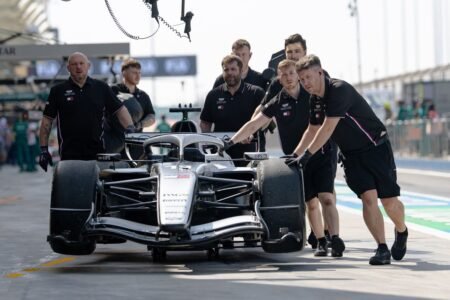



Formula 1’s five power unit manufacturers are set to vote on a proposed tweak to how engine compression ratios are measured, which could come into force over the summer break.
The 2026 power unit regulations prescribe an engine compression ratio of 16:1, down from 18:1 last year. That compression ratio has always been measured at ambient temperature when the engine isn’t running, so it doesn’t account for any material expansion under heat when cars are running out on track.
A group of rival manufacturers, understood to be led by Audi, have been worried about Mercedes coming up with a trick to increase the compression ratio closer to 18:1 when the car is actually running while still complying with the static test, which some OEMs are worried could bake in a significant horsepower advantage.
Mercedes’ rivals have been urging the FIA to make changes to how compression ratios are measured before the start of the campaign, which would have considerably compromised Mercedes and its customer teams McLaren, Williams and Alpine.
One compromise would be to introduce additional tests over the summer break or ahead of the 2027 season instead, with the former solution now the subject of a vote, proposing an additional mandatory test at 130 degrees to be introduced from 1 August 2026.
The mechanism to do so is a vote through the relevant Power Unit Advisory Committee, which gathered earlier this year to formulate potential solutions. Rather than commission another in-person meeting, sources have suggested the five power unit manufacturers have been given a 10-day period to vote on the resolution online.
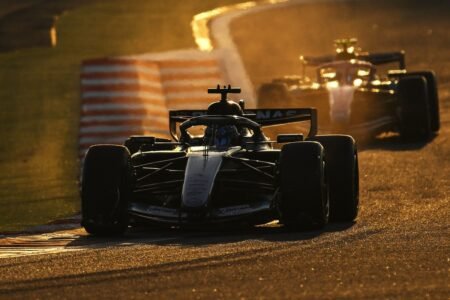
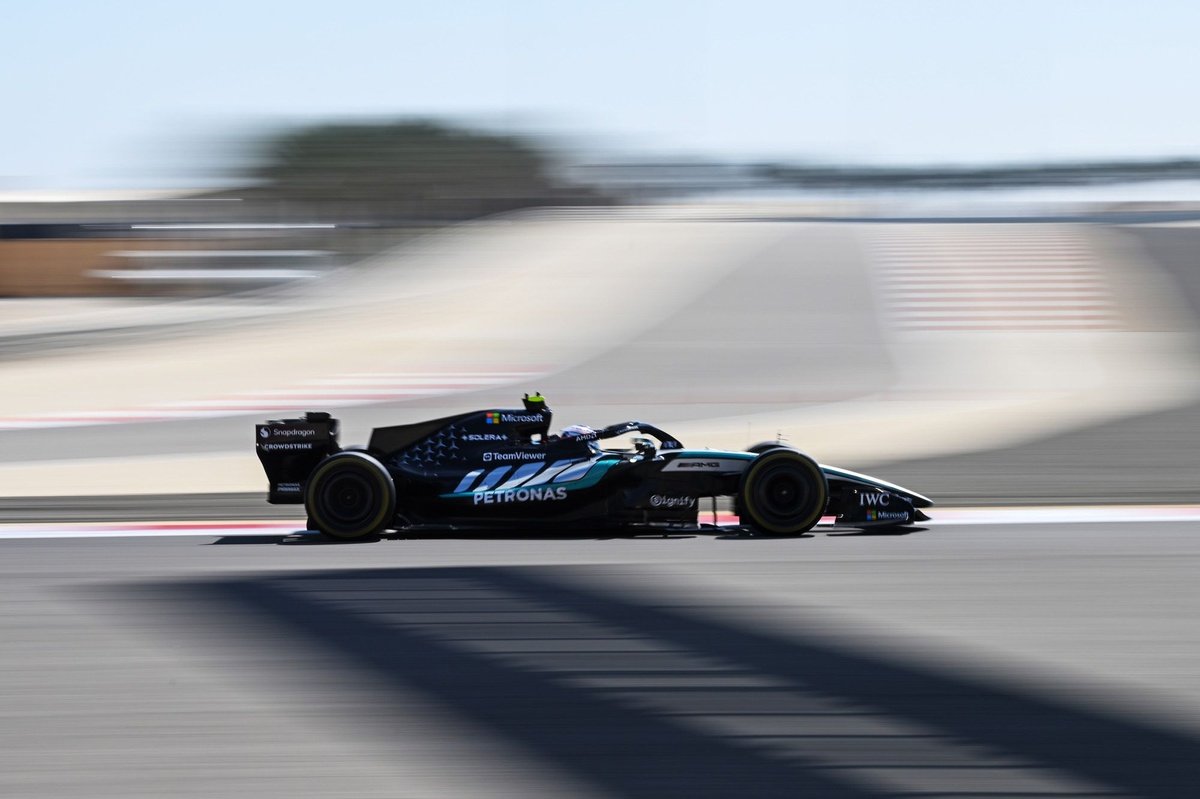
George Russell, Mercedes
Photo by: Sam Bloxham / LAT Images via Getty Images
As well as Mercedes, Ferrari, Audi, Red Bull Ford and Honda, the FIA and commercial rights holder FOM will also vote on the matter, requiring a supermajority of four manufacturers plus the two bodies for the change to be voted through.
“Over recent weeks and months, the FIA and the Power Unit Manufacturers have collaboratively developed a methodology to quantify how the compression ratio changes from ambient to operating conditions,” the FIA said in a statement. “Following validation of this approach, a proposal has been submitted whereby, from 1 August 2026, compliance with the compression ratio limit must be demonstrated not only at ambient conditions, but also at a representative operating temperature of 130C.
“The vote has been submitted to the Power Unit Manufacturers, and its outcome is expected within the next 10 days and will be communicated in due course. As with all Formula 1 regulatory changes, any amendment remains subject to final approval by the FIA World Motor Sport Council.”
The FIA had been keen to draw a line under the matter as soon as possible, so F1 2026’s first technical controversy wouldn’t spill out into the start of the season next month in Australia. Suggestions Mercedes-powered teams would be unable to run in Melbourne, if the FIA and FOM had agreed to clamp down immediately, were always a far-fetched idea. But there has also been annoyance with the amount of chatter that has been generated by what is effectively seen as a left-field but legal interpretation of the technical regulations.
Mercedes-powered teams have consistently played down the significance of the power unit trick to begin with. “I think there’s probably a misunderstanding of just how significant it is,” said James Vowles, team principal of Mercedes customer Williams. “There will be a resolution I’m sure. For me it’s just noise frankly, it will go away probably over the next 48 hours is my guess.
“I understand why everyone was focused on it, but that isn’t the big-ticket item I would say in this championship race.”
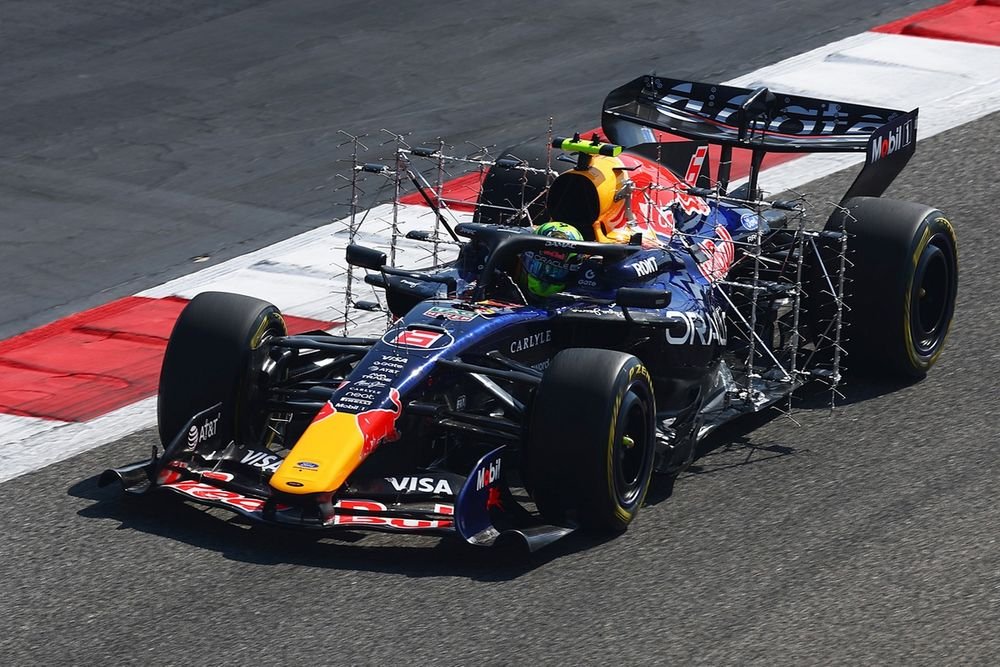
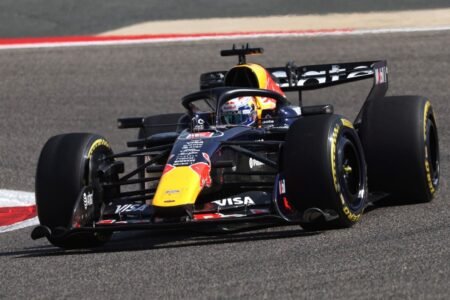
Initially believed to have sided with Mercedes, Red Bull says it is welcoming clarity on the regulations
Photo by: Joe Portlock / LAT Images via Getty Images
Red Bull team principal Laurent Mekies said his team, which now produces its first-ever in-house power units, welcomes a move to provide clarity over the matter. And amid suggestions the constructor had switched sides between Mercedes and the opposition, Mekies stressed Red Bull was happy either way.
“We don’t think it’s noise, we think we must have clarity,” Mekies said. “We are not stressed if it goes left or if it goes right, but we must have clarity on what we can and what we cannot do.
“It’s true that it’s early days, but it will come to a point very quickly where any competitive advantage – whatever number of tenths – is going to make a difference, so what we want is clarity, and I would agree with James on thinking that we will get that clarity hopefully very soon.”
We want to hear from you!
Let us know what you would like to see from us in the future.
Take our survey
– The Autosport.com Team
Read the full article here