


“We can forget everything that we’ve learned since go-karts” is how Esteban Ocon summed up the regulation overhaul for the 2026 Formula 1 campaign.
He isn’t alone in thinking that either, because one of the major talking points ahead of this forthcoming season is how drivers are having to significantly adapt their styles to these completely new cars; Oscar Piastri revealed there’s “pretty big differences” than before, while George Russell claimed “there’s a lot of learning to be had at the moment”.
One of the biggest learnings is with the power unit, which is now more reliant on electrical energy as it has a near 50-50 split with the internal combustion engine. That means battery harvesting is going to be a big theme at all 24 grands prix, as at times drivers will need to preserve their car’s energy in order to go quicker later on – downshifting along a straight being an example in which that could happen.
So slowing down to achieve a better lap time, in essence, results in going against what drivers will have been taught growing up and reigning world champion Lando Norris believes “the biggest challenge at the minute is battery management”.
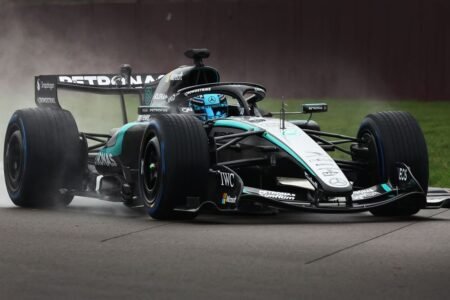
But there have previously been safety concerns which come with it, particularly closing speeds. The clear example is when a driver is harvesting energy down a straight and the car behind is flat out, the rate at which they meet will be significantly quicker than before – as Mercedes boss Toto Wolff saw during the first collective test of 2026 in Barcelona.
“George passed [Franco] Colapinto whilst Colapinto was doing his long runs,” he said. “I think it was like 60km/h or 50km/h straightline speed difference.”
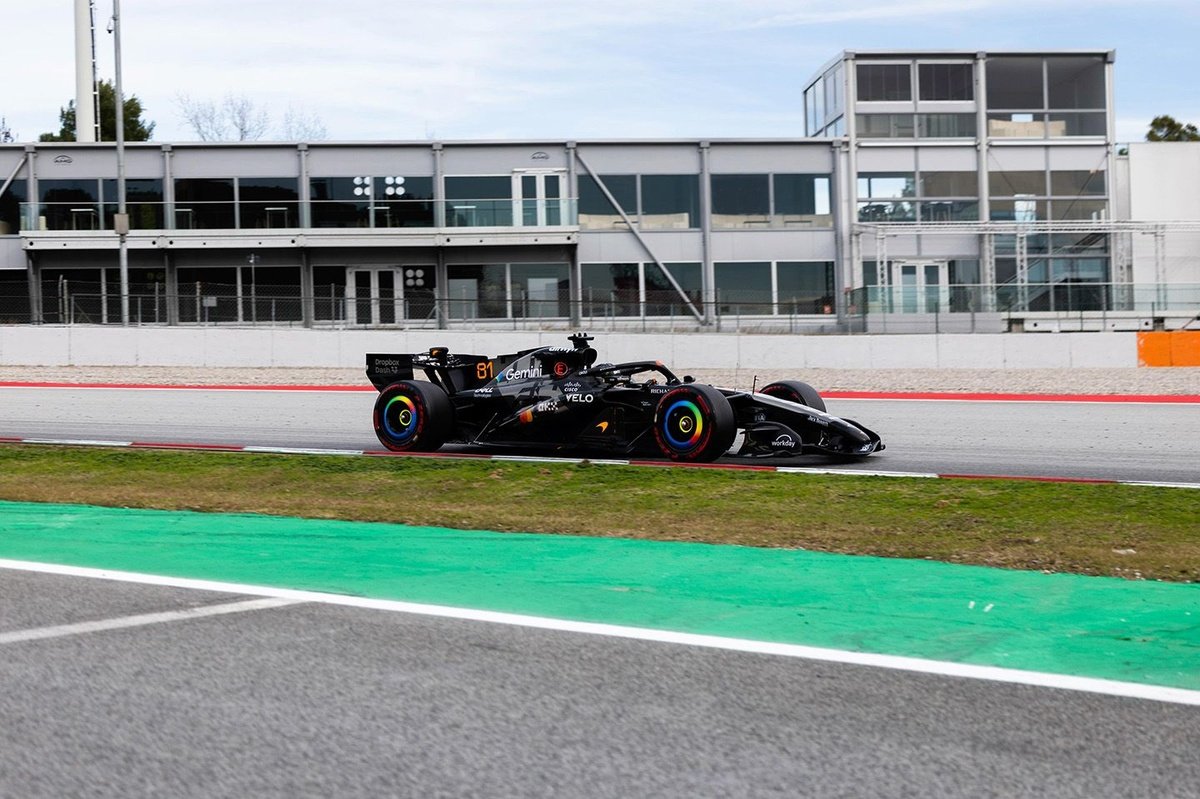
George Russell, Mercedes
Photo by: Mercedes AMG
Wolff therefore reckons it’s going to change the style of racing, especially with these new cars also being 32kg lighter – the regulated minimum weight has decreased from 800kg to 768kg – and having less downforce than the ground effect era.
“We are going to see much more overtaking,” the Austrian added. “We’re going to see it in areas that we wouldn’t expect. So, apart from the fact of the quickest cars with the best drivers, it’s also going to have this additional dimension of intelligent driving and tactics that are going to be easy to understand, in my opinion, for Formula 1.”
Despite his optimism, the quicker closing speeds and new opportunities to overtake potentially pose a risk at tracks like Jeddah where there are several blind corners. This is something Russell raised two years ago when he said “having a crash at 360-370km/h is going to be pretty crazy”.
“It’s going to have so little downforce in the straights,” the Mercedes driver added at the time. “It’s almost going to feel like you’re just flying through the air. You can imagine in a race that it starts raining and you’re on slick tyres, and you’re doing 250mph on a street circuit. That’s going to be a bit of a sketchy place to be, so these are questions that need to be answered.”
Those concerns for wet races remain, but the other issues have faded for the 2026 championship favourite: “There are going to be some examples of major closing speeds, I don’t think that’ll be a problem in dry conditions.
“It would be a problem in low-visibility races. However, if there’s low visibility, that obviously means it’s wet and if you’re driving in the wet, because you’re going around the corners so much slower and the braking distances are longer, you’re re-harvesting much more and you’re spending much less energy.
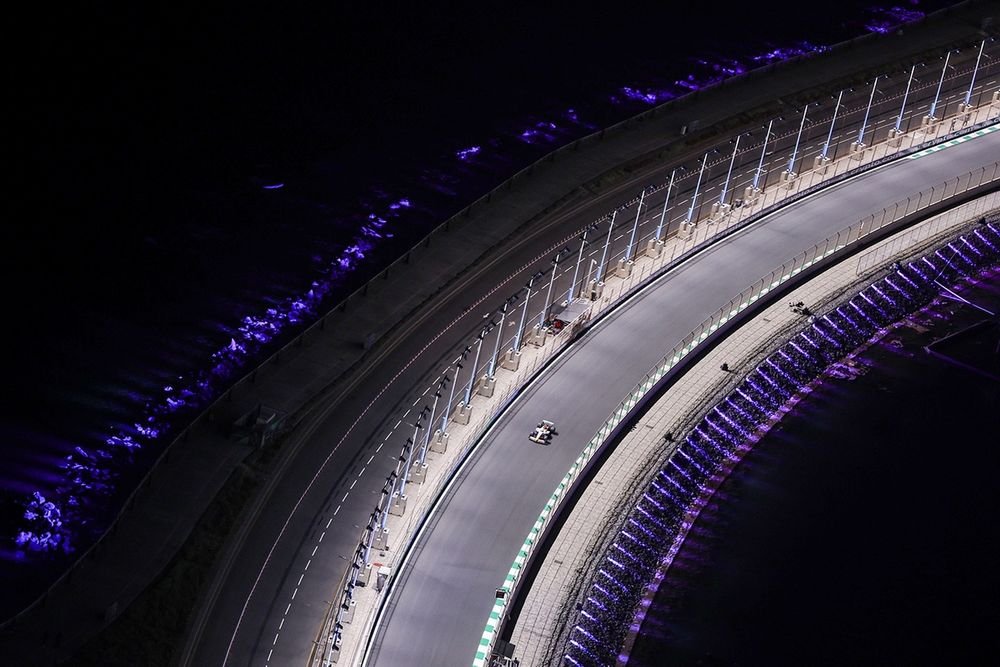
Isack Hadjar, Racing Bulls
Photo by: Red Bull Content Pool
“Over the course of a lap, you’ll have much more to spend and there’ll be less of these major de-rates. So in wet conditions, there should be plenty of energy to spend across the lap and you shouldn’t have these major closing speeds.”
In the scenario the 27-year-old is referring to, he is saying that all drivers should have sufficient electrical power due to the earlier braking and lower cornering speeds which come with wet contests. So, drivers do not need to harvest in certain parts, therefore mitigating the large speed differences. Those thoughts were echoed by McLaren’s Piastri when he reflected on his Barcelona shakedown.
“I got close to a couple of cars, and I made one overtake, which was a pretty big speed difference, but I think that person was just being nice and letting me pass,” he said. “So I think the speed differences will be, maybe a little bit bigger than what we had with DRS, but I don’t think there’s going to be any dangerous scenarios of cars doing wildly different speeds.”
Overcoming such a potential problem has come as a result of teams cooperating with governing body the FIA. “With such a big difference in power, when you don’t have the battery deploying at full power, it’s 350 kilowatts – it’s a lot of horsepower difference, so we kind of need some indication,” added Piastri. “So we’ve worked pretty closely with the FIA across all the teams in trying to make it as safe and as obvious as possible when things are happening that we might not expect.”
Additional reporting by Filip Cleeren and Stuart Codling
We want to hear from you!
Let us know what you would like to see from us in the future.
Take our survey
– The Autosport.com Team
Read the full article here