


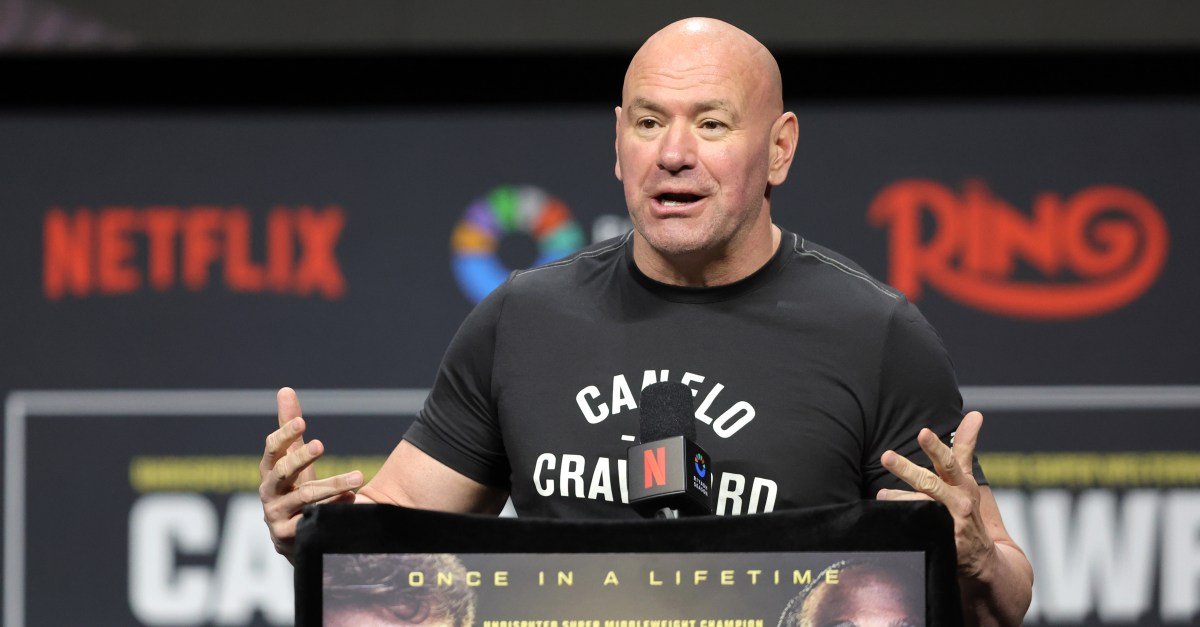
UFC CEO Dana White spent over two hours testifying in two ongoing UFC antitrust lawsuits while answering questions about his methods of communication and his involvement in the day-to-day operation at the promotion.
The hearing, which also saw UFC vice president of athlete compliance and regulatory, Tracy Long, answer questions, was built around missing communications that the plaintiffs in the case are seeking for discovery. White and Long spent a lot of time on the stand addressing phone usage, which apps they use to communicate UFC business, and the location of past devices.
During his testimony, White admitted that he’s not the most tech-savvy person in the world and only switched over to smartphones after the UFC’s lawyers told him it was necessary to retain data for the ongoing lawsuit. White said in the past he always used “flip phones,” and as soon as these cases were closed, he intended to go back to his flip phone.
As attorneys for the plaintiff and Judge Richard Boulware offered questions to White, the subject of his involvement in the day-to-day operations of the UFC became a topic of conversation. While he detailed under the former owners, led by his boyhood friend Lorenzo Fertitta, how he was involved in almost every facet of the business, White’s role has changed since Endeavor purchased the UFC for $4.4 billion in 2016.
As he addressed details about the UFC contracts, including an arbitration clause, White said ever since the company hired Hunter Campbell as chief business officer, he’s largely taken over fighter negotiations and matchmaking alongside Sean Shelby and Mick Maynard. White testified that while he does conduct business through text messages, he no longer gets involved with fighter contracts, and even on occasions when fighters reach out to him directly, he would refer back to the matchmakers, along with a message saying, “Why do they want to talk?”
“Less than zero,” White answered when asked about his involvement in fighter contracts.
The same largely goes for White’s part in matchmaking, although there he does typically get involved during the later stages when it’s time to seal the deal. White said Campbell, Shelby, and Maynard handled the matchmaking, and then once “they get it down to the one yard line,” he’ll join them for a discussion or debate on why certain fights do or don’t make sense.
White also added that “I don’t remember the last time I did” when it came to his involvement in communicating with other UFC executives regarding fighter pay. The same goes for fighter negotiations.
“You won’t find one manager on this planet who will tell you I’ve negotiated a deal in I don’t know how long,” White said.
There was also a lengthy conversation about a missing phone that White testified he believes was stolen by a former employee. White described the employee as a “runner” — somebody who would “stock the fridge” at UFC officers, among other minor tasks.
The employee, who White revealed was a relative of UFC owner Ari Emanuel, was allegedly caught by security stealing a ring he was gifted after sponsoring a championship Little League baseball team. As research continued, White alleged that the employee likely stole a lot more, including Christmas presents, and could have been involved in the phone theft.
“It’s the only thing that makes sense,” White added.
As for Long’s testimony, she answered many of the same type of questions regarding her involvement in communications with fighters as well as her method of communication. While White testified that he doesn’t have an email or own a computer, Long said she uses both when speaking to fighters or managers but largely defers to the UFC matchmakers when it comes to deals getting done.
On Thursday, Judge Boulware is expected to call Campbell to the stand along with Elliott Howard, a videographer with UFC who also helps White set up his phones, and Eric Yee, who works with UFC social media.
Read the full article here