

Ah, the fall of 2021. It was perhaps the most promising time in the short history of AEW, especially up to that point. In the weeks prior to the first-ever AEW Grand Slam in New York, the promotion had added CM Punk, Bryan Danielson, and Adam Cole to its roster. It’s safe to say a lot has changed in the years since, as none of those three men are currently active performers in the company.
In honor of the latest edition of Grand Slam, set for February 11, 2026, we’ve decided to look back on the inaugural version of the special. Taking place across “AEW Dynamite” and “AEW Rampage” (remember “Rampage?”), the first Grand Slam was taped at the Arthur Ashe Stadium in Queens, New York, home of tennis’ US Open. AEW was riding high at the time, with a reported live attendance of more than 20,000 fans for this show.
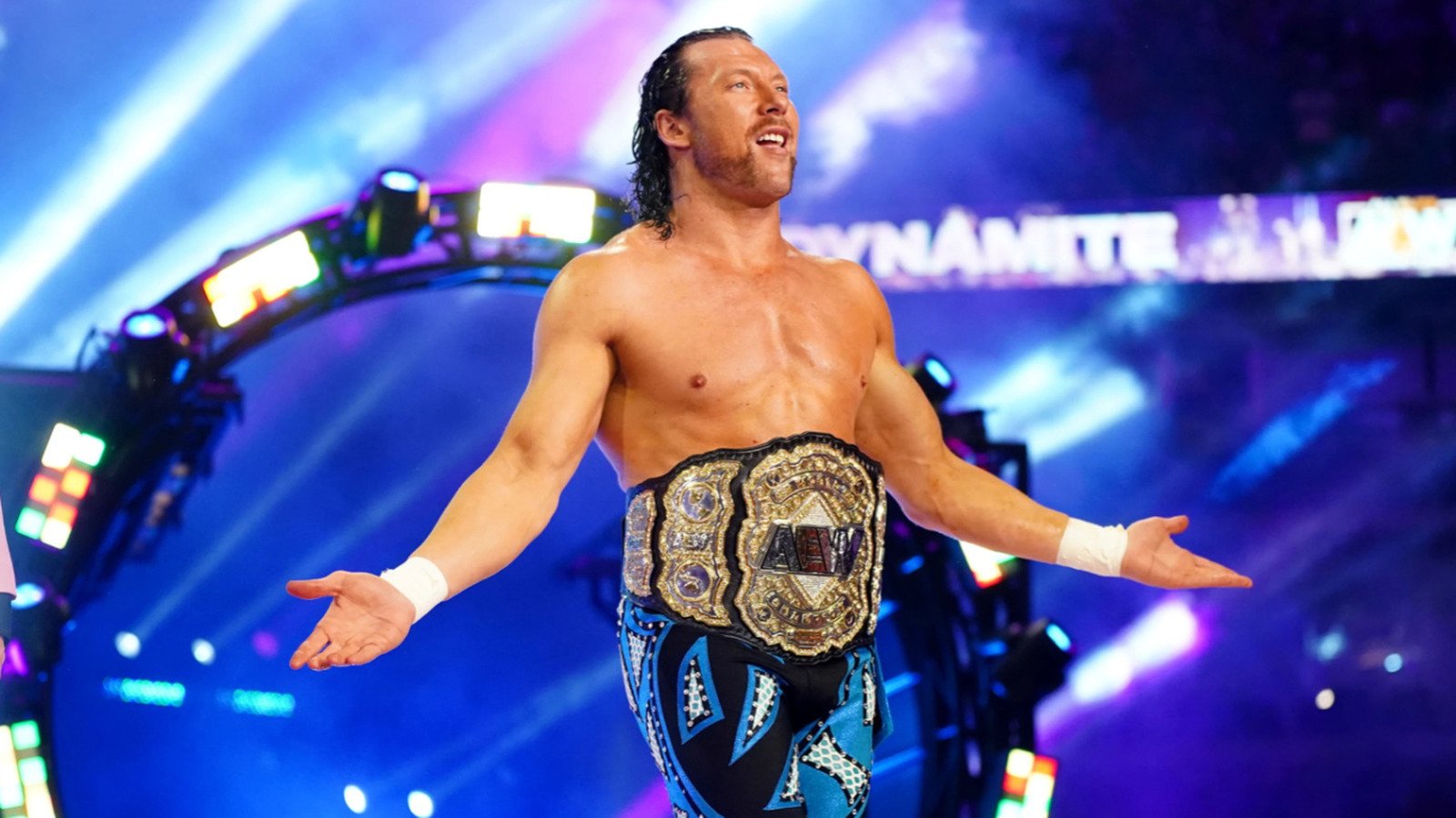
At the time, Kenny Omega was at the tail end of his AEW World Championship run, having held the title for more than nine months. Meanwhile, Britt Baker held the AEW Women’s World Championship, future WWE stars Penta and Rey Fenix were the AEW Tag Team Champions, and the TNT Championship was in the hands of Miro, who didn’t wrestle on this show. As for AEW’s other titles? They didn’t yet exist!
Now that the stage is set, let’s dive into the events of the first Grand Slam to discover what holds up and what falls flat.
Loved: The start of something extraordinary with Bryan Danielson
Personally, I’d put Bryan Danielson’s run as a full-time AEW wrestler up there with any performer in modern history, and it all kicked off with this “dream match” against Kenny Omega. The two stars take each other to a 30-minute draw to open up “Dynamite,” and it remains one of the best matches in the show’s history.
The thing that drives this match is the return of Bryan Danielson rather than Daniel Bryan. After spending a decade-plus in WWE, the match reintroduced Danielson’s previous persona, who relishes in violence in ways Daniel Bryan never could. Understanding the significance of this, the crowd is immediately fired up as the match begins, and they stay invested throughout the bout.
With Don Callis as his manager, Omega was a fully-established heel champion, and he wrestles like it here. While Danielson does his best to mix his technical acumen with heavy strikes, Omega is constantly trying to thwart Danielson’s offense and slow down the pace of the match, elongating the affair enough for the time-limit draw.
The pace quickens as the 30-minute mark approaches, with Danielson and Omega trading explosive moves until both end up on their knees, exhausted. Then, through sheer force of adrenaline, they rise to their feet, trading strikes – when suddenly the bell rings. The ref separates the two until the Young Bucks and Adam Cole come out to help Omega, and Christian Cage and Jurassic Express appear to back up Danielson.
If there’s any flaw to be found here, it’s that the two did not lock up again after this (yet). However, it still succeeds as both the start of Danielson’s time in AEW and the beginning of the end for Omega’s world title run.
Hated: A long way to go with the booking of AEW’s women’s division
Across four hours of programming between “Dynamite” and the extended “Rampage,” there were about 20 minutes of women’s wrestling. In comparison, the men got roughly 126 minutes of in-ring time total. That’s just inexcusable.
Britt Baker and Ruby Soho were slotted into the main event of “Dynamite,” but that fact is tempered by the perception of the opener as the real highlight of the show. Baker and Soho had a perfectly good match, but their storyline hadn’t been given as much attention as Omega/Danielson, or the match that came directly before it: Cody Rhodes vs. Malakai Black. They did the best with what they were given, but they deserved a feud worthy of the main event on such a big platform.
The “Rampage” match between Anna Jay and Penelope Ford is another story. The shortest of the 11 televised matches during Grand Slam, the bout is short and sloppy, and it’s probably a good thing this one didn’t go any longer.
The biggest problem here is the booking of the women’s division during this time. They were being treated as an afterthought compared to the men, and in turn, the audience often treated their matches that way. It would be easy to blame the state of the division on a lack of experienced talent, but I don’t buy it. There were plenty of women employed in AEW during this time that could’ve put on an excellent match with the right time and build-up, but it rarely turned out that way.
While there’s still plenty of room to improve, things have come a long way for the AEW women’s division, and this show stands as a reminder of the progress that’s been made.
Loved: Watching Old Man Sting wrestle is always a pleasure
Growing up as a young wrestling fan, my awareness of WCW pretty much extended to the fact that I owned a Kevin Nash NWO action figure. Beyond that, I was a WWF kid (and then WWE), and WCW was long out of business by the time my fandom peaked. Because of that, my first real exposure to Sting as a wrestler came upon his AEW debut.
Even taking Sting’s age out of the equation, his AEW performances were top-notch. Unwilling to let Darby Allin do all the heavy lifting in their tag matches, Sting was constantly upping the ante, including on this night. As fans of old school wrestling, FTR knew exactly how to work a Sting match, leading to another great showing from the veteran.
With FTR sporting NWO-inspired gear to evoke Sting’s perennial WCW rivals, the duo start selling for their hero early in the match, firing up the crowd, who still weren’t used to seeing Sting wrestle live and in-person. FTR got their fair share of heat in the bout, too, with Tully Blanchard serving as their manager. There’s even a spot played for laughs, with Sting accidentally headbutting Dax Harwood in the groin. Allin’s there too, of course, doing what he does best: using his body as a weapon.
In the end, after turning FTR’s attempt to cheat against them, Sting took out Blanchard and submitted Harwood with the Scorpion Death Lock after Allin subdued Wheeler with a Coffin Drop. While not the best match in the duo’s run, it’s a highlight of this two-part Grand Slam featuring another exciting performance from Sting.
Hated: Man, a lot of these guys ended up leaving, huh?
Including matches and commentary, these two shows had nine wrestlers who would go on to leave AEW for WWE, plus a few more that are rumored to possibly head there eventually with Private Party and Chris Jericho. Being the number-two promotion in the United States, it’s inevitable that you’re going to have wrestlers join the bigger company, and it’s actually a good thing for the business in the long-run.
Still, there is a part of me that thinks it’s a shame that Cody Rhodes left, and that the House of Black never fully took off in the way it could have. CM Punk’s departure eventually became an inevitability, but just weeks after his big return, his future in AEW seemed to show nothing but promise. His opponent on this night? None other than Powerhouse Hobbs, who just debuted in WWE as Royce Keys. Then there are the Lucha Brothers, Rey Fenix and Penta, who wrestled in a decent eight-man tag on “Rampage” and can now both be found in WWE.
Beyond Punk, in my eyes, Ricky Starks is the biggest loss that AEW missed the boat on. While he has yet to get his big break on WWE’s main roster as Ricky Saints, I have little doubt that he will, and I think he has a massive future ahead of him.
Good for Saints, but not so good for AEW, where he could’ve been one of their top stars.
Loved: Jon Moxley & Eddie Kingston brawl with Suzuki-Gun
The main event of “Rampage” is far from the classic that is Danielson vs. Omega, but there’s something to be said for a good old-fashioned brawl. I’m especially onboard if said brawl includes some combination of Jon Moxley and Eddie Kingston, and this one most certainly does. Whether they’re partners or opponents, Moxley and Kingston have a chemistry that’s hard to match.
The wrestlers get straight into the action, with Suzuki challenging Moxley to a steel chair battle right when the match begins. Suzuki comes out on top of that particular interaction, and they transition straight into a contest of chops between Suzuki and Kingston in the center of the ring.
There’s some kendo stick action, Kingston breaks out a table, and Suzuki sends him through it, all in quick succession. The match continues on at this pace for another 10 minutes, ending before it fully kicks into high gear.
Not that the match is tame (consider Archer at one point hangs Moxley on the ropes with a belt), but it doesn’t feature the amount of violence expected from a Lights Out match, especially compared to some of the other matches bearing that same stipulation. It’s a fun bout nonetheless, and as a bonus, it features Ricky Starks on commentary before things became more complicated for the wrestler in AEW.
Hated: Nothing else on the card is on the same level as the opening bout
I understand the thought process behind putting Omega vs. Danielson on first. There are time constraints to think about, and opening with that match will ensure you get as many people as possible to tune in right away. However, looking back, nothing else on the show reaches the level of the opening bout, and how could it?
It’s one thing when you’re watching a show live and you have no real idea of what’s going to, or what could, happen next. Watching the show back now, I felt very aware that nothing was going to top the first match, which makes the remaining three-and-a-half hours slightly more of a chore to get through.
There are definitely good matches throughout Grand Slam, but there’s a reason bookers usually slot their most anticipated match into the main event. Looking back years later, rather than a finely-crafted card that builds to a stellar main event, the show gets the best part out of the way first and leaves you thinking, “Oh, yeah, and then this happened, too.”
Read the full article here