



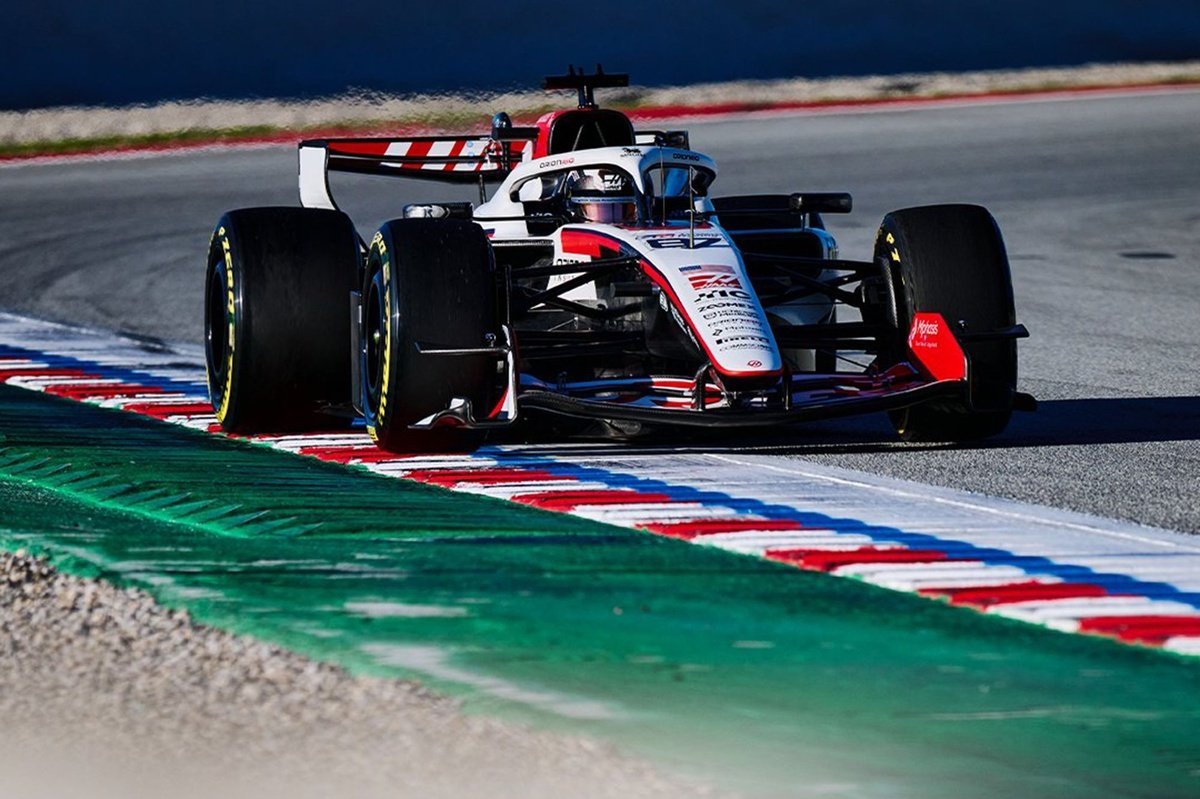
Although every Formula 1 team has some degree of confidence that it has chosen the best platform for 2026’s new rules, it pays to build some leeway into the design – giving the engineers space to adapt to emerging trends.
The best approach should become clear over the opening rounds. Back in 2022, for example, Red Bull’s aerodynamic solutions were observed, tested, and implemented onto a range of rival cars on the grid – and, later, refined by others as they pursued their own.
Haas team principal Ayao Komatsu has faith in his squad’s approach to the 2026 regulations, explaining that the American squad explored various concepts in the early design stages before settling on the current build for the VF-26.
That said, he stated the importance of keeping options available. Thus, the team has kept “a door open” to explore different aero concepts over the course of the year should one team garner a clear advantage early on in the year.
Asked by Autosport how the team had approached the new regulations, Komatsu explained that the general process in getting the car to accept the Ferrari powertrain had remained consistent with previous years, but that the aerodynamic development required different stages to hone in on a final design.
“Regardless of what’s going inside the [bounding] box, as long as we get the dimension from PU manufacturers – which we do – that’s no different to a usual process,” Komatsu said.
Oliver Bearman, Haas F1 Team, Ayao Komatsu, Haas F1 Team
Photo by: Haas F1 Team
“In terms of the aerodynamic side, that’s the biggest question for us on the chassis side. We obviously look at a few different concepts, we think certain concepts are better than the other, but you can’t be 100% sure.
“Also, you cannot be 100% sure you haven’t missed something totally obvious, and then for me the key is managing the unknowns.
“It’s like a tyre choice during race weekend: sometimes it’s better to accept you don’t know what’s going to happen for these race tyres to keep the options open.
“For us aerodynamically this year, we believe that our packaging is the way to go, but that’s not to say we have the best one. Looking at other people as well, they have a very, very different interpretation as well.
“Our philosophy was having a layout packaging such that it leaves a door open for changing to different concepts of the aero solution.”
Manufacturers and teams with Formula E experience will have an advantage
Asked if he felt that the new regulations had contributed to a “level playing field”, Komatsu stated that the regulations generally favoured the manufacturer teams – given that they’ve seen the process of 2026’s energy management phase develop.
While keen to add his gratitude that Ferrari was willing to collaborate with Haas, and that the Italian brand had been feeding back with its powertrain development, he felt that there were other areas that the manufacturer teams could benefit from more than the independent teams.
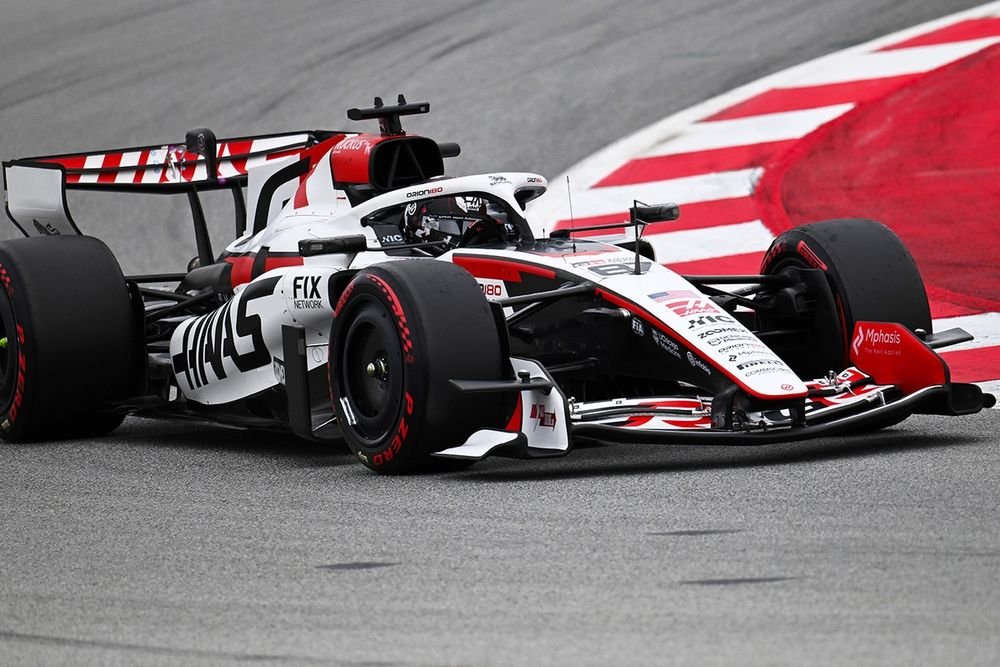
Oliver Bearman, Haas F1 Team
Photo by: Haas F1 Team
Mercedes, Komatsu reckons, is one such team. The German marque had been able to run reliably throughout the Barcelona shakedown and logged more than 500 laps through its allotted three days, helped by its own dyno processes and in developing its powertrain in tandem with its own 2026 package.
“Definitely not a level playing field. You know, people like Mercedes, people like Ferrari. I mean, Mercedes, you remember how prepared they were when they came into this initial hybrid era in 2014,” he said.
“They’re a great company. So by looking at Barcelona shakedown week, day one, how much they ran, how fast they were running, I think they’ve done their homework very well. It’s not a surprise to any of us.
“And then the same with Ferrari: Ferrari’s been developing quite well. So manufacturer teams, I’m sure that those guys have the knowledge inside out, compared to the customer teams like us.
“So that’s a challenge. But having said that Ferrari’s been, over the 10 years, very, very collaborative. We’re working together, especially in terms of energy management. All the learnings that Ferrari PU engineers do with us in the energy area goes back to Ferrari. So within a relevant department.
“We are developing the procedures together. But I wouldn’t say it’s a level playing field.”
Interestingly, Komatsu suggested that those with Formula E experience could also gather a small advantage. Formula E uses a 350kW motor as its primary source of propulsion, equivalent in output to the new F1 MGU-K, and the process of harvesting and deploying energy has become a key skill in the championship.
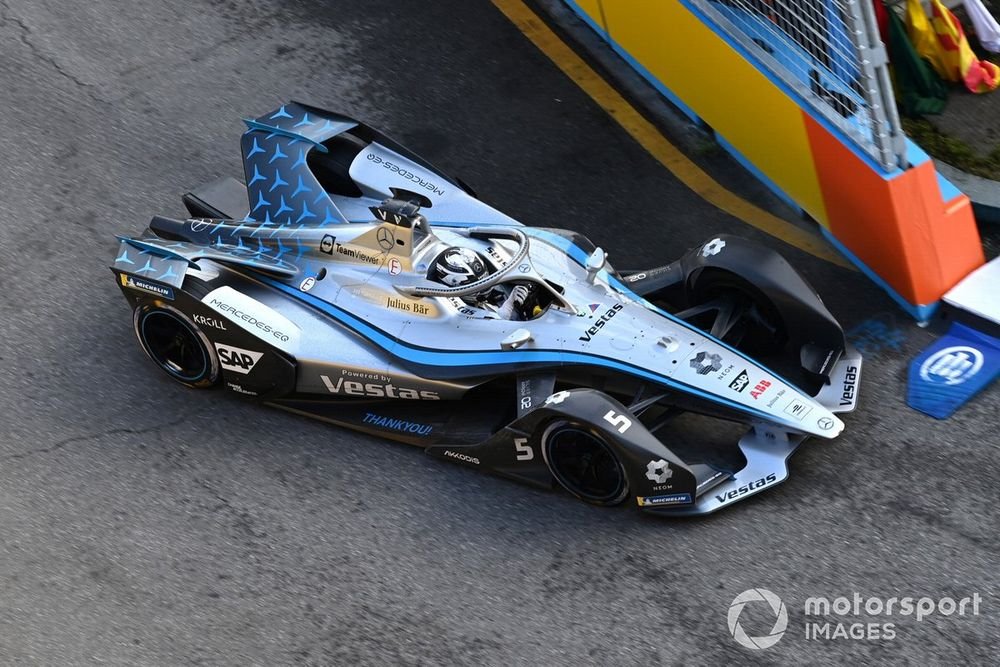
Stoffel Vandoorne, Mercedes-Benz EQ, EQ Silver Arrow 02
Photo by: Sam Bagnall / Motorsport Images
Mercedes won titles in Formula E before bowing out of the championship at the end of the 2021-22 season, while Audi also has experience – although manufacturers have not been involved in the series’ most recent generation.
Audi’s sister brand Porsche, however, is currently involved in the all-electric championship. Nissan, Jaguar, Stellantis (though its DS and Citroen brands), Mahindra, and Lola-Yamaha are the other current manufacturers; Nissan had previously supplied McLaren’s Formula E team with powertrains, before it departed to focus on its incoming World Endurance Championship project.
“Teams with bigger resources, bigger experience, teams used to run Formula E teams, for instance, they will have an advantage.
“But that’s how they do their homework, so I’m not complaining at all. It’s going to be a huge challenge for us.”
We want to hear from you!
Let us know what you would like to see from us in the future.
Take our survey
– The Autosport.com Team
Read the full article here