


The FIA has said it is keen to settle Formula 1’s first major technical controversy before the 2026 era gets under way in Australia.
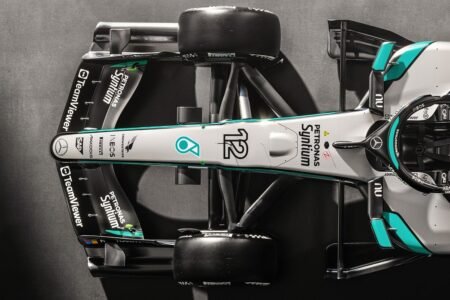
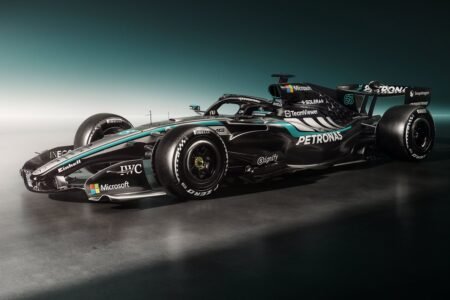
Several manufacturers believe Mercedes and Red Bull Powertrains have come up with a trick to cleverly exploit the F1 2026’s power unit regulations, which prescribe a compression ratio of 16:1 down from 18:1 last year.
That compression ratio is measured when the engine isn’t running and is therefore cold, while it is believed Mercedes and Red Bull have found a way to make their engines run at higher compression ratios on the track, using materials that expand under heat.
The matter will be discussed between the teams and the FIA on Thursday, with several parties urging the FIA to take action if it is deemed the rules aren’t being interpreted fairly by all manufacturers.
“We have to, as we do, trust the FIA with making the right decisions here,” said Audi technical director James Key at the team’s 2026 car launch.
“It’s new regs. You’ve got to have a level playing field. If someone came up with a clever diffuser and you said it’s not the right thing to do, no one else can have it, but you can have it for the rest of the year. It doesn’t make sense. We’d never accept that.”
Honda and Audi are among the parties concerned by the F1 2026 compression ratio trick
Photo by: Honda
What complicates matters is that it is far too late for manufacturers to make any hardware changes for 2026, so if the regulations aren’t actually being breached it would seem that any performance advantage from the compression ratio trick – believed to be two- to three-tenths of a second per lap depending on the circuit – is baked in until 2027.
Speaking exclusively to Autosport at the Autosport Business Exchange in London, the FIA single-seater director Nikolas Tombazis said the FIA was keen to resolve the matter before the start of the new campaign.
“I think it’s obvious we need to be careful about such matters,” Tombazis said. “Compared to the past, we are far more conscious that we want teams to have the same interpretation of the regulations. We don’t want who wins to be somebody who just had a smartarse interpretation, if I may, or who was, I wouldn’t say necessarily clever, but just ignored certain things or drove a truck through other things.
“So, we are very keen to avoid such controversies and to make sure that when people go racing, they understand the rules in exactly the same way.
“Inevitably, when there’s such a new set of regulations certain things do come up, and we take the view that it is our responsibility to resolve these matters before the first race.”
Tombazis said it was inevitable that surprises would crop up at the start of a radically new regulations cycle, just like the porpoising phenomenon that flew under the radar until the eve of the 2022 season.
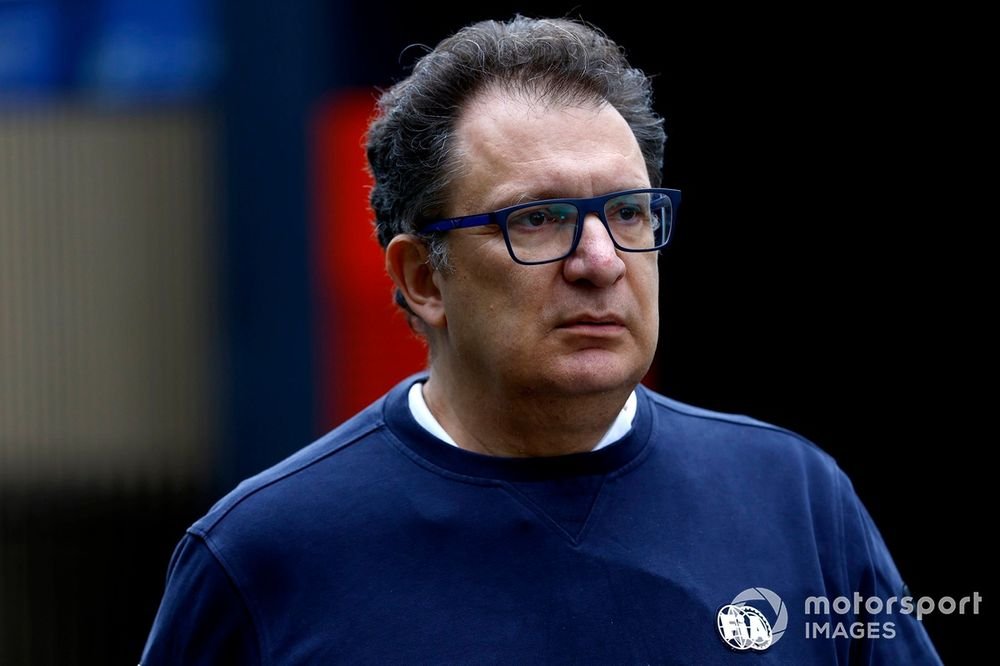
Nikolas Tombazis, FIA Single Seater Director
Photo by: Andy Hone / Motorsport Images
“There’s always going to be some issues that need resolving that we have not predicted properly,” he said. “Going back to the specific example, each team has around 80 aerodynamicists, so maybe all 10 teams together that’s maybe 800 aerodynamicists, plus three in the FIA, so that’s the ratio of workforce. But none of the 800 picked it up before it happened, so it was a surprise for the whole industry.
“But I would say, by and large, we managed to get it under some sort of control before the first race in 2022 – not eliminated – and I guess it became a non-topic by mid-season. So, I think the whole industry and the FIA have a good record in trying to react to issues. If such issues take place, I believe we know how to deal with them.
“We have quite a lot of good people, simulation tools, we collaborate a lot with the teams, so if anything comes up, of course we will act.”
We want to hear from you!
Let us know what you would like to see from us in the future.
Take our survey
– The Autosport.com Team
Read the full article here