




For many years, Wiggle was the first place most people would look when searching for cycling equipment and apparel, from spare tubes, tools, repair kits and affordable dhb cycling shorts and jerseys through to helmets, shoes, saddles, pedals, pumps, frames and entire bikes. It was a one-stop Amazon for bike riders. You even used to get a little packet of sweets with each delivery.
But while Wiggle seemed all-powerful, behind the scenes elements were failing and eventually the wheels fell off. The company went into administration three years ago, was subsequently acquired by Frasers Group for a bargain and now, as we reported last week, even the URL has disappeared, along with the once-ubiquitous logo. The entire brand has seemingly been swallowed by another subsidiary of the Fraser Group: Evans Cycles.
So, what does the demise of the major player in the online cycling market mean? Why did it happen, where are riders spending their money now, and how has it impacted other retailers in the bike businesses?
Latest Videos FromCycling Weekly
Obviously, the relentless rise of online retail within the cycling industry – epitomised by Wiggle – was not welcomed by all. Cycling shops, especially traditional and small independent stores, couldn’t compete on price with a massive company that operated on an industrial scale with comparatively small overheads. Of course, what web purchasers saved in discounts they lost in service and expertise, but still the market became increasingly challenging.
Some shops, including many with a long histories like Brixton Cycles, sadly shut, with the ‘survive to 25’ mantra wearing thin, but others doubled down on their bespoke credentials and/or evolved to offer online sales as well as in-store service. And finally this adaptability and tenacity appears to have paid some dividends.
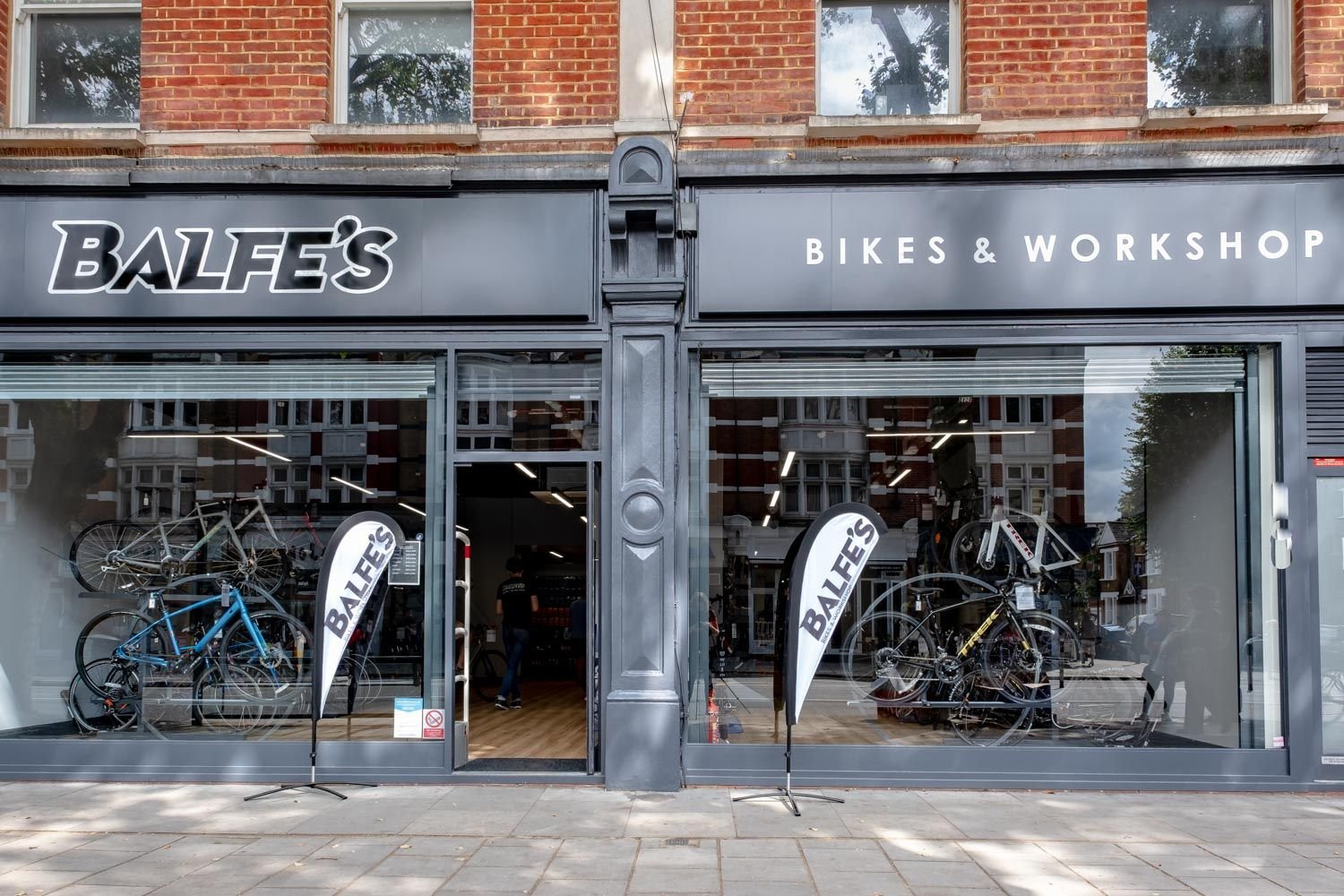
“This has been a pretty good year for the cycle industry,” says Mike Rice, CEO of Balfe’s, which operates 12 bike shops across London and the South East, and also trades online. Like other similar-sized businesses, Balfe’s have been buffeted by some big headwinds in recent years, but Rice sounded very positive when Cycling Weekly spoke to him this week.
“Data from the Bicycle Association has shown month-on-month growth throughout the year, and August was one of the highest grossing months,” he told me. “I think the cycle industry is returning to a growth mode and it’s in a healthier position than it has been for years – in the post-COVID era.”
His sentiments are backed up by the recently released accounts of Sigma Sports, which reveal the company made a profit last year, for the first time since 2021.
Rice reports an increase in sales both in-store and online. “We’ve adapted our product range to fill some of the voids that had been created by the demise of Wiggle Chain Reaction. We now have around 70,000 active SKUs on our website, and over time we’re looking to grow that. But at Balfe we operate a single pricing policy, so the price you see on the web is the price you pay in store. It’s our duty to give a consistent offering.”
(Image credit: Courtesy of Pronto Bikes)
This last point seems key. “Sales online is generally driven by price,” observes Justin Hoy, MD of Pronto Bikes in Frome, Somerset. Hoy has completely eschewed web sales because of the pressures to discount in the online marketplace, but his company is growing and has very advanced plans to open a second store in Ringwood before the end of this year.
“I don’t want to be in a price war with Merlin, Wiggle, Sigma Sport or whoever,” he says. “It’s a lot of work for little gain. It seems all those businesses that have been big online, have either gone bankrupt or are really struggling. To me, there’s something wrong with that business model.
“We announced that we’d be opening Ringwood a couple of weeks ago, and a couple of days later Primera closed down. But I think they’ve been suckered down that line of the internet and well, you can only get to a certain point. I mean, even Planet X is gone.
“We’re growing, which is great. But if we’re suddenly making less margin, because we’ve got to match whoever else is online, we’re going to be busy fools. It’s not financially viable to continue like that.”
Hoy has taken a very different approach. “We have set ourselves up as a community,” he tells me. “Our business is not just about offering products that people want to buy, but offering them the ability to meet other people and go riding together. People don’t join the cycle industry to get rich, because it’s not a massively lucrative thing for anyone. They join it because they like riding bikes. And we love riding bikes.
“We opened in Frome in Covid, and started a club off the back of the shop: Pronto CC. Because of Covid, we were meeting in the car park across the road and groups of six would do a little chain gang ride. The first week we announced it, 30 people turned up. And then word got round, and three weeks later we had 85 people rock up for this chain gang ride. Soon we got to the point where we’re having Christmas parties with 150 people, which is brilliant.
“You feed the shop by people coming in, and it being have a place to meet. We’ve got a cafe in here, so it’s a nice place for people to sit and sit and chill out and drink a cup of coffee mid-ride, or to meet to go for a ride.”
For Hoy, selling kit online at discounted prices but without the service is the antithesis of the community-based business he has worked hard to build. “If people want to buy things online, that will happen,” he admits, but says something gets lost along the way.
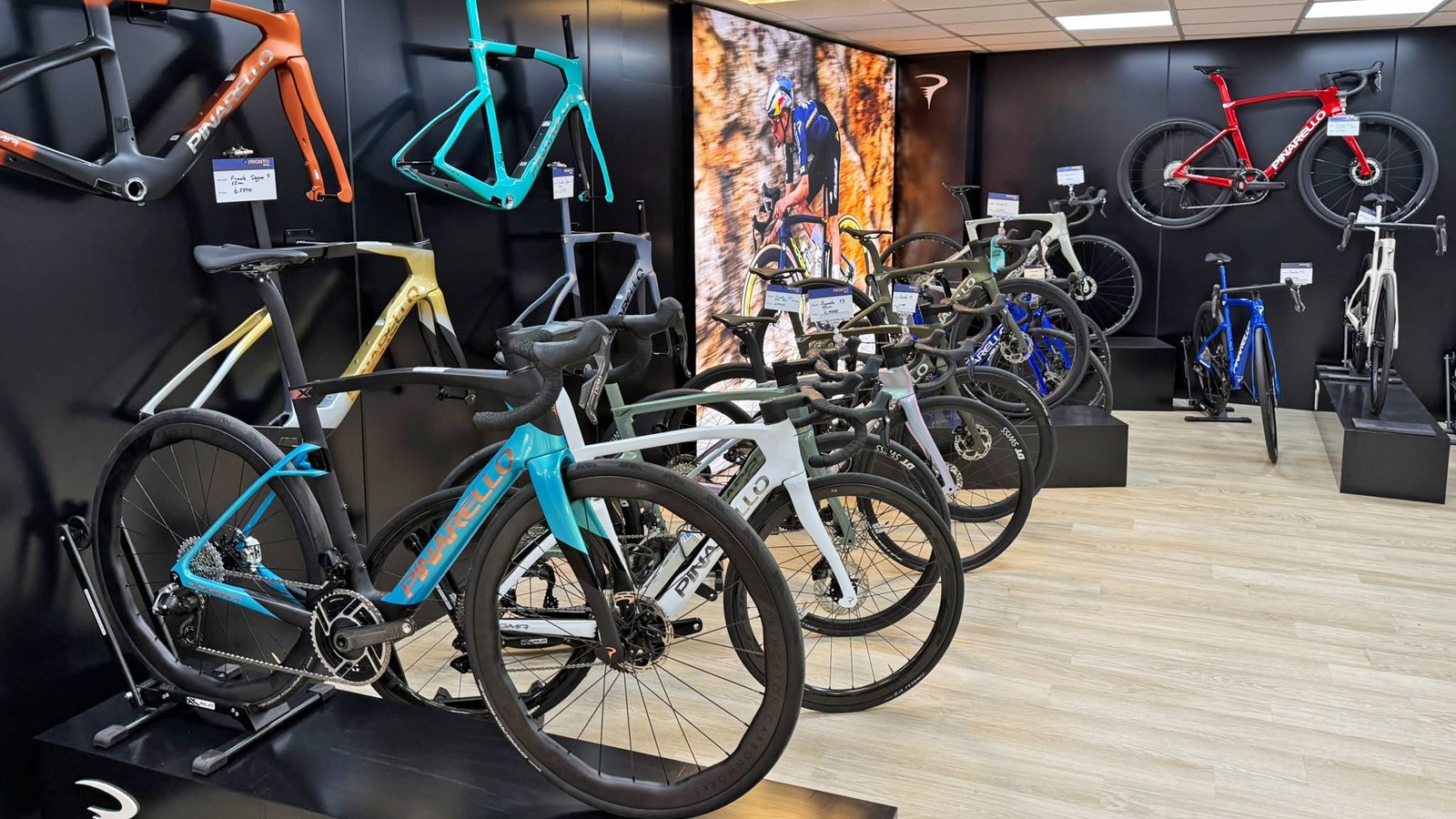

Pinarello bikes in Pronto Bikes’ Frome Store
(Image credit: Courtesy of Pronto Bikes)
“We’ve done super well with Pinarello, because they don’t allow you to sell online. You’re not allowed to ship a Pinarello bike. That’s great, from my point of view, and it’s why the brand has grown. The customer sees the value in that product, because they’ve got to come into a shop, they’ve got to be fitted to it. They get to pick it up and they get to experience that sense of collection. It’s not just opening a parcel.”
And when people come into a bricks-and-mortar store like Pronto Bikes, they get the benefit of many years’ experience and knowledge.
“We’ve been in the bike industry long enough to know what’s going on,” says Hoy. “Tony [from Torke Cycling], one of the best bike fitters in the world, works from here. People fly in from bike shops around the world to get taught by Tony.
“And we stock up to £15,000 worth of shoes, because everyone’s feet are different. [An online outfitter] will just sell someone a pair of shoes because they can, but we want to be able look at someone’s feet and sell them the shoe that fits them best. It adds real value to what you offer, and it’s the right thing to do.”
Read the full article here