



World Bicycle Relief (WBR), the charity that provides sturdy bicycles to rural communities across the globe, has announced the first upgrade to its two-chain Buffalo bike.
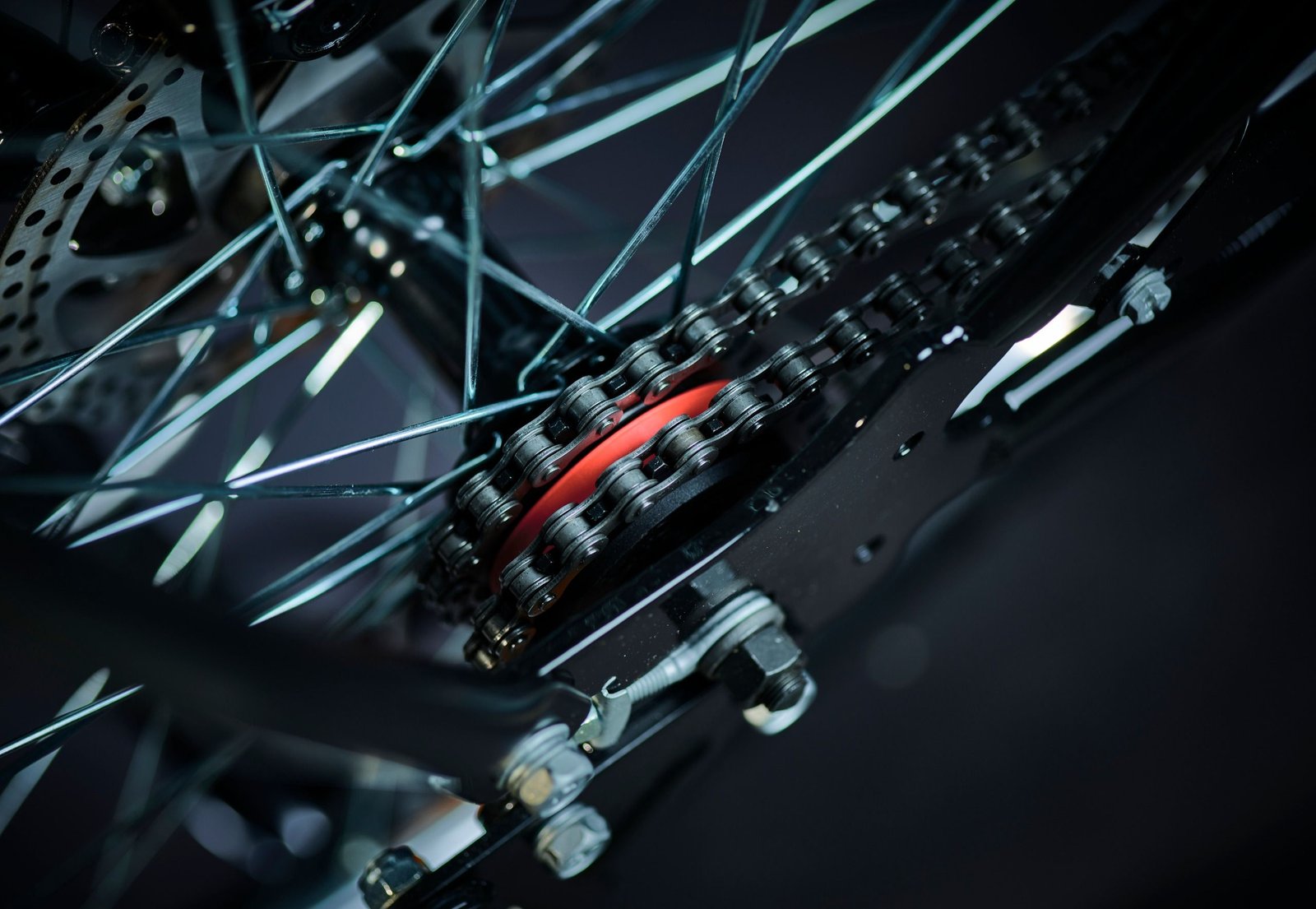
The Buffalo Pro is the newest iteration of the Utility S2 bike that was released in July 2024 and bore an innovative drivetrain with two chains. The system, described as an “engineering feat”, allows riders to backpedal shift across two chain tensions to swap between two gears.
Last week, WBR announced the release of two updated bike models: the two-chain Buffalo Pro and single-speed Buffalo One. The new versions build on two decades of design for the charity’s flagship bike, of which more than a million have now been distributed around the world.
Latest Videos FromCycling Weekly
Speaking to Cycling Weekly, Andy Samways, WBR’s VP of product development, explained the latest updates focused on the bike as a whole, rather than the just dual drivetrain.
“We were broadly happy with our bike. It’s been doing really well,” Samways said. “We hit a million last year, and so in that time, I think we’d amassed a bunch of observations and things we’d seen, some things we wanted to tackle, and so we just took a pass through all of those issues.”
The updated Buffalo Pro bike, with two chains.
(Image credit: World Bicycle Relief)
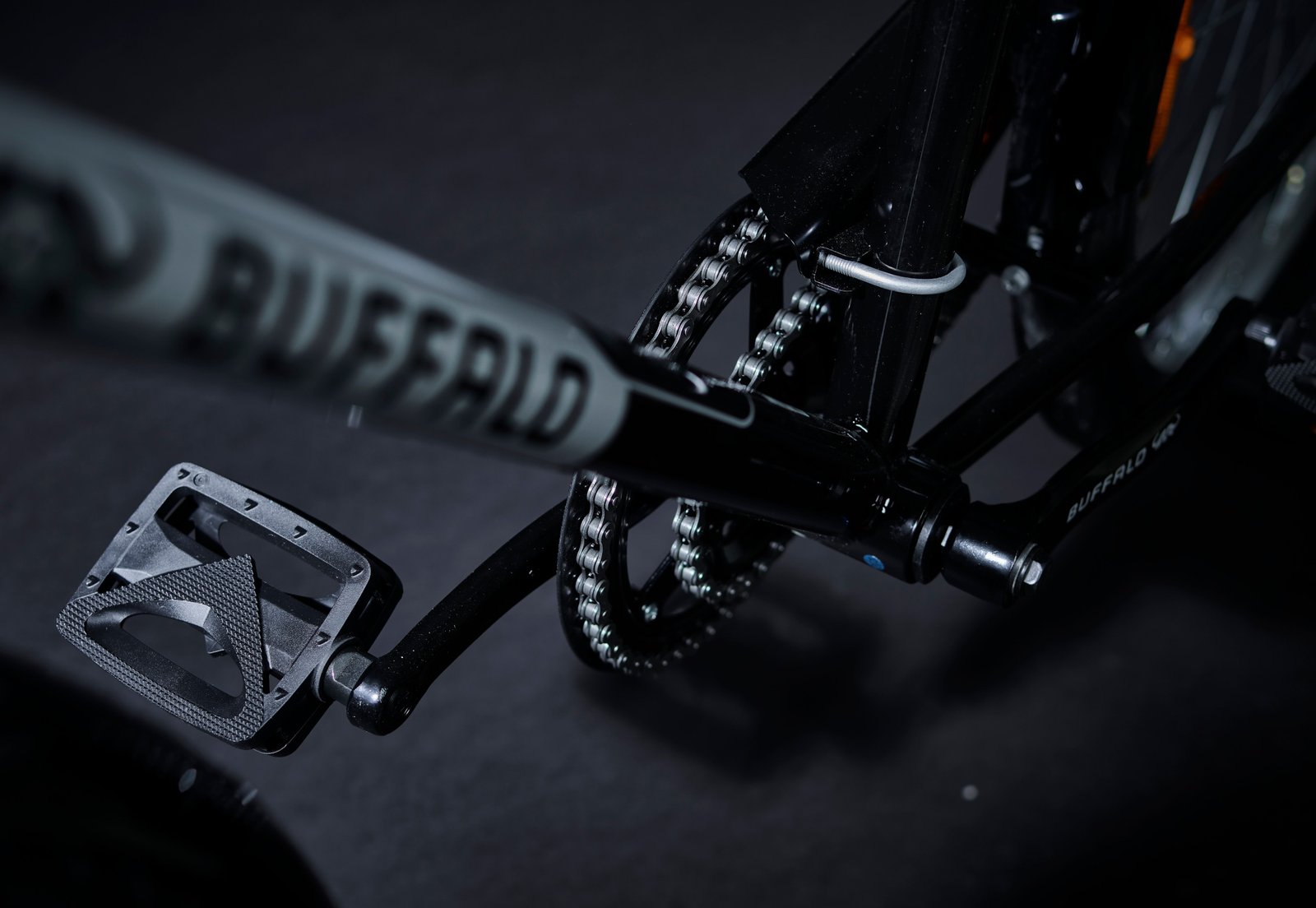
The changes include front and back disc brakes on the Pro model, an updated stand to make loading and unloading cargo more stable, and the introduction of two frame sizes: standard and large. The previous model was one size fits all.
“Although it’s not a huge technical innovation for us, it does mean that more people can ride the bike,” said Samways of the size options.
“Taller riders never complained about the bike, but it was clear to us from watching how they use it and how they ride that there was an opportunity to make the bike more comfortable and functional for them.
“Similarly, when we were testing our very early prototypes of this generation in Kenya, a woman came to us and asked if we sold children’s bikes, and we don’t. Rather than produce a kids’ bike, we want to make sure that a much younger rider can get on our bikes, and so the geometry changes for our standard-sized bike allow us to get a much shorter, much younger rider on that bike.”

Riders shift between the two gears by performing a sharp backpedal.
(Image credit: World Bicycle Relief)
WBR runs bike distribution programmes in seven countries – Zimbabwe, Uganda, Kenya, Zambia, Malawi, Tanzania and Colombia – although its bikes are present in at least 28.
The latest iteration of Buffalo bikes took three years to design and develop, and are already being rolled out into communities.
The cost to donate a single-speed Buffalo One is £138 ($185), which covers the price of materials, manufacturing and distribution. A two-speed Buffalo Pro is around £20 ($27) more.
“That two-speed drivetrain is still the start of the show,” said Samways, adding that the system underwent no major changes in the update.
“It’s a product that, because it’s so unique, it’s very much at the beginning of its life,” he said.
“If you look at a derailleur, for example, that’s had like 100 years of innovations and improvements and refinements, and this is a very new thing. We know there’s plenty of room to keep improving that, so we’ve been working on bearings and material processes, and just trying to refine it as we learn about how it behaves in the field.”
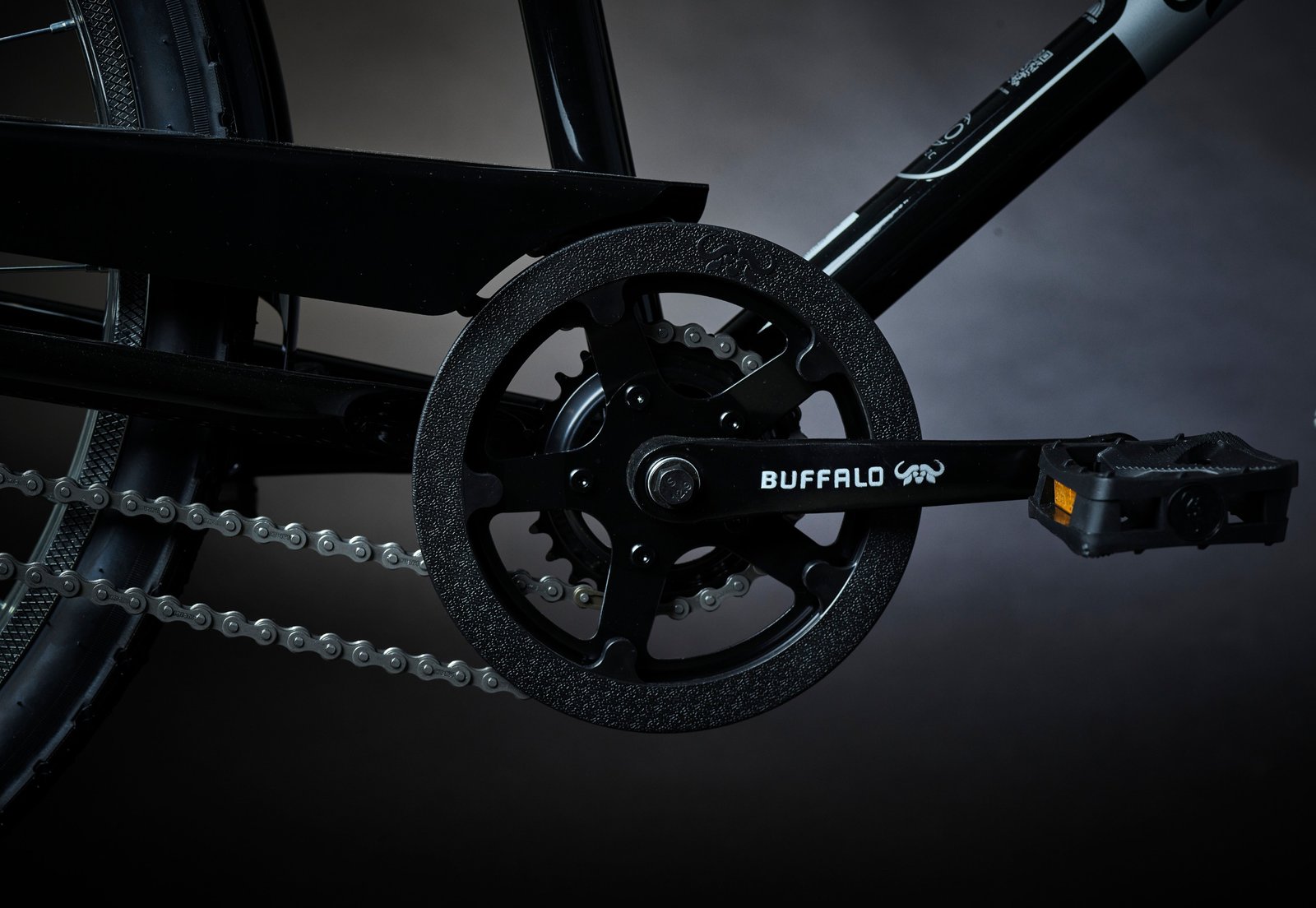
Only the updated Buffalo Pro model, which replaced the Utility S2, has two chains.
(Image credit: World Bicycle Relief)
As it stands, the single-speed Buffalo One is best for users on flat terrain, while the two-chain Buffalo Pro was built to withstand hillier regions, as well as cargo loads sometimes exceeding 100kg.
Samways, who has been working with WBR since 2010 and was previously employed by parts manufacturer SRAM to develop drivetrain solutions for the charity, hopes one day to have the two-chain technology on all Buffalo bikes.
“That’ll be something we’ll look at in the future,” he said. “But it does take time for us to work the manufacturing, find the efficiencies, and bring it down to a price where we can make it a standard feature.”
It’s all part of WBR’s commitment to keep developing. As the charity’s bikes reach more people, and are ridden to their limits on hard-wearing terrain, Samways and his team of around 17 developers are always looking for ways to make the design more durable and accessible.
“We’re never done [innovating],” he said. “Our bikes are used so hard for so long. We will work on one set of problems, and then we’ll move on to the next. We’ll just keep chipping away at whatever presents itself as the next big problem.”
Read the full article here