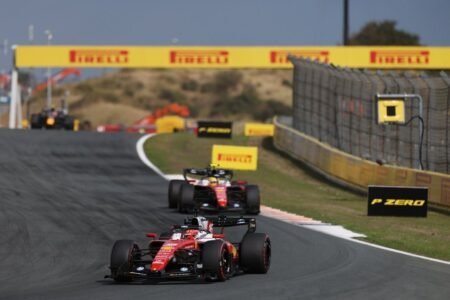




Qualifying for the Austrian Grand Prix ended in disarray after Max Verstappen crashed his Red Bull at the fast Turn 9 on his final push lap.
Championship leader Kimi Antonelli was also on a push lap, trying to improve on his previous time, and misinterpreted the waved yellow flags at the scene for double waved yellows.
Within the rulebook, the distinction between single and double waved yellows is very clear: drivers must demonstrably slow down for single yellows, whereas double yellows signify a greater hazard which requires them to be prepared to stop immediately. Any lap time set under double waved yellows is struck off.
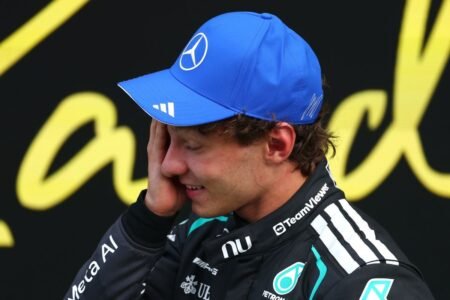
“I saw double yellow, so it probably was my mistake,” said Antonelli afterwards. “I aborted the lap and that was it, so my mistake in execution.
“I heard ‘yellow yellow’ [from engineer Peter Bonnington on the radio], but I was looking at the marshal and probably I saw wrong and I just saw two flags instead of one and I aborted.
“Also it was hard to see because there was the sun in my face. I just looked at the marshal because the panel [on the steering wheel] went yellow – but of course, you don’t know if it’s a single or double, so I looked at the marshal and it was hard to see. I just saw double yellow instead of one.”
The error proved costly for Antonelli because it left him fourth on the grid. He had been on provisional pole after his first run, only to be usurped by the Ferraris of Charles Leclerc and Lewis Hamilton.
Verstappen’s crash brought out yellow flags, but the decision to ‘upgrade’ to double yellows can only come from race control
Photo by: Getty Images
Most of his room for improvement came in the first two sectors, since on his provisional pole lap he had only been fastest of all through the final sector, with a 19.998s. This was still the fastest final-sector time as he started his final lap, since new provisional polesitter Leclerc’s time through there had been 20.232s.
Antonelli’s first two sectors on his previous lap had been 16.564s and 29.852s. On his final push lap they were 16.477s, 29.666s – so he was on course for a quicker lap had he not aborted.
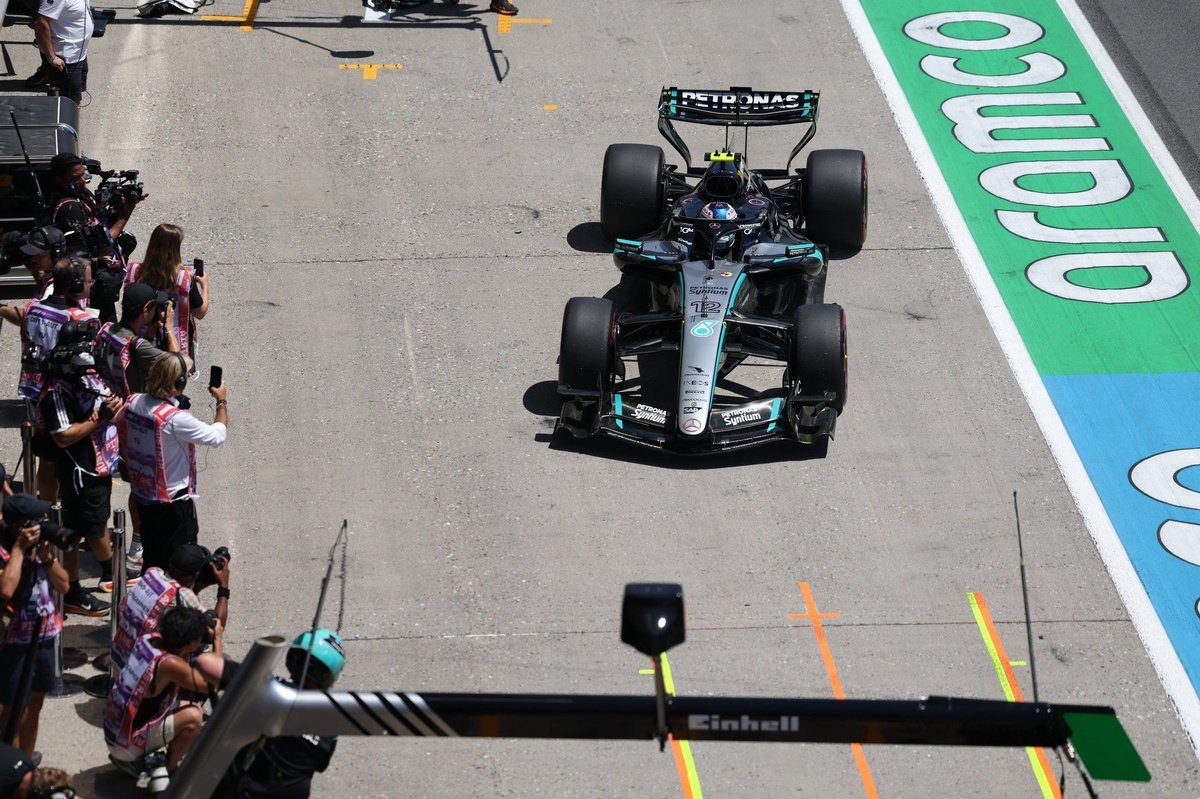
Controversially, Antonelli’s team-mate George Russell, running just behind on track, tackled the area with a lift of the throttle and completed the lap to put his Mercedes on pole position. His lap was permitted to stand because the timing data – in which each sector is split into smaller segments – clearly indicated he had slowed down when passing the area covered by the yellow flag.
Russell’s final-sector time was 20.069s, slower than the 19.968s he set through there on his previous push lap. It was in the first two sectors where he was far enough ahead of his rivals, including Antonelli, to take pole anyway: 16.424s and 29.620s.
Article B1.8.4 of the 2026 sporting regulations states: “Any driver passing through a waved yellow flag marshalling sector must reduce their speed and be prepared to change direction. In order for the stewards to be satisfied that any such driver has complied with these requirements they are expected to have braked earlier and/or discernibly reduced speed in the relevant marshalling sector.”
Scrutiny of the F1 TV footage confirms that the marshal post began to display a single waved yellow flag as soon as Verstappen’s car entered the gravel trap. But the decision to display double waved yellows is made by race control, not the marshalling post.

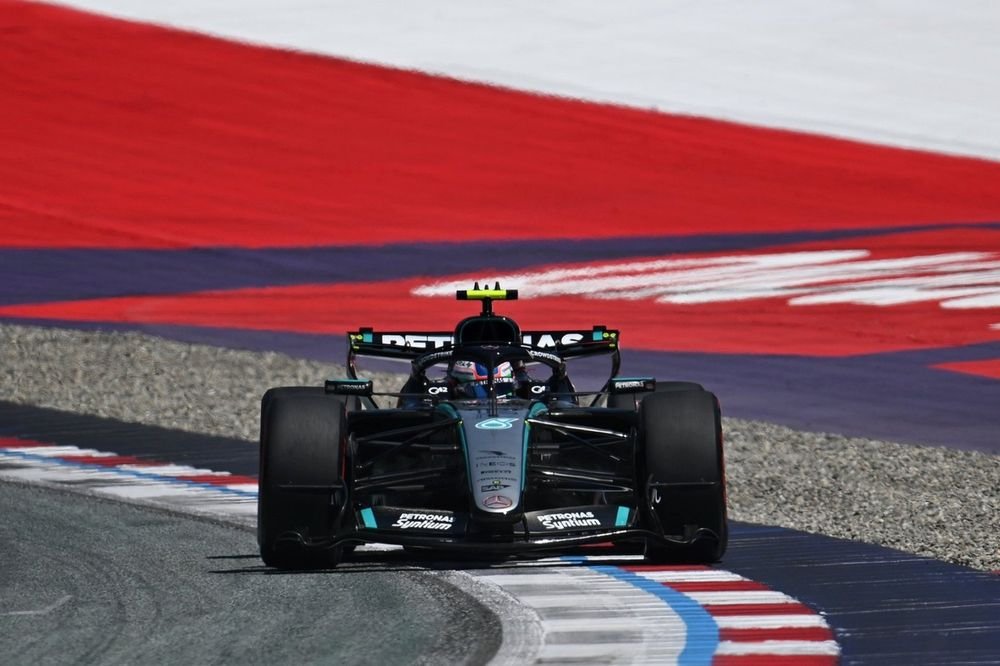
Andrea Kimi Antonelli, Mercedes
Photo by: Sam Bagnall / Sutton Images via Getty Images
The call to upgrade from single to double waved yellows did come, but not until after Russell arrived on the scene 15 seconds later. So while Antonelli was reconciled with the fact that he was unlikely to have qualified on pole, he raised the point that it was reasonable to expect double yellows to be declared more promptly, given the nature of that corner.
“I was one tenth behind him, so it would have been front row, but still not enough for pole,” he said.
“There was a car in the wall in a fast corner, so I think in this situation I don’t know why they didn’t go double yellow straight away because it’s a super quick corner and if you go off at the same time it can end up very badly.
“So, yeah, it was a bit confusing, but it is what it is.”
We want to hear from you!
Let us know what you would like to see from us in the future.
Take our survey
– The Autosport.com Team
Read the full article here