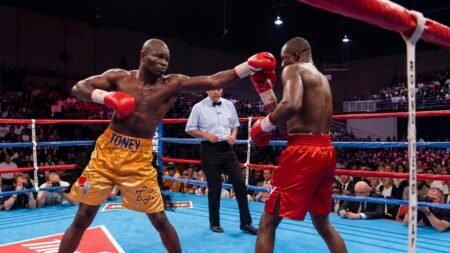
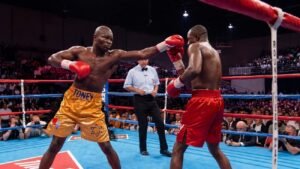




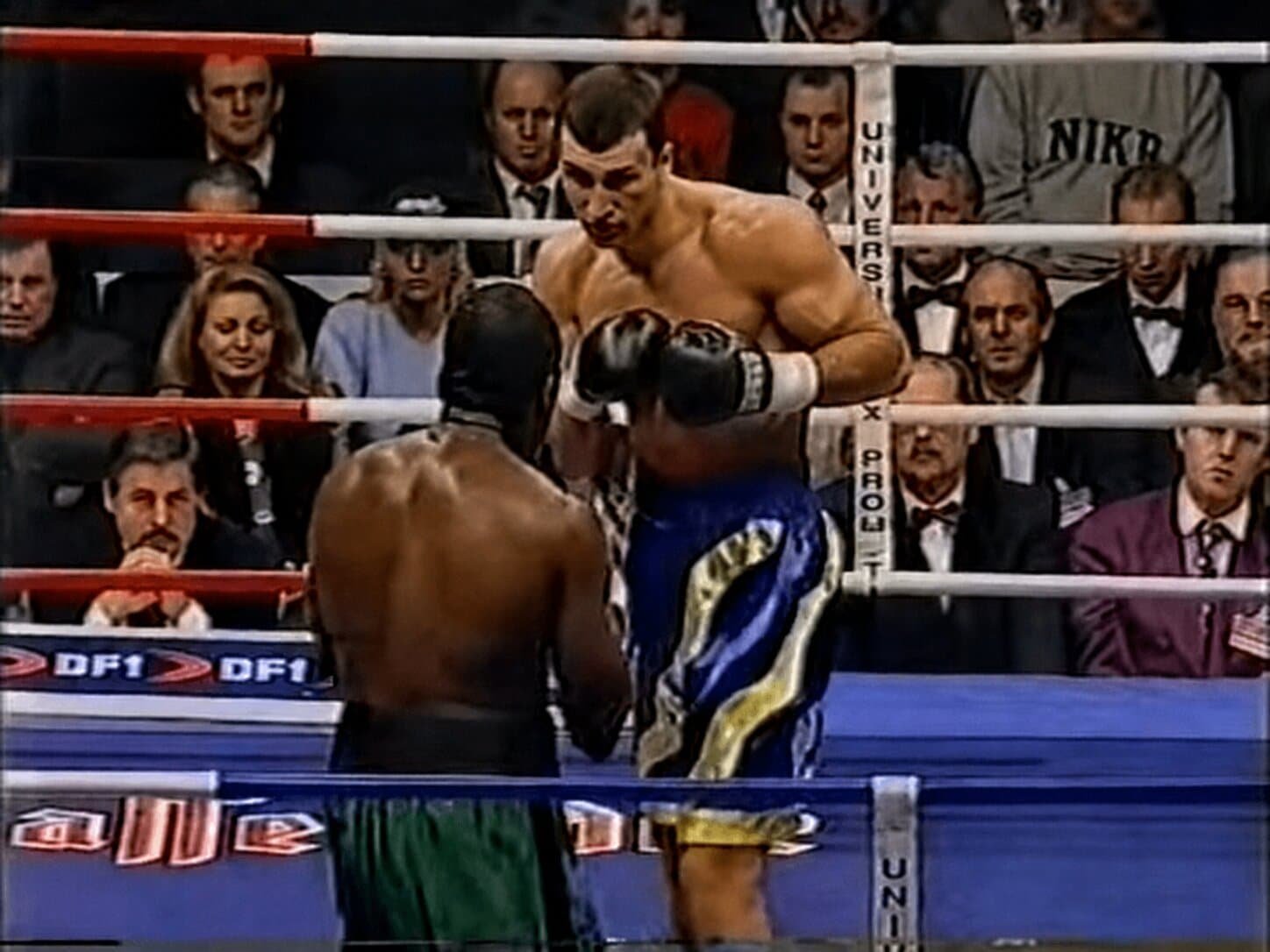


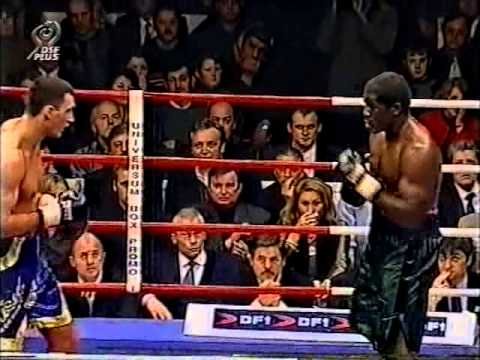
At 22, Klitschko had Olympic gold, fast hands and a growing reputation built largely in German rings. Puritty was 31, with 13 defeats and little of the younger man’s polish. This was supposed to be another step toward the top.
Yet Wladimir had never boxed beyond eight rounds. His ability to overwhelm opponents had left him largely untested in the final third of a long fight.
Repeated blowouts can teach a prospect to keep increasing the pressure until someone falls. He gets fewer opportunities to recognize when his own pace is becoming wasteful, or to practice winning a round without trying to finish his opponent. Puritty forced Wladimir into that unfamiliar territory.
Behind a high guard, the American absorbed punishment. Plenty of punches reached him. This was a dangerous way to fight, dependent on durability that many opponents would not have possessed. But his selective output meant Klitschko was doing most of the work.
Even shots caught on gloves and forearms took a toll on the man throwing them. When another combination failed to produce a collapse, Wladimir had a choice: accept the points he was collecting or press harder for the stoppage. The home crowd helped make patience harder.
“I had to listen to myself and to my corner… while I was listening to the audience,” Klitschko later recalled in a translated account published by Boxing247.
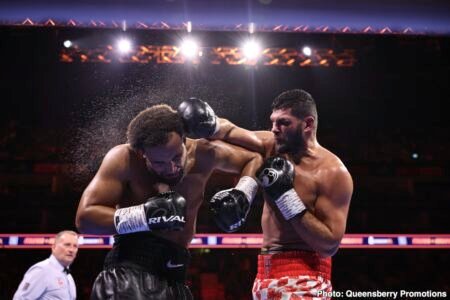
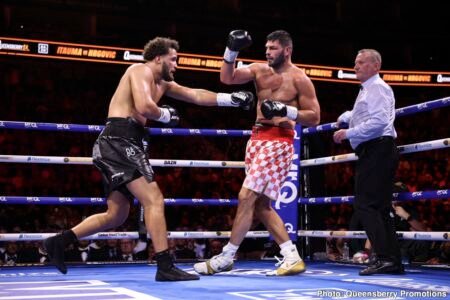
Itauma’s intentions cannot be established from the result alone. The useful comparison is the tactical opportunity that early success creates: a young heavyweight with a lead can make his opponent take risks to recover lost rounds.
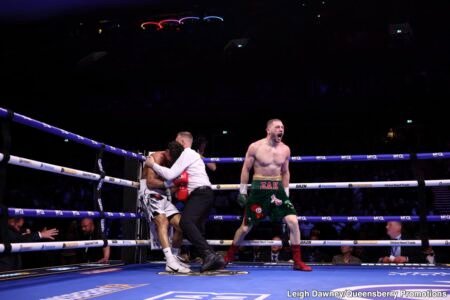
By the tenth, Wladimir’s legs were failing. One fall was ruled a slip; another brought a count. Puritty attacked again in the eleventh, prompting trainer Fritz Sdunek to come through the ropes. The official stoppage time was 18 seconds.
This was no sudden ending from one isolated punch. Exhaustion had become visible before the final attack, leaving Klitschko increasingly unable to escape or answer. That does not make Puritty’s punches incidental. He recognized the deterioration and punished it.
The distinction is useful when discussing Itauma. Taking hard shots while exhausted does not, by itself, establish poor punch resistance. The more immediate concern is how a fighter reaches the point where he can no longer defend himself effectively.
Wladimir’s eventual transformation took years. Further defeats to Corrie Sanders and Lamon Brewster followed. Emanuel Steward was already training him for the Brewster loss; their successful partnership began with defeat.
Practical adjustments will help Itauma control those difficult stretches: vary the force of his punches, work behind the jab, use lateral exits and learn to smother an attack when he needs a breather. Simply throwing less will accomplish little if it leaves him stationary and available.
Klitschko’s later championship career offers encouragement, but the lesson from Kyiv remains specific. Puritty exposed what early knockouts had concealed: Wladimir had yet to learn how to pace himself through a long fight.

Read the full article here