






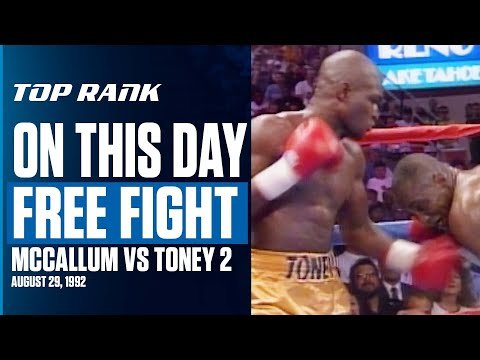
Their first meeting had ended in a draw eight months earlier. Between the two, Toney survived a heavily disputed decision against Dave Tiberi. Beating McCallum offered a chance to put a better performance beside that damaging result. At 35, the challenger still had the technique to make the younger champion work for his openings.
McCallum’s jab and body punching gave him a way to compete without matching Toney’s hand speed. Working downstairs reduced his dependence on finding a head that was constantly slipping or rolling away. His persistence also made Toney pay for stretches when he waited to counter.
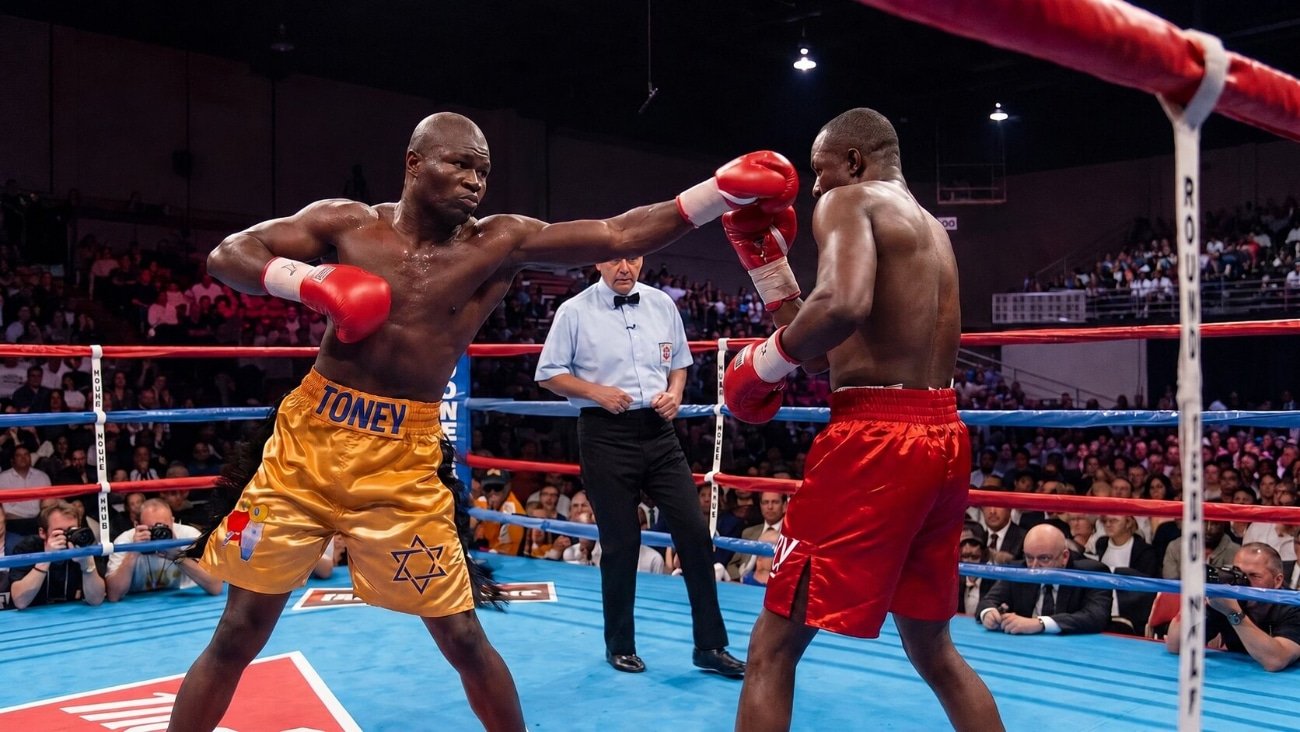
Fighting at close range carried its own risk. Getting near Toney did not take McCallum safely past the champion’s offense. Short counters remained available at distances where a wider punch needed too much room. The tactical challenge was to attack the body without staying exposed afterward. Neither man had the luxury of treating the inside as a place to rest.
The champion’s case rested on the quality of his replies. His harder, sharper punches drew attention, and rewarding those shots was reasonable. The difficulty came in deciding how much of a round a brief successful attack should outweigh. McCallum kept collecting scoring punches between those bursts.
Defensive economy was useful only up to a point. Catching a punch on the gloves saved Toney from taking it cleanly, but a successful block did not score for him. McCallum’s steady output forced the judges to distinguish between successful defense and actually winning an exchange. Looking comfortable under pressure was not enough by itself.
Punch totals illustrate the dispute without settling it. McCallum was credited with 332 landed punches to Toney’s 232. Those numbers do not measure impact or tell us who won each round. They do, however, challenge any easy description of the challenger being comprehensively outboxed. A fighter can land more across twelve rounds and still lose, but his contribution deserves to be judged beyond the most memorable counter.
Joe Cortez deducted a point from McCallum in the eighth for hitting behind Toney’s back while holding him in a headlock. The penalty widened the deficit; it did not determine the winner. Removing it still leaves Toney ahead on two cards. The real argument concerns how those judges distributed the rounds.
Trainer Eddie Futch treated the closing rounds as essential, telling McCallum: “It’s very close, Mike. You’ve got to get the next round.” That instruction fits the competitive fight far better than the eventual margins. It also underlines the danger of leaving close rounds to the judges: each corner can see opportunities that the scorecards have already denied.
Toney deserved credit for beating an opponent whose skill survived the difference in age. Yet treating the result as a rout diminishes the achievement. McCallum forced him to solve a difficult fight, and a narrow Toney victory is a much easier argument to defend than seven points of separation.

Read the full article here