


Follow Boxing News 24 on Google News

“The only thing about that kind of style is that you’re always in range to be touched. And maybe if it’s not touching you clean, it’s still kind of touching you and the numbers game may force you to be active because a guy like Zepeda who’s very active can give you a problem,” said Malignaggi on his Youtube channel. “The answer is changing range. There is different variations of defense in boxing.

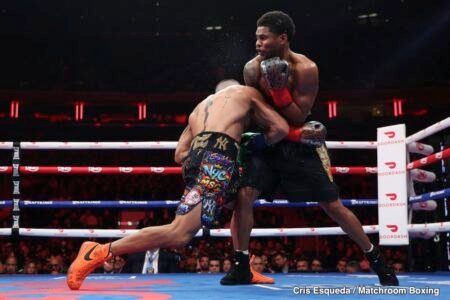
“I think the catch and shoot is a very solid way of defending. Roach, his main asset is the catch and shoot. It’s the blocking and holding position. He’s not a great reflex fighter and he’s not great with his legs either. The thing that troubles Zepeda a bit more is the in-and-out. He had a lot of trouble with this against Tevin Farmer, and he had a lot of trouble with this against Shakur Stevenson.”

In Malignaggi’s view, making Zepeda miss is just as important as blocking his punches. Catching shots on the gloves or arms still tells an aggressive pressure fighter he has found his range, encouraging him to keep throwing combinations. When an opponent steps completely out of range, Zepeda is more likely to overcommit, creating openings for sharp counters before he can reset his stance.

Roach stayed disciplined throughout the contest, but he rarely mixed lateral movement into his defense. He spent long stretches catching punches on his gloves and arms while searching for counter opportunities. The longer the fight continued, the more comfortable Zepeda became throwing combinations, giving him control of the contest on the scorecards.

Malignaggi’s breakdown explains why Roach struggled, but Zepeda’s recent fights suggest the tactical picture is more nuanced. Shakur Stevenson could not keep the action at long range, as Zepeda repeatedly closed the distance and forced exchanges. Shakur prevailed through sharp accuracy, precise timing, selective clinching, and elite defensive awareness rather than simply boxing from the outside all night.

Tevin Farmer found himself in a similar position. In the rematch, Zepeda repeatedly trapped him along the ropes and unleashed relentless combinations. Frequent clinching became Farmer’s best defense, allowing him to smother the attack and recover during several dangerous stretches when the sustained pressure left him close to being stopped.

The bigger story is Zepeda’s growing commitment to the body, an element Malignaggi barely touched on. That adjustment changes the entire equation because it punishes defensive habits that usually work against pressure fighters.

Leaning back is one of Shakur’s trademark defensive moves, taking his head out of danger against most opponents. Against Zepeda, however, that adjustment exposes the body. Every time Stevenson leaned away from punches upstairs, he created openings downstairs, where Zepeda found far more consistent success. Had he committed to that attack earlier instead of continuing to head-hunt, he may have made it even more difficult for Stevenson to stay mobile.

Roach ran into the same problem. His catch-and-shoot defense protected his head reasonably well early, but it did little to slow Zepeda’s work downstairs. As those punches accumulated, Roach lost mobility and spent more time directly in front of Zepeda, exactly where the Mexican pressure fighter is most dangerous.

The blueprint against Zepeda is more complicated than simply moving around the ring. Stevenson and Farmer both tried to keep him on the outside, yet he still forced extended exchanges by cutting off the ring and steadily breaking down their movement. Once opponents can no longer maintain that mobility, Zepeda’s relentless volume becomes far more difficult to contain.

Youtube video

Read the full article here

Share.