

The comparison with Norris’s 1991 victory over Leonard was not flattering to Crawford. Leonard entered that fight trusting the timing, intelligence, and psychological control that had allowed him to solve younger and physically stronger opponents. Norris denied him the time required to think. His hand speed, combinations, and youthful reactions kept Leonard behind throughout the fight.
Norris dropped Leonard twice and won a lopsided unanimous decision. The younger man did not need a greater historical reputation or a deeper collection of accomplishments. He only needed to be faster on that night. That was the danger Ennis represented.

Few fighters solve problems inside the ring as well as Crawford. He often uses the opening rounds to study an opponent’s rhythm, distance, reactions, and preferred attacks. Once he recognizes the patterns, he begins switching positions, taking away weapons, and landing increasingly damaging counters.
That process worked brilliantly against Errol Spence Jr. Crawford read Spence’s jab, punished his predictable entries, and transformed a major welterweight fight into a one-sided beating.
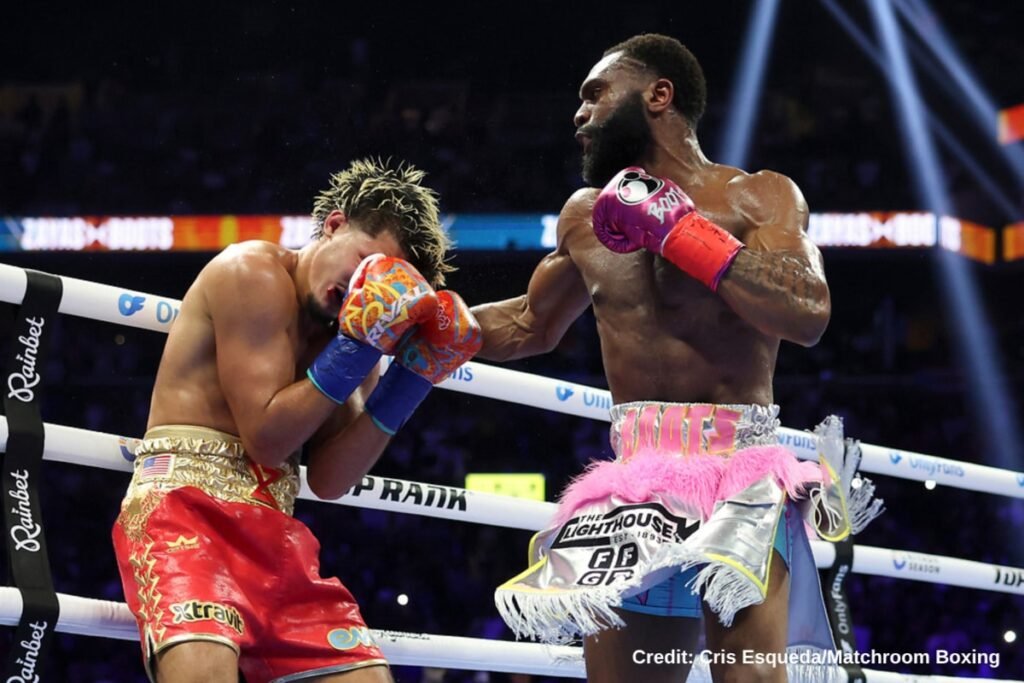
Boots presented a different type of puzzle. He could attack with fast combinations from both positions, change the angle of his punches, and continue punching after the first countering opportunity had passed. His natural size also meant Crawford would not automatically control the exchanges through strength.
Giving away early rounds while collecting information becomes far more dangerous against a younger opponent who can bank them behind speed and activity. Crawford would need to identify Boots’ patterns without allowing the fight to escape him or suffering damage during that process.
The Norris comparison fits here. Leonard still knew more about boxing than Norris, but his knowledge could not slow the younger fighter’s hands or restore the reactions he once possessed. Ring intelligence only takes over after a fighter creates enough time and space to use it.
Those openings might have been available against Boots. The younger man also might have closed them too quickly for Crawford to capitalize.
The business calculation made the decision easier. By the time Crawford defeated Spence in July 2023, he had already taken everything he needed from the welterweight division. He had become undisputed, beaten the other leading fighter of his era, and delivered the signature performance of his career.
The athletic danger Ennis presented was not matched by a comparable payday. He did not possess Spence’s commercial following, Saul “Canelo” Alvarez’s drawing power, or the historical value attached to winning championships in higher divisions.
Beating Boots would have strengthened Crawford’s record. Losing to him might have changed how the public viewed his entire welterweight reign.
That was a poor exchange for a fighter already in his late thirties. Modern stars expect enormous compensation for accepting enormous danger. Remaining at 147 to face the youngest, largest, and most explosive opponent available for less money violated every sensible rule of career management.
Leaving the division allowed the Spence destruction to serve as Crawford’s final welterweight image. He advanced toward larger purses and championships elsewhere while Ennis inherited the welterweight class without receiving the fight that would have connected one generation to the next. That was smart business. It also protected Crawford’s historical argument.
A place among boxing’s greatest fighters has become part of Crawford’s public case. Once a fighter begins making a Mount Rushmore argument, controlling the final stage of his career becomes essential.
A decisive loss to Boots would have supplied Crawford’s critics with an image they would never stop using: an older great being outsped, outworked, and overpowered by his successor. Most fans would not carefully account for Crawford beginning his championship career at lightweight or Ennis being a natural welterweight. They would remember who controlled the fight.
There was less for Crawford to gain because Boots belonged to the next generation. Clearing out your own era establishes dominance. Remaining long enough to be tested by the leader of the following era invites a very different ending.
Floyd Mayweather Jr. understood that distinction. He faced Canelo while the younger fighter was still developing, then retired before age and declining reactions left him vulnerable to the next wave. Crawford followed the same basic principle: leave the division while the signature victory remains vivid and pursue only the opportunities that pay enough or add enough historical value.
None of this proves Crawford feared Ennis. Fear is unnecessary when basic arithmetic produces the same decision. Boots brought greater youth, natural size, explosive combinations, and minimal commercial compensation compared with the danger involved.
By reading the business correctly, Crawford protected his legacy. Davis merely explained the physical truth behind that choice.
This was not simply another challenger. Ennis was the one welterweight capable of damaging Crawford’s Mount Rushmore campaign while paying him less for the privilege. Leaving 147 allowed Crawford to avoid discovering if his timing and intelligence could overcome the same youthful speed that made Leonard look old against Norris.
Read the full article here