

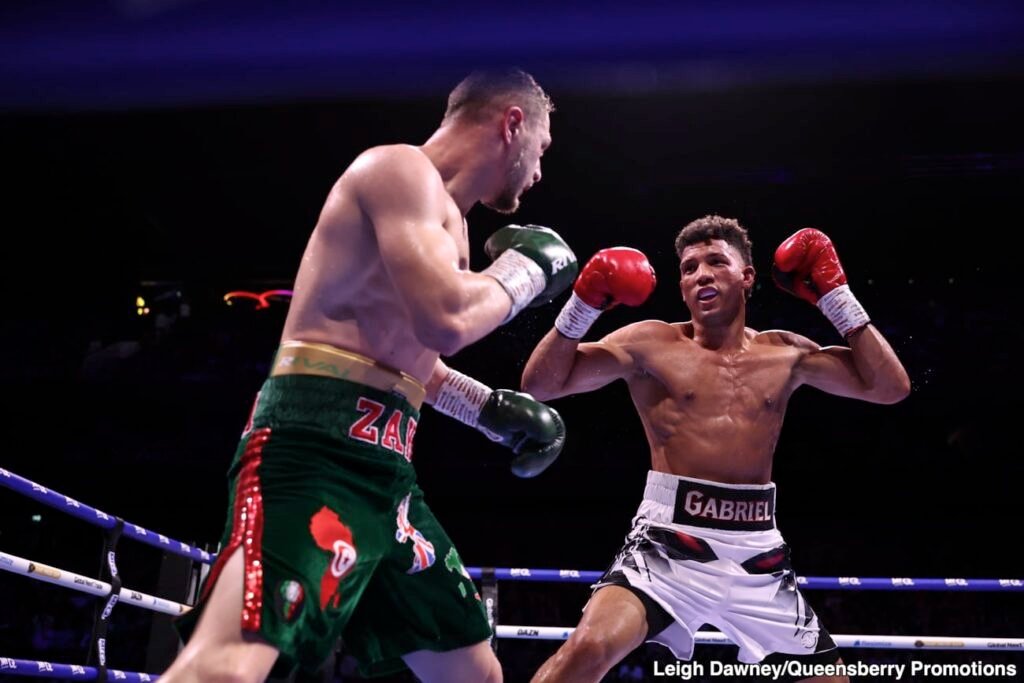
David Morrell has disappeared from the boxing conversation since Zak Chelli stopped him in the 10th round on May 9. Once presented as a future star at super middleweight, the Cuban now sits at 12-2 with no confirmed return date and serious questions about his future at 175 pounds.
Chelli accepted the fight on two weeks’ notice and was trailing before hurting Morrell in the ninth and finishing him with 36 seconds left in the final round. It was not merely a shocking defeat. It exposed a technical weakness that had followed Morrell throughout his professional career.
When pressured, Morrell retreats in straight lines until his heels reach the edge of the ring. He then squares his upper body, raises both gloves, and waits for the attack to end.

The guard protects parts of his head, but widening his torso gives opponents access to his liver and ribs. He also provides no angle for an escape. Instead of stepping around an orthodox fighter’s lead foot, Morrell remains directly in front of him.
David Benavidez exploited that behavior over 12 rounds in February 2025. Morrell dropped Benavidez in the 11th, but those isolated successes could not erase the long stretches he spent absorbing combinations along the ropes.
Chelli found the same opening. Once Morrell’s legs faded, the guard became a hiding place rather than an active defense.
Morrell remains dangerous when he has room to select his shots. His straight left hand, counter right hook, and short two-punch bursts are fast enough to punish careless entries. The trouble begins when an opponent survives the first attack. Morrell rarely follows with the sustained combinations needed to hold the center of the ring. His style still carries the rhythm of amateur boxing: land the cleaner single shot, reset and wait for another opening. Professional pressure fighters do not always grant that reset.
An opponent willing to walk through one or two hard punches can force Morrell backward and beat him through activity. Morrell does not have a developed inside game that allows him to fight for position once the distance has disappeared.
Elite fighters who become trapped along the ropes usually clinch, pin an arm or turn the attacker before leaving. Morrell does little of that.
He stands behind his forearms and allows opponents to complete their combinations. Even when most of the punches strike his gloves, judges see one fighter attacking and the other merely surviving.
That passivity is more exhausting at light heavyweight. Morrell was physically stronger than most of his opposition at 168 pounds. At 175, naturally larger fighters can drive their weight into him and force his legs to support both bodies.
Holding a turtle guard under that pressure drains the shoulders, back, and thighs. It helps explain why Morrell’s energy vanished so rapidly against Chelli in the ninth and 10th rounds. Morrell reportedly relocated to Orlando and changed his training setup after the Chelli defeat. A new camp will only help if it changes his reactions when another fighter presses him.
He needs lateral escape steps, an offensive clinch, and combinations long enough to make opponents reconsider walking forward. Returning to super middleweight would reduce the physical burden, although making 168 again may no longer be practical.
Matchmaking presents another issue. Morrell remains too powerful to become an easy opponent for a rising prospect, but his two defeats have stripped away much of his bargaining power. A soft return fight will bring criticism, while another aggressive volume puncher may push him farther from the top level. Morrell is only 28, and his speed, power, and amateur background still give him valuable tools.
His future depends on accepting that the defense which carried him through 168 pounds does not work against strong light heavyweights. If he returns with the same straight-line retreat and stationary high guard, Chelli’s victory will no longer look like an isolated upset. It will look like a blueprint.
Read the full article here