


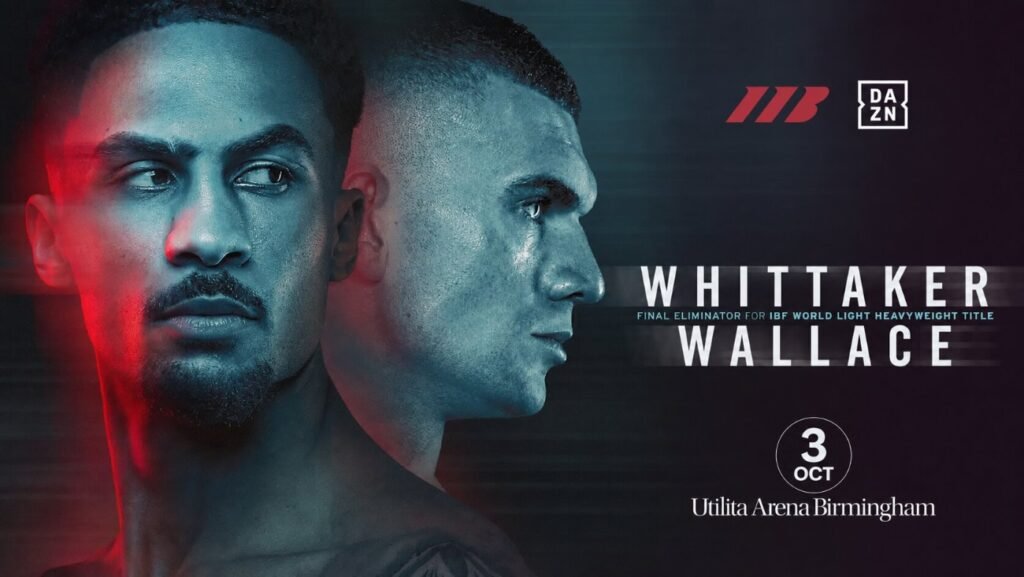
Ben Whittaker’s fight with Conor Wallace on October 3 is being sold as a step up, but his path to the IBF eliminator deserves a closer look. He struggled with domestic-level Liam Cameron before winning their rematch, then faced lesser opposition after signing with Matchroom. At 29, Whittaker is now one win from a mandatory position without having beaten an established contender. Wallace is supposed to validate that leap.
In terms of ranking and stakes, Wallace is a step up. Whittaker’s recent opponents have rarely forced him to show what happens when his speed and theatrics fail to take control immediately. His two-round stoppage of Richard Rivera in June looked spectacular, but Rivera was 35, and the fight ended before Whittaker had to make a difficult adjustment. It was a useful American showcase, not an answer to questions about his stamina, defense or composure over twelve rounds.
Matchroom has chosen the available IBF route instead of putting Whittaker in with an established light heavyweight such as Anthony Yarde or Joshua Buatsi. A promoter is entitled to seek the fastest route to a title shot. But an eliminator label cannot give Whittaker the experience those fights might have provided. He can reach mandatory status while still learning how to handle the kind of resistance a champion will bring.
Wallace (17-1, 12 KOs) should not be treated as a guaranteed win. He is ranked above Whittaker in the IBF rankings and earned a split-decision victory over Jerome Pampellone. He is also an Australian-based southpaw who has yet to fight professionally outside Australia. His record establishes him as a legitimate ranked opponent, though it offers limited evidence of how he would fare against the best fighters at 175 pounds.
His best chance is to make Whittaker work at a pace the favorite does not choose. Whittaker likes space to move, set traps, and perform for the crowd. If Wallace can close that space, touch the body, and keep coming after Whittaker lands, the bout could become an examination of discipline rather than reflexes. Dropping his hands against an opponent who is still pressing forward in the later rounds would be a different gamble from doing it during a brief showcase.
Birmingham brings its own challenge for Wallace. He cannot afford to surrender the early rounds while getting accustomed to Whittaker’s movement and the atmosphere. That does not mean the judges would deny him a close win. It means that a slow start on the road could leave him needing to take risks against the faster boxer as the rounds run out.
There is a longer-term problem for Whittaker even if he wins clearly. Becoming Bivol’s mandatory challenger does not guarantee that the champion will be available next. Bivol has other potential obligations and recently completed an IBF mandatory defense. Whittaker could gain the position, wait for his turn, and still need the hard fights his title route allowed him to bypass.
That is what makes the Wallace fight more revealing than the poster suggests. Another early knockout would strengthen Whittaker’s appeal, but it would leave familiar questions unanswered. If Wallace forces him through difficult rounds, Whittaker has an opportunity to show that the fast track has produced a boxer capable of handling more than opponents selected for his highlight reel.
Read the full article here