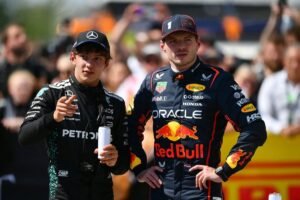





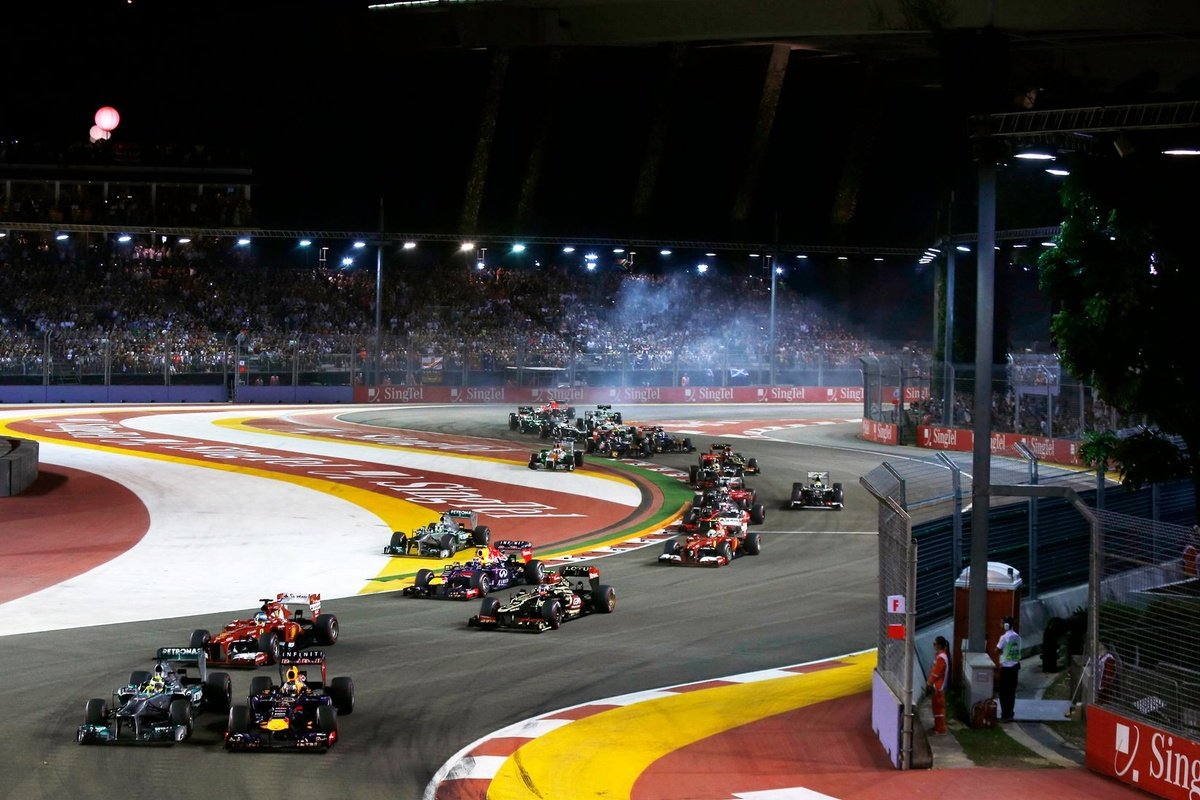
FIA president Mohammed Ben Sulayem and his Formula 1 counterpart Stefano Domenicali are keen on F1 cars returning to naturally aspirated V8s from 2031 or even 2030.
The majority of power unit manufacturers appear to be aligned on advanced sustainable fuels and a modest amount of electrification amounting to a lower-cost and lower-complexity formula.
Other than cost, one of the key reasons cited by Ben Sulayem is for F1 to turn up the noise and give fans what they want by providing louder V8 engines, reminiscent of the pre-2014 era.
But is that by default a good idea? And does louder necessarily mean better? Our writers have their say.
It’s not about volume – Kevin Turner
To argue that F1 should simply be louder would probably not be a smart move. Of all the challenges facing motorsport, ‘noise pollution’ is not high on the list but it is on it. Engine noise is, after all, wasted energy, so perhaps best not to big that up too much…
That said, the sound of racing cars is important to many fans. I doubt many of us would put it ahead of great racing, fast machines and top drivers in a ‘biggest desires’ list, but it undoubtedly has an impact on how we feel and respond to motorsport. It’s part of the visceral experience that entice people in the first place.
But the sheer volume is a bit of a red herring. The current cars aren’t quiet and you could make a case that the V8s of the previous era were too loud. What’s important is the nature of the sound.
Turbos are just not as aurally satisfying. Yes, Porsche’s straight-six has become incredibly evocative at Le Mans but ask most people what their favourite engine sound is and most will pick V8s, V10s or V12s – or maybe straight-eights and V16s if they’re a little older.
Photo by: JEP
The low rasp of the incredibly powerful F1 cars of the 1980s is quite nostalgic now, but doesn’t really match the higher pitches of a bigger normally aspirated powerplant, which also happen to be louder. Or, to put it another way, listen to all the cars in the current World Endurance Championship Hypercar field at the same volume and select a favourite: I’ll bet you pick the Cadillac V8 or Aston Martin V12.
Noise is barely a factor – Jake Boxall-Legge
Noise isn’t the be-all and end-all for me – in fact, it’s barely even a factor. I prefer it when it looks like the driver is just barely in control of the car, hanging on in a way that us mere mortals are unable to do. It should be tantamount to a fighter pilot navigating a jet through heavy turbulence, dazzling onlookers with daring tricks and sufficiently nauseating any passengers.
So I don’t mind the current powertrains, and I don’t mind being punished when I forget to bring earplugs. It’s still ear-splitting through the Monaco tunnel, and the cars still roar like a pack of lions chasing a wounded impala.
But if we’re going to have louder engine notes, then I don’t understand why there’s such clamour for the tedious rasp of a V8. Of the many engine sounds that F1 has been bestowed with over the years, the V8 emits little more than a milquetoast, meat-and-two-veg, chicken korma and plain rice, Coldplay-adjacent meekness. It’s boring.
Nobody liked them when they supplanted the V10s. While the more cylinderly-gifted engine had different layers to its ethereal wail, a bassy note topped by higher-pitched shrieks in its sonic strata, the V8 cannot offer any such depth. The V10 was an opera singer, the V8 was Anthony Kiedis.

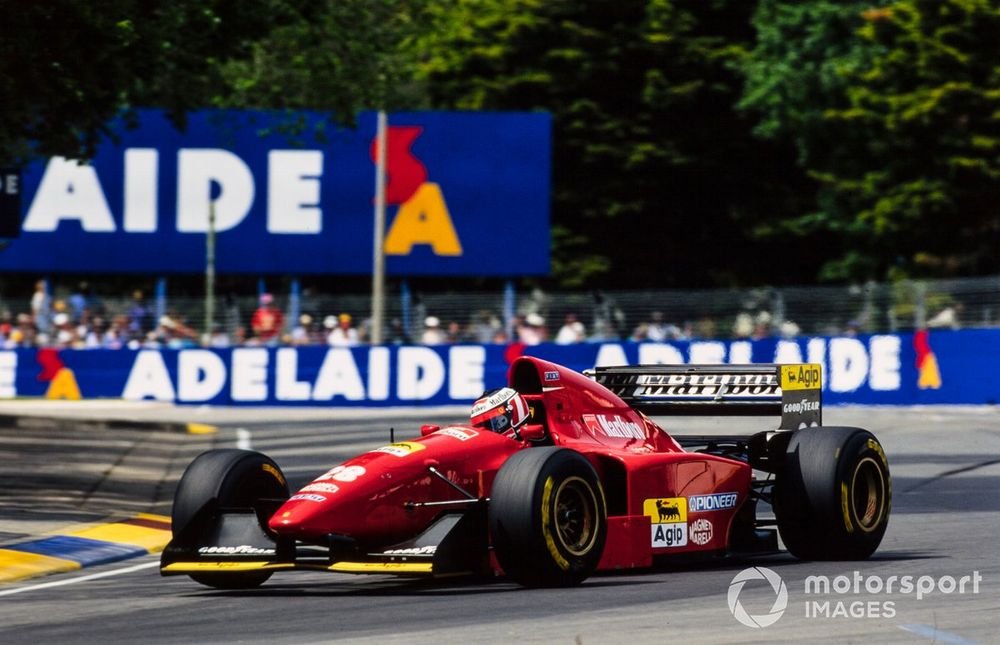
Gerhard Berger drives a Ferrari 412T1B with an iconic-sounding V12 engine
Photo by: Motorsport Images
And the V12s were even better. Having recently had the pleasure of listening to the Lamborghini V12-powered McLaren test hack in the flesh (coming soon to an issue of Autosport), this was even more raw. In its sonorous encore, it held power and brutality, yet the beautiful and poetic undertones. A V12 played the Ferrari soundtrack for so many years, howling through the Monza parkland like a banshee in search of her lost child. This was not noise, nor sound: this was music.
Whether or not you like the sound of the current engines, at least it has a story to tell; those pursuing lions, perhaps, or that of a caged beast laboriously bellowing into its pitch-black confines. A V8 cannot inspire me to make any kind of allegories for its noise, other than just being loud for the sheer sake of it.
V8s are the right idea, but has F1 moved on? – Filip Cleeren
I can’t and won’t match Jake’s prose singing the praises of the V12, which I agree is probably the best engine I have heard in person. Having a background covering the Le Mans 24 Hours is the best schooling to become somewhat of an engine sound sommelier, and there is something about the sweet symphony of frequencies emanating from a V12 that makes it much more interesting than the in-your-face grunt of a V8.
I do understand the reasoning behind wanting a more aggressive and enticing sound than the current muffled and tinny-sounding V6 turbo hybrids, although they admittedly have grown on me since, but I don’t think the pre-2014 V8 sounded all that pleasant compared to the hair-raising shrieks of the preceding V10.
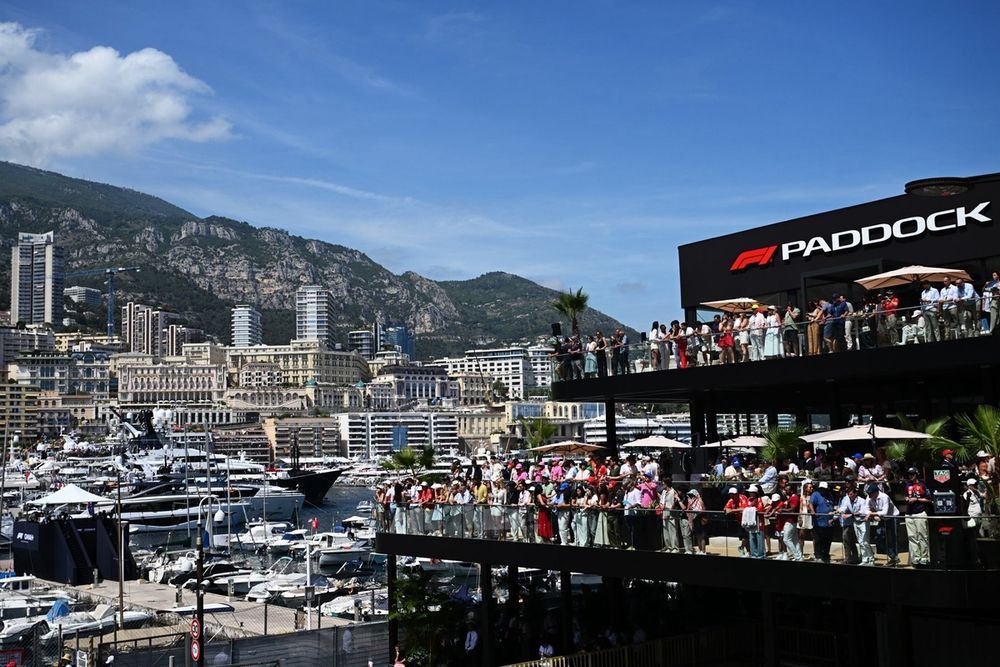
Photo by: Sam Bagnall / Sutton Images via Getty Images
I don’t want to be the boring guy here, but there are also a few other side-effects to this V8 push that perhaps haven’t really been thought through properly. A decade has passed since loud engines were part of F1, and the series is now in a very different place, with a younger and different demographic of fans and more races held in urban settings that would very likely not survive if the decibels were going to skyrocket. I also wonder how many fans really want V8s specifically and if there has been enough robust research around this.
A return to nicer sounding V10s or V12s is certainly not going to happen because of their bulk and lack of road relevance, nor is F1 going to move away from street tracks (sorry, purists). So while naturally aspirated V8s are looking like the way F1’s stakeholders are wanting to go, and I’m not against that, I wonder if F1 as a business is onboard with some of the unwanted side effects that will come with it.
We want to hear from you!
Let us know what you would like to see from us in the future.
Take our survey
– The Autosport.com Team
Read the full article here