



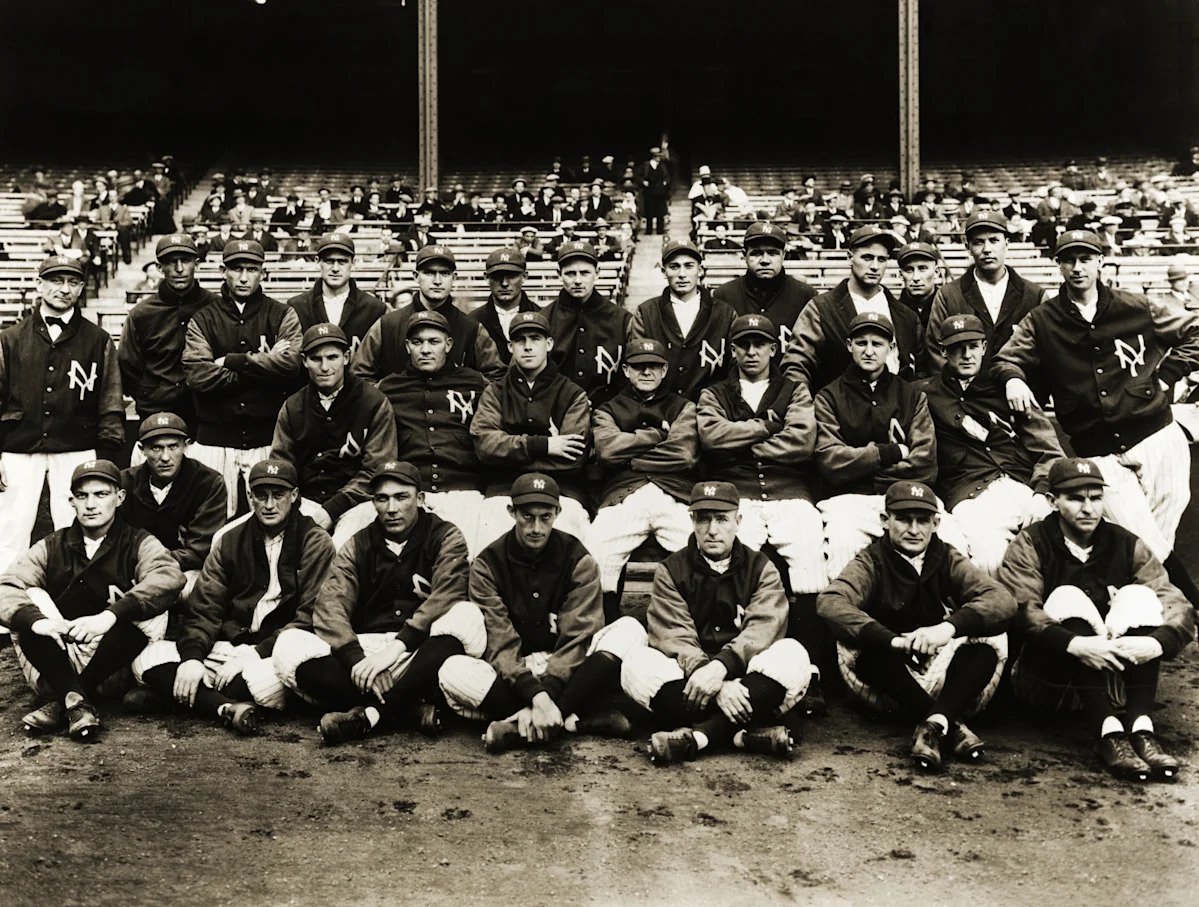
The first half of the 1920s were a transformative time for the Yankees, the still relatively new franchise transitioning from an also-ran into a true behemoth. With the arrival of Babe Ruth coinciding with the beginning of the live-ball era and the assemblage of Murderers’ Row, the building of the sport’s greatest empire was just beginning. Not all who played for those teams garnered the same fanfare as your Ruth’s and Gehrig’s — some were lucky enough just to be along for the ride, and that label certainly applies to right-handed relief pitcher Herb McQuaid.
Hebert George McQuaid
Born: March 29, 1899 (San Francisco, CA)
Died: April 4, 1966 (Richmond, CA)
Yankees Tenure: 1926
Herbert George McQuaid was born on March 29, 1899, in San Francisco, CA, to Frank McQuaid — brother-in-law to former heavyweight champion James J. Corbett — and Lillian Cecilia McQuaid (née O’Neill). He grew up just across the street from Recreation Park, home of the Class AA San Francisco Seals of the Pacific Coast League — a young McQuaid gaining his love for the game from watching Seals games out the window of his childhood home. His family suffered tragedy when he was young, his father taking his own life during a poker game when McQuaid was just 13-years-old.
McQuaid attended Mission High School and pitched for the Visitacion Valley neighborhood team before moving to the Fruitvale neighborhood of Oakland prior to his senior year. By 1919 he was working as a stenographer and pitching for the St. Joseph’s Sodality team of east Oakland in the Oakland Midwinter League. He caught the attention of local professional teams when he tossed a near-no-hitter for the J.J. Kriegs store team in 1920, and earned an invitation to the training camp held by the team he watched growing up, the Seals. He threw a complete game during his audition and snuck a spot on the Opening Day roster when a pair of their pitchers were released for gambling allegations.
McQuaid threw a complete game in his professional debut, a 2-1 win over Portland at the same Recreation Park that he grew up adjacent to. That fall, Ty Cobb traveled to San Francisco as part of his barnstorming tour, and McQuaid retired him twice on a ground out and popup in another. McQuaid pitched two seasons for the Seals and one for the Los Angeles Angels — both in the PCL — and caught the eye of Cincinnati Reds scout Dick Egan, with whom he signed prior to the 1923 season.
The then-24-year-old pitcher made his MLB debut that season, giving up a run in two innings of relief of an 8-2 loss to the Pirates on June 22, 1923. The six-foot-three hurler possessed a “blinding” fastball, a fast overhand curve, and a slower, “wicked” underhand curve. Shortly thereafter, he missed over a month with a sore foot, and was later unused during a 15-game road trip when he returned from injury. However, he made nine appearances between September and October, earning his first start on September 13th and first career win nine days later. The Reds finished second in the division and missed out on the playoffs, but McQuaid finished the year with a 2.36 ERA and didn’t allow a home run across 12 appearances totaling 34.1 innings.
That winter, the Reds sold McQuaid to the St. Paul Saints of the Class AA American Association as partial payment for Chuck Dressen. He pitched two seasons for the Saints, going 21-14 in 76 appearances with a 4.39 ERA across 314 innings. In September of 1925, Saints president and former Yankees scout Bob Connery sold McQuaid to the Yankees in part to prevent him from being exposed to the Class AA draft, New York agreeing to pay St. Paul an additional $25,000 should McQuaid remain on the roster beyond May 1st.
McQuaid made the Opening Day roster and appeared in one game before the Yankees agreed to return him to the Saints. However, they made an immediate U-turn and traded pitcher Hank Johnson, outfielder Nick Cullop, two players to be named later, and cash to St. Paul to reacquire McQuaid. He made one start that season, allowing three runs in seven innings of a 4-3 win over the Tigers, and finished the year with a 6.10 ERA in 17 appearances totaling 38.1 innings having not appeared in the Yankees’ final 14 games of the regular season.
As division winners, the Yankees advanced to the World Series to face the Cardinals. McQuaid was the very last player added to the World Series roster, with instructions that he only be called as a last resort. He didn’t make an appearance as the Bombers fell to St. Louis in a seven-game instant classic. He wouldn’t pitch another game in the Majors, the Yankees selling him back to the Saints for $10,000 at the end of the season.
McQuaid pitched six more seasons in Class AA between American Association and the Pacific Coast League. He retired from professional baseball in 1932 and ran a taproom in Modesto and was later a bartender in Oakland, where he coached local youth teams in the area he grew up. He passed away from cancer on April 4, 1966, in Richmond, CA, at the age of 67. A relative footnote during a legendary decade in Yankees history, it is said that “his greatest act with the Yanks was refusing to be released.”
References
Herb McQuaid. Baseball-Reference.
Herb McQuaid. Baseball Almanac.
Gibson, Darren. “Herb McQuaid.” SABR.
See more of the “Yankees Birthday of the Day” series here.
Read the full article here