




I’ve been working in cycling and – by nature of being a woman working in cycling – women’s cycling for around 15 years, and if there’s one sentence I’m sick off, it’s “well, things are improving, it’s just slow.”
“Progress is there, but it’s incremental.”
The same stock response, over and over, to explain why women’s gear always follows several years after the men’s version of the same; why headline races in the men’s calendar have not existed for women; why joining the average club ride still feels like being the rare species attraction in a zoo: “Here, we have the female variant of the cyclist. It has a monthly cycle which occasionally interferes with its performance, at times in life it may carry a child, and it gets really ratty if you send sexist memes in the group WhatsApp chat.”
Latest Videos FromCycling Weekly
All of this alongside annual marketing campaigns about ‘celebrating women on bikes’ that would create a big noise annually, but ultimately fade into obscurity a week later.
Perhaps it’s those past experiences that made me overlook Canyon’s ‘We Femmes’ campaign this year, with its bold jersey graphics and simple premise: “If you ride, bring a woman who doesn’t.” I was becoming so long in the tooth and bored of the narrative that ‘change is coming’, I didn’t buy that a Sex Pistols-inspired pink and yellow splattered jersey would make any difference.
Canyon-SRAM raced with the ‘We Femmes’ logo on their kit this year
(Image credit: Canyon-SRAM)
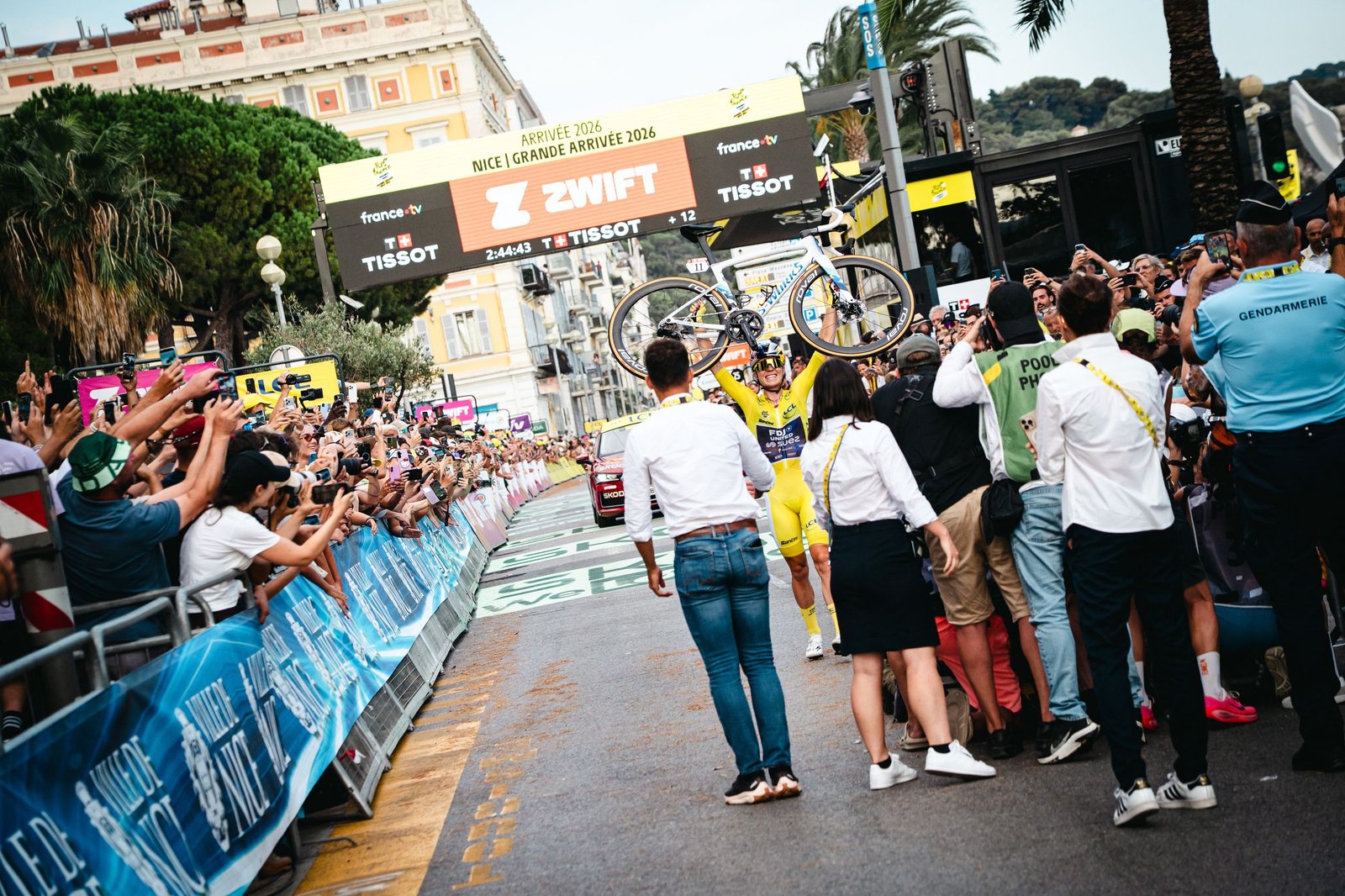
But, I bring good news. The Tour de France Femmes avec Zwift has just concluded its fifth year of racing, and the stats speak for themselves: momentum is gathering. Progress is finally, thank Zwift, not slow.
Strava was the latest to drop its numbers; it found a 60% increase in women taking on their first-ever 100km rides over the course of the race, and a 41% jump in first-ever 50km rides. Overall, there was a 30% uptick in ‘longest ever’ rides uploaded by women. Over in France, there was a 15% increase in rides logged by women, with a 28% distance jump.
Supporting pro women’s racing isn’t just about the world stage, these numbers show what happens on the podium influences everyday habits.
More women riding means more women buying, which bodes well for those of us who just want purchasing a bike with a handlebar and saddle that’s within the realms of sensibility for the female anatomy to be easy.
Announcing its sponsorship of the white jersey for 2026, Liv reported an incredible stat: 17% of women who watched the Tour de France Femmes avec Zwift in 2025 actually went out and bought a bike, while 69% were motivated to ride. If that doesn’t advertise the commercial opportunities available in supporting women’s racing to brands, I don’t know what will.
Headline sponsor Zwift grew its women’s share from 9% before 2022, to 22% as reported in 2025, with director of women’s strategy at the indoor training brand, Kate Veronneau, calling the investment an “absolute, clear, undeniable success”.
For businesses, let’s not forget that women make up roughly 50% of the population, and yet 2022 stats showed UK males were making three times as many cycling trips vs females, with women around 20% of British Cycling and 15% of USA Cycling’s membership. That’s a pretty big currently untapped market with cash to spend – especially given women influence a reported 85% of consumer spending.
Disappointingly, only three of the nine stages of the race were broadcast in full, and yet 23 million people in France alone tuned in, with the race achieving a 32.9% audience share in the host country, up from 31.6% in 2025. Rest of world stats are yet to be released, but race director Marion Rousse told Cycling Weekly that organisers ASO were “giving serious consideration to broadcasting all the stages in full in the future”.
The interest was clearly there. All of a sudden, rather than the crowning race of the women’s calendar being reduced to comparison to the men’s event, with headlines around how the female peloton differs from its male counterpart, the focus was on the beef (or lack thereof) between eventual victor Demi Vollering (FDJ United-SUEZ) and Kasia Niewiadoma-Phinney (Canyon-SRAM), the latter’s incredible Ventoux QOM and Pauline Ferrand-Prévot’s questionable time trial position.
Whilst our own numbers are yet to be crunched, a simple snoop in Google Analytics shows an uptick of 24% in views on pages with Tour de France Femmes in the title over the course of the race, on Cycling Weekly. Our homepage was bursting with news, because there was so much to deliver. The days of ‘we’re covering Women’s WorldTour racing because we should’ are gone – we’re well and truly in the era of ‘the audience is here for it’.
Before this year’s race began, Canyon’s ‘We Femmes’ felt a little like another piece in the puzzle of more ‘incremental progress’. Viewed in light of this year’s utterly incredible, unmissable, can’t-wait-for-next-year’s race, and the numbers behind its success? Well, I better go grab a friend to ride with. Handy, because since the Tour de France Femmes first appeared on our screens, I’ve had two daughters; here’s to a future where they’ll never be the rare species on the group ride.
Read the full article here