




A wiser man than this author once opined that you can make statistics stand on their head and sing Jerusalem. After the Australian Grand Prix, the official F1 social media accounts published a graphic (or, to use the ghastly argot of those in the trade, an “asset”) trumpeting the fact that while last year’s race featured 45 overtaking manoeuvres, this year there were 120.
Those who watched the race may be inclined to feel that not only has the commercial rights holder patently inverted the stat, it has horsewhipped it to perform Status Quo’s greatest hits while the blood runs to its head. Overtaking in Formula 1 – or lack thereof – has been a topic of debate since the dawn of the world championship, but the solution is not to make it easier by in effect widening the goalposts.
All that does, ultimately, is devalue the achievement of overtaking, in much the same way world championship points have been diminished since the decision was made to distribute them like confetti. When pretty much everyone behind the top four finishers in a race are lamenting the cheapening of the act of overtaking by artificial means, including two world champions, it would be wise to reflect on the consequences rather than claiming the surfeit of quantity over quality as a win.
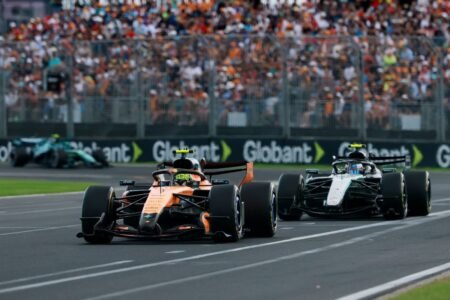
“It’s not for me,” said Lando Norris after the race. “It’s a shame, it’s very artificial, depending on what the power unit decides to do and randomly does at times. You get overtaken by five cars and you can just do nothing about it sometimes.”
Lando Norris, McLaren, Andrea Kimi Antonelli, Mercedes
Photo by: Joe Portlock / Getty Images
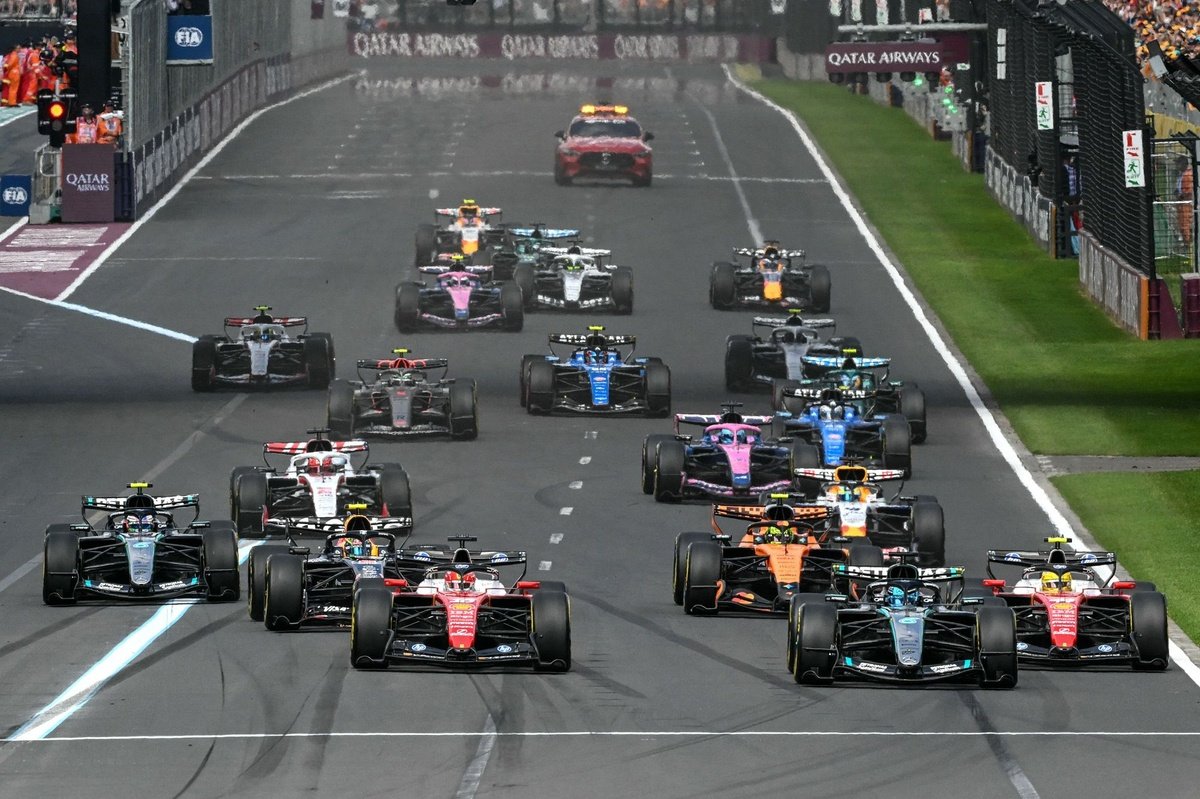
Weighed superficially, the harum-scarum opening phase of the race at Albert Park was exciting and spectacular, with a drawn-out battle for the lead featuring up to three drivers at one point, along with wheel-to-wheel combat further down the field. But it was pure popcorn, fuelled by the unseen dead hand of software rather than guts and finesse.
Many of the battles, such as they were, had been set in motion by drivers being out of race-pace order through having a faster start, which at the moment is determined more by clever engineering than by driver reflexes and an exquisitely balanced right foot.
This is what is piquing the drivers, along with the nature of racing 2026-style: while it may seem thrilling in the moment, and when clipped up and packaged for consumption on social media or the news highlights, but it is essentially a process of yo-yoing until some outside circumstance breaks the string.
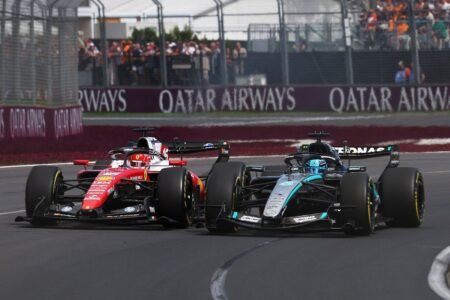
Take the main battle for the lead, for example. Sure, George Russell and Charles Leclerc swapped places several times, but this was the product of using electrical boost at a given moment to make the pass and then, with the battery depleted, being vulnerable to a similarly electrically augmented countermove.
The nature of electrical deployment and harvesting with limited storage means the driver ahead cannot break away until one of them over-stresses their tyres – or, in the case of Leclerc at Albert Park, the other driver pits under a virtual safety car while your pitwall sits on their hands. Once Russell was unstitched from Leclerc and Lewis Hamilton, he was free to lay down the Mercedes W17’s superior race pace, because the ‘optimal lap’ isn’t necessarily the same as one in which a driver is attacking or defending.

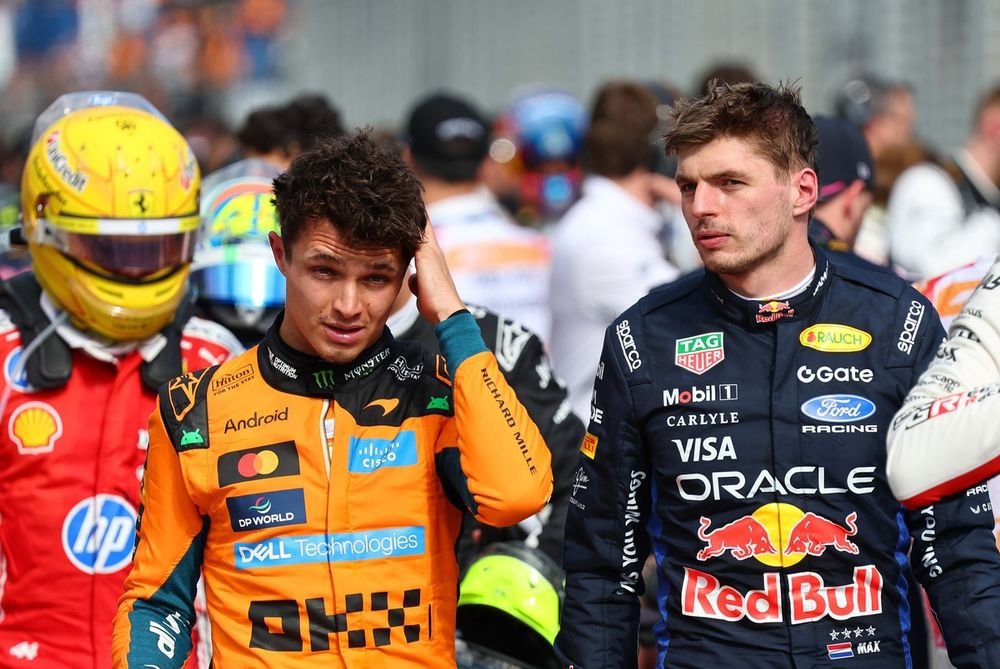
Drivers have been largely unimpressed by racing – at Albert Park at least.
Photo by: Andy Hone/ LAT Images via Getty Images
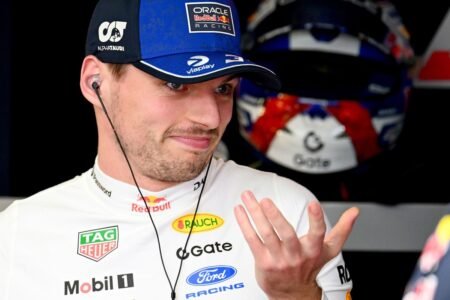
Max Verstappen won F1’s ‘Driver of the Day’ poll, having raced from 20th on the grid to sixth, but he was rather less impressed than those thumbing multi-choice buttons on X-formerly-known-as-Twitter or whatever, telling one broadcaster that passing cars two seconds a lap slower than him was “just clearing traffic”.
“They [F1 and the FIA] ask questions and I give my opinion of what I would like to see and what I think is better for the sport,” he said in the post-race media ‘pen’.
“Because I do care about it, I do love racing and I want it to be better than this, right?
“So, let’s see what we can do. I hope that even during this year maybe we can come up with some different solutions so it becomes more enjoyable for everyone.”
The common denominator among those drivers critical of the new regulations (and there’s an argument to say those being positive are doing so at the behest of their teams, for diplomatic reasons) is that so many elements of car performance, and of the racing, are now out of their hands, determined by the exigencies of the ‘optimal lap’ – something plotted out on a spreadsheet rather than the seat of the pants. They feel their input as a performance differentiator has been diminished, especially if overtaking moves are meted out by the push of a button, then arbitrarily rationed.
One powerful counter-argument is the extent to which the audience cares. Purists may chafe – that is very much the tenor of Autosport reader feedback – but the prevailing wind is determined by the viewing figures, and whether the trend line is up or down. If the former, then those raging in sundry web forums, comments sections and social media silos are ultimately screaming into the void.
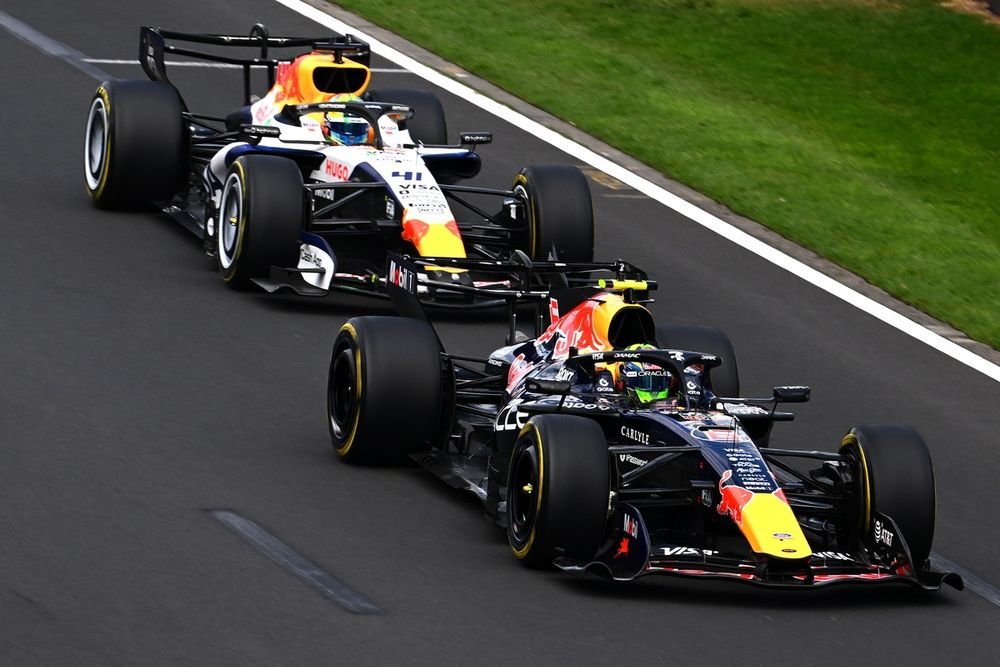
Arvid Lindblad (following) was one of the drivers whose rapid starts put them ahead of where they might ordinarily be in the opening laps.
Photo by: Mark Sutton / Formula 1 via Getty Images
“I didn’t hear any one of the drivers speaking particularly good of the last cars and saying it was the best car,” said Mercedes boss Toto Wolff. “We tend to be very nostalgic and looking at past events.
“Clearly, we’re all stakeholders of the sport. We need to have a great spectacle, the best cars in the world and the best drivers. Being exciting for the fans. That’s why we just need to look at the product.
“One perspective is the view of the drivers, which is an important perspective. But… Stefano [Domenicali, F1 CEO] would say that the single metric that matters to him is whether the fans like it. That is what we need to look at.”
Regardless of the varnish applied by Wolff, it is acknowledged within F1’s inner sanctum that there is a problem – the question is what to do about it, and when. The FIA is known to have a shortlist of options but it, along with F1 and the teams themselves, are in no hurry to tinker given the relatively small sample size of one grand prix.
The wisdom of this was made clear when the FIA reversed its decision to delete the ‘straightline mode’ section on the straight leading up to Albert Park’s Turn 9. Single-seater director Nikolas Tombazis made the initial call to strike off the zone on safety grounds, based on feedback expressed during the Friday night drivers’ meeting.
But this ostensibly minor change would have had far-reaching effects on car setup and how the teams ran their power units, effectively rendering Friday’s data irrelevant. The active aerodynamics are integral to the way teams approach a race because, while the object of introducing them was to reduce drag and its effect on electrical power deployment, they have significant second-order effects on tyre loadings and, therefore, ride heights.
Removing the straightline mode could have had all manner of unintended consequences potentially more embarrassing to F1 than the U-turn, so undoing the change was the pragmatic course of action. The lesson here is to gather more data and widen the sample size before making further changes, so the consequences can be fully anticipated and understood.
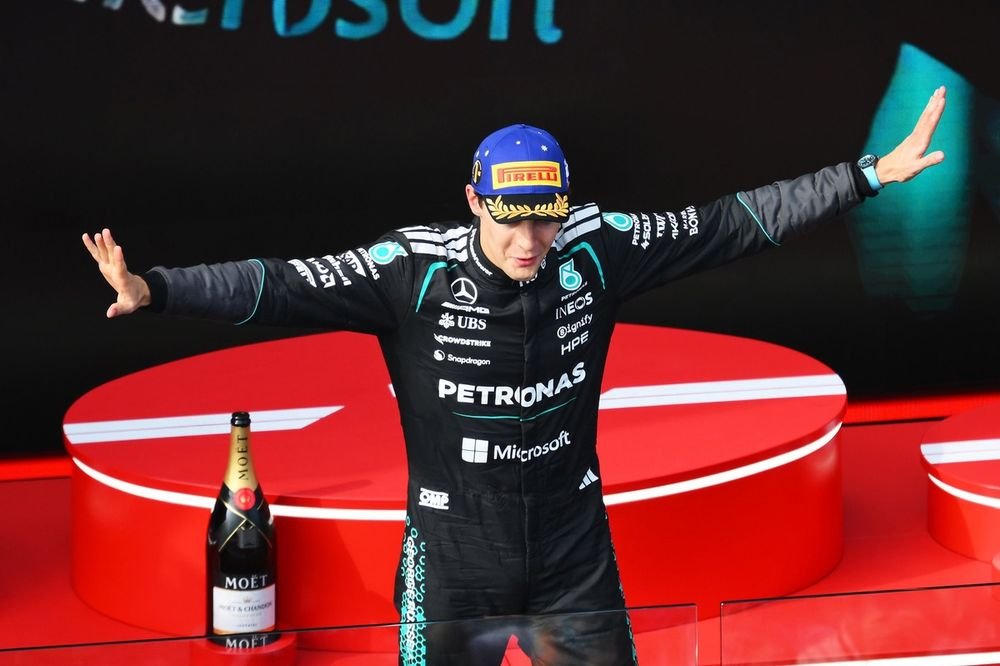
George Russell, Mercedes
Photo by: Simon Galloway / LAT Images via Getty Images
What’s positive is that a sensible consensus is building: there’s broad agreement that changes need to be made, and that now is not the time. In hindsight, opening the season with two circuits where the cars are energy-compromised by the ratio of straights to corners was also a mistake.
“We still have a sport,” said Williams team principal James Vowles. “Can we improve on it? Yes. And what I really like, and actually this is a good thing, because normally we [the teams] are at each other’s throats.
“Before we went into Bahrain, what we all said is, ‘Are we in the right place? No. Do we know exactly what to change to make it better? No. Let’s go through these two races, including a sprint race, and then actively change these rules to be in a solid place afterwards.’
“What it looks like, I’m not sure yet, but are we in a perfect spot? No. I think we are a little bit energy starved, and we have to remember this [Albert Park] is probably the top three in terms of worst tracks for it.
“But irrespective of that, is this what we want to show as a sport? No. And we want it to be in a slightly better place. So there’s about four or five different proposals on the table.
“We’re going to go through the next few races, just see really what works and what doesn’t work. But watch this space!”
We’ll happily watch the space – so long as nobody parks a disingenuous ‘asset’ in it…
We want to hear from you!
Let us know what you would like to see from us in the future.
Take our survey
– The Autosport.com Team
Read the full article here