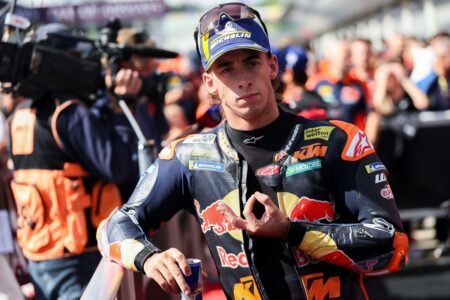





Until this weekend, KTM’s last MotoGP victory had come courtesy of Miguel Oliveira, in the 2022 Thai Grand Prix – a race heavily affected by rain. That same Sunday at Buriram, Pedro Acosta finished 16th in the Moto2 race. It was his first season in the intermediate class, before being crowned champion the following year (2023) and making his MotoGP debut in 2024.
A lot has happened since Oliveira’s Thai win. The Portuguese rider is no longer even in the world championship – he has been racing in WorldSBK this season. KTM also came close to leaving after the company went bust, before it was placed under administration and then rescued by one of the shareholders that was already involved when the collapse began in 2024.
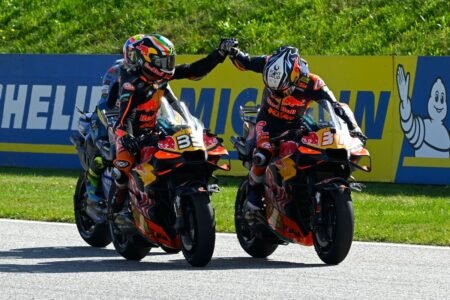
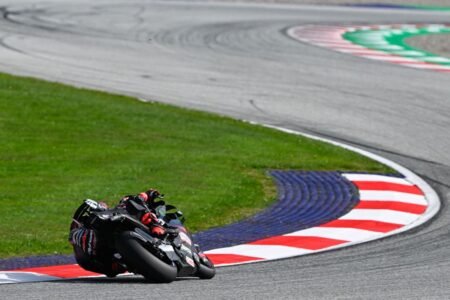
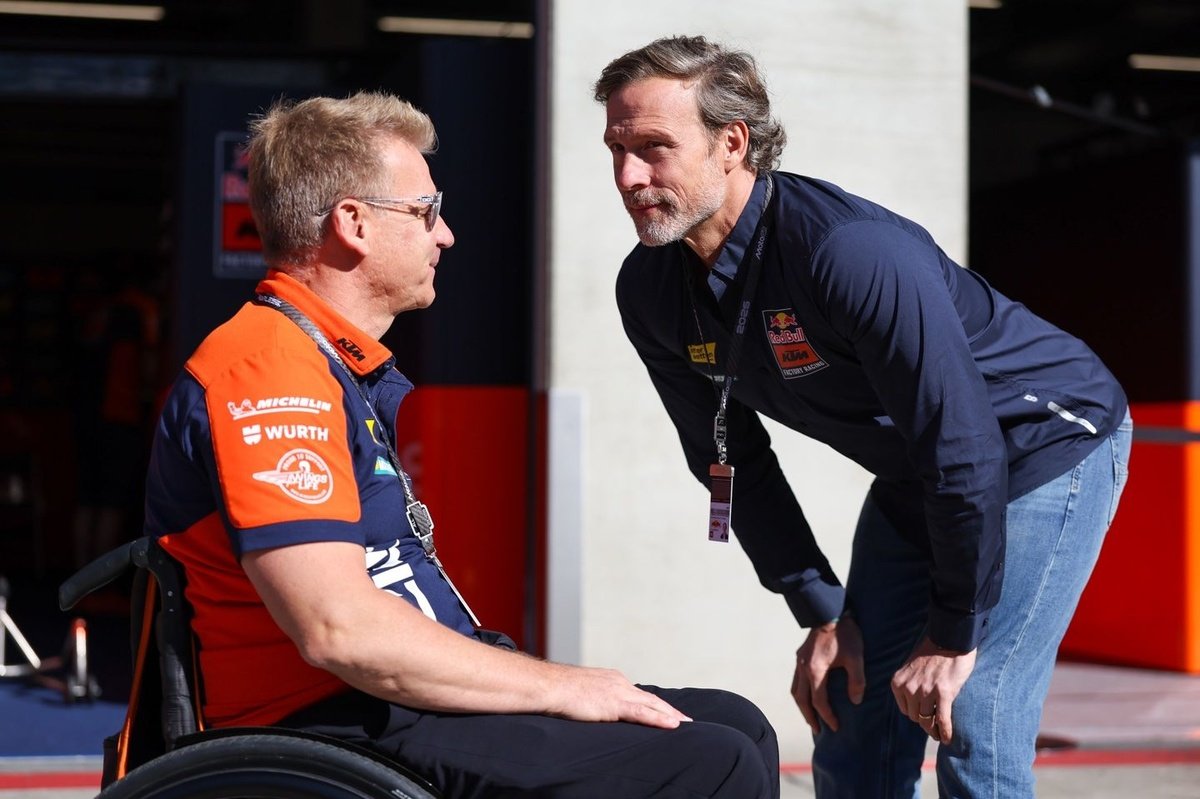
This Sunday, as Acosta completed the final three laps at the Red Bull Ring, which were probably the longest of his life, the cameras focused on the orange bikes’ garage. They picked out Gottfried Neumeister, KTM’s CEO in the post-Stefan Pierer era, and Pit Beirer, the company’s motorsport director. The moment their rider (soon to be their ex-rider) crossed the finish line as a winner, the two executives embraced, visibly emotional. It was pure catharsis. A moment that released the enormous amount of tension that had built up over the past year and a half.
But the moment also brings with it a series of lessons about the mistakes that must not be repeated if KTM is to avoid falling back into such a barren period.
Until the financial cataclysm of late 2024, if you sought paddock opinions of KTM, one of the adjectives that came up most often was ‘arrogant’.
“If you analyse it, KTM’s pride and stubbornness have always held it back,” a former KTM employee, who now works for another manufacturer, tells Autosport. “The people in charge had no patience. And without a method and a clear direction, it is very difficult to make it in MotoGP.”
That idea is backed up by some of Pierer’s remarks in the past. “We will never give up on the trellis frame, because it is one of the main advantages of our bikes,” he told Autosport in 2019. Three years later, the engineers decided that the only way to make the RC16 capable of fighting for MotoGP victories was to abandon that philosophy and embrace carbon fibre.
Stefen Pierer, former KTM CEO
Photo by: Gold and Goose Photography / LAT Images / via Getty Images
At times, the stubbornness sounded a lot like arrogance, particularly when it came to setting targets. “We have just completed a five-year period in which we set ourselves the goal of closing the gap to the front teams. Over the next five years, the objective is to win the title,” said Pierer in another interview with this writer in 2022, shortly before a process of upheaval began that brought anything but the stability needed for the workforce to operate with peace of mind.
Francesco Guidotti was brought in as team manager and sacked two and a half years later, in a revolving-door story that also affected Fabiano Sterlacchini. The Italian engineer had been Gigi Dall’Igna’s right-hand man at Ducati before KTM snapped him up in 2021, only for the two sides to agree to end their relationship four years later. At the end of 2024, Sterlacchini joined Aprilia, where he has been singled out as one of the key figures behind the RS-GP’s remarkable competitiveness over the past two seasons. Guidotti, for his part, will take charge of Trackhouse when Davide Brivio’s contract with the American team expires at the end of this year. That turbulent period will also be remembered for the confusion generated in the boardroom, with more riders under contract than bikes available.
But the most painful loss from this hellish journey has been Acosta. In 2027, he will pull on red Ducati leathers, in an effort to increase his chances of becoming world champion.
“I tried to convince Pedro to stay with us,” said Neumeister in Austria last weekend. “But when I sat down with him, he told me he was Spanish and that his main goal was to beat Marc Marquez with the same weapons. There was nothing I could do about that desire.”
The tone of KTM’s new boss sounds less arrogant than that of his predecessor, which is understandable given the hole the manufacturer is climbing out of. KTM will have to take careful note of the mistakes made during the previous era if it is to avoid falling back into the same trap.

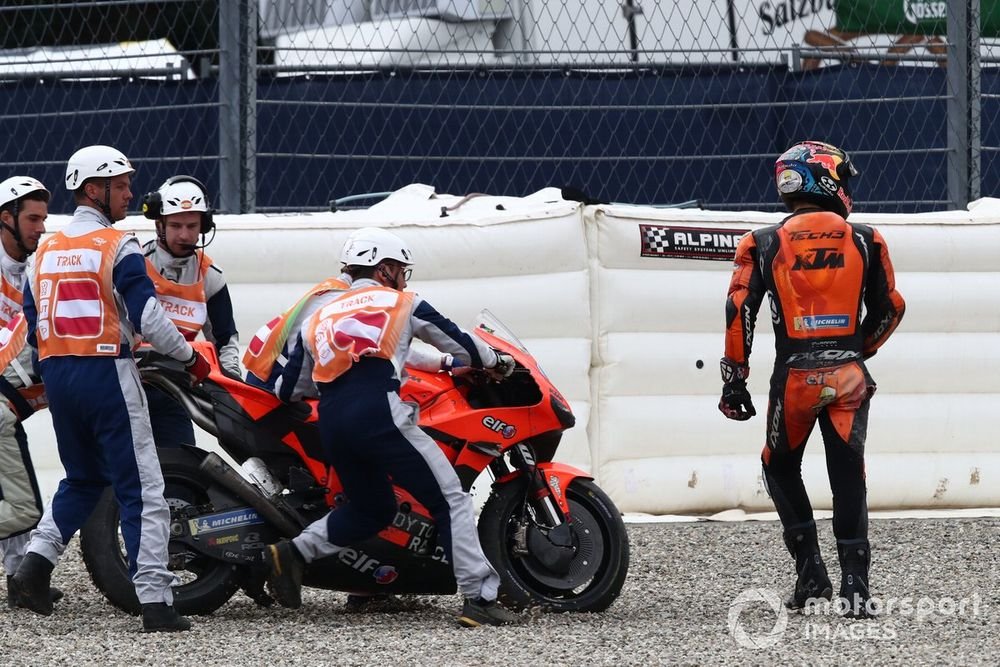
Remy Gardner, KTM Tech3 crash
Photo by: Gold and Goose Photography / LAT Images / via Getty Images
The business side is now being handled by the administrators at Bajaj, the Indian group that took control of the company, but it remains unclear how the MotoGP operation will ultimately be structured. Acosta’s departure will be offset, as far as possible, by the arrivals of Alex Marquez and Fabio Di Giannantonio. The former will inherit Brad Binder’s technical chief, Phil Marron, while Manuel Cazeaux, Maverick Vinales’ trusted lieutenant, will lead Di Giannantonio’s side of the garage after being promoted from Tech 3.
It is also known that KTM’s support for Tech 3 will be significantly reduced from 2027 onwards, with the team run by Guenther Steiner set to receive far less backing and operate with much greater independence. That is hardly an indication that inspires optimism.
With the smell of prosecco still lingering on the clothes worn on Sunday, KTM would do well to learn from the mistakes that sent it tumbling towards the abyss not so long ago, particularly those born out of complacency. A dose of humility at the right time can only do good.
We want to hear from you!
Let us know what you would like to see from us in the future.
Take our survey
– The Autosport.com Team
Read the full article here