




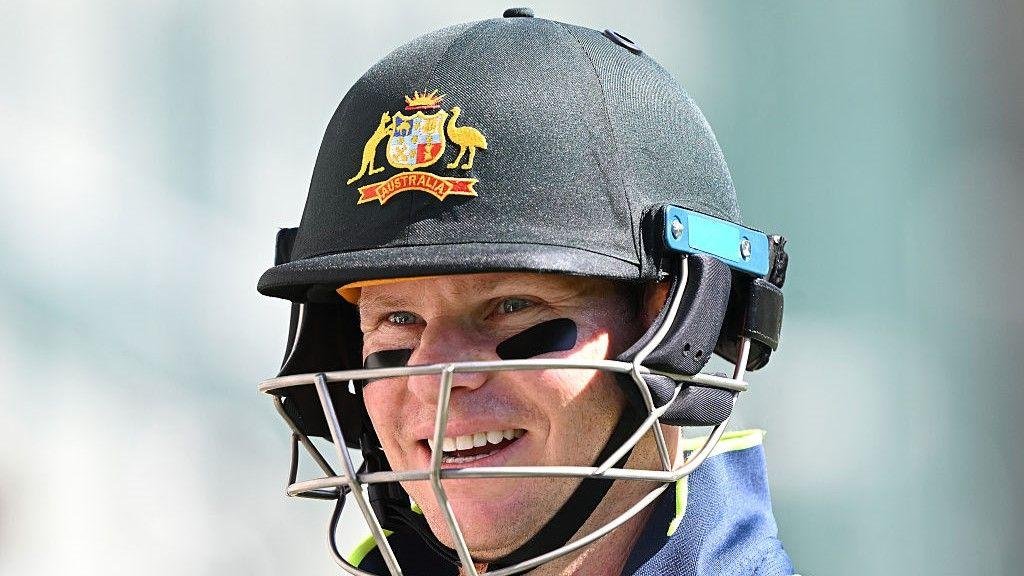
Australia batter Steve Smith has been wearing black strips of tape under his eyes ahead of the second Ashes Test against England in Brisbane.
The second Test is the day-night match, meaning floodlights will be in operation and the players will use a pink ball.
The patches have been used in the past by former West Indies batter Shivnarine Chanderpaul to reduce the glare caused by the sun and improve contrast.
Australia’s stand-in captain was photographed wearing the patches while batting in a nets session, with the anticipation of floodlights being in use at the Gabba.
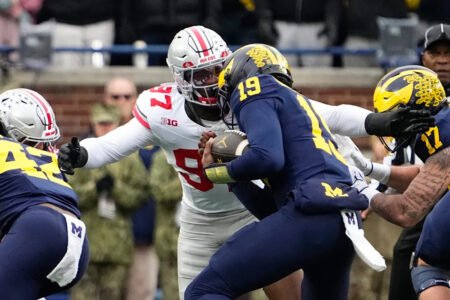
The method is known as ‘eye black’ and is commonly used in American sports, including American football, baseball and lacrosse.
Babe Ruth, one of baseball’s greatest players, used it in the 1930s and seven-time Super Bowl winner Tom Brady famouly wore paint under his eyes too.
“There must be sort of science or theory around it,” explained Australia team-mate Marnus Labuschagne when asked about Smith’s patches.
“I haven’t read into it. I think it’s something to do with glare, especially on the wicket. The glare up from the wicket. Maybe it helped pick the ball up better.
“I look at it either way, if there is a science behind it or whether it is a placebo. If it doesn’t but it feels like it works, both ways, it works.
“I would love nothing more than to see him stroll out to the wicket with the Shivnarines and go out there and smack them around everywhere.”
Does eye black actually work?
Steve Smith has been experimenting with eye black ahead of the second Ashes Test [Getty Images]
A number of tests have been conducted this century to determine whether eye black actually has an effect.
A 2008 episode of American science-entertainment television show MythBusters ran tests and found that they made no real difference compared to light coloured make-up.
Results changed after the subject put on a baseball cap, finding a noticeable reduction in the amount of light exposure. However, glare was not fully eliminated.
A separate study by Yale University found that the paint helped to reduce glare and improved contrast sensitivity, but that test was subject to unavoidable learning bias.
A second study by the University of New Hampshire reached an insignificant result due to testing a small sample size. But it did find that they only made an impact from short distances.
This article is the latest from BBC Sport’s Ask Me Anything team.
What is Ask Me Anything?
Ask Me Anything is a service dedicated to answering your questions.
We want to reward your time by telling you things you do not know and reminding you of things you do.
The team will find out everything you need to know and be able to call upon a network of contacts including our experts and pundits.
We will be answering your questions from the heart of the BBC Sport newsroom, and going behind the scenes at some of the world’s biggest sporting events.
Our coverage will span the BBC Sport website, app, social media and YouTube accounts, plus BBC TV and radio.
More questions answered…


Read the full article here