


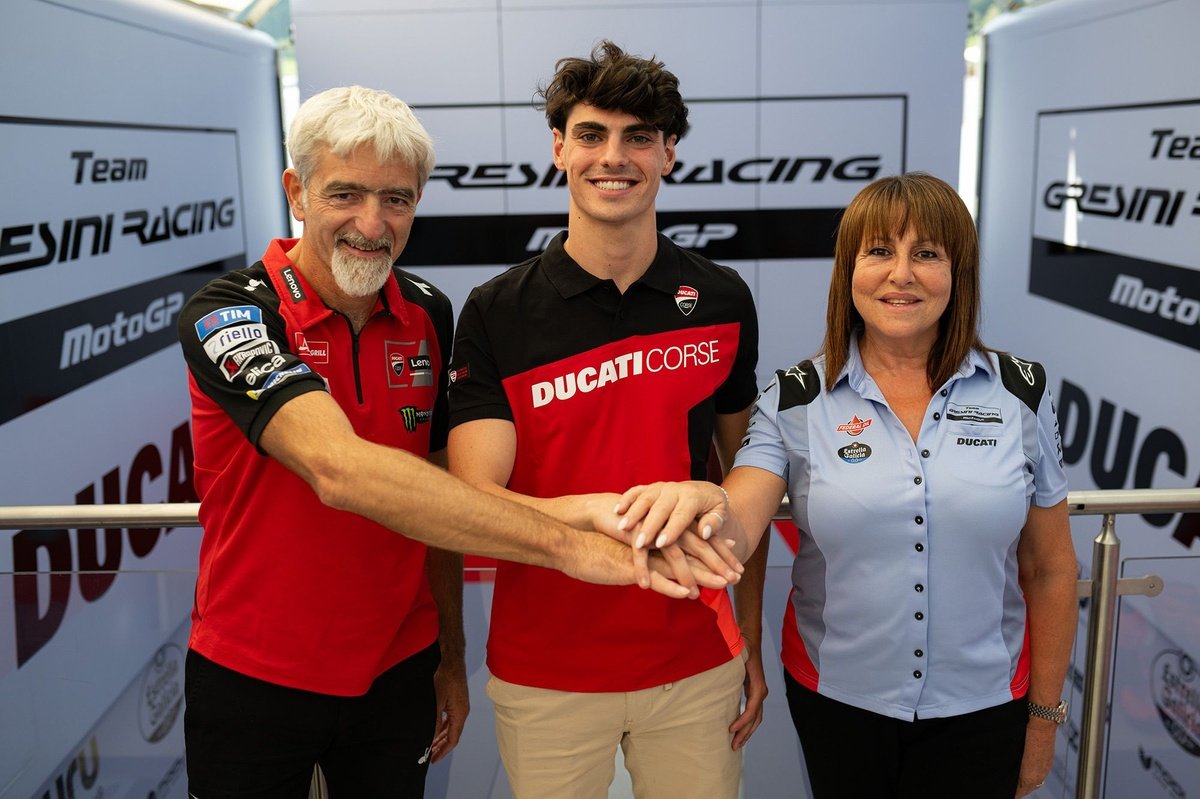
In many two-child families, parents are often required to step in and mediate domestic disputes driven by rivalry and ego. Transpose that dynamic to the MotoGP paddock, and Ducati has effectively been playing that role for several years between its two satellite teams, VR46 and Gresini.
Ask around either garage about the state of their relationship and the answer is consistent: “We don’t get along at all.”
Ducati insiders go a step further. “That’s exactly it – it’s like constantly having to mediate between two children who are always fighting. It’s exhausting,” a senior executive from the Borgo Panigale manufacturer told Autosport. The Italian brand has long had to balance relations between Valentino Rossi’s VR46 structure and the team founded by Fausto Gresini, now led by Nadia Padovani following his passing due to COVID.
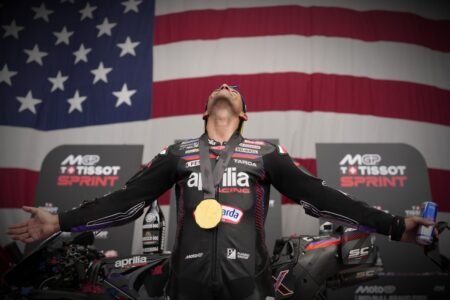
Tensions between the two outfits escalated further following the decision to move Fermin Aldeguer to VR46 from 2027. The Spaniard – currently partnered with Alex Marquez at Gresini and named Rookie of the Year in his debut MotoGP season – will switch teams under Ducati’s impetus, a move that has not gone down well with Gresini management.
The reaction in Faenza was strong enough to briefly cast doubt over the renewal of Gresini’s contract with Ducati, which expires at the end of the season. Aldeguer’s own wishes were not enough to alter the outcome: he had consistently stated that he would prefer to stay put if given the choice.
Fermin Aldeguer, Gresini Racing
Photo by: Gold and Goose Photography / LAT Images / via Getty Images
With Alex Marquez already set to join KTM, replacing that line-up will be extremely difficult. That is precisely why Gresini had hoped to retain Aldeguer – an objective that ultimately proved unattainable for several reasons, some of them directly linked to VR46.
A key factor lies in VR46 inheriting the factory-supported status previously held by Pramac, which switched to Yamaha in 2025. The Tavullia-based outfit signed a two-year deal (2025–2026), with an option to extend for a further three seasons (2027–2029) – a clause that has already been activated, albeit not yet officially announced due to the manufacturers’ (MSMA) ongoing negotiations with MotoGP’s commercial rights holder.
That factory-backed status grants certain advantages over Ducati’s other customer teams, although in the past two seasons it has not translated into results or visibility.
In 2024, much of the spotlight fell on Marc Marquez who, alongside his brother, finished ahead of both Fabio Di Giannantonio and Franco Morbidelli in the standings.
In 2025, Alex Marquez secured the runner-up position in a standout campaign – three wins and 12 podiums – in stark contrast with the more subdued performances from Di Giannantonio (four podiums, sixth overall) and Morbidelli (two podiums, seventh). Aldeguer finished just behind the latter, although his victory in Indonesia and three additional podiums made him a frequent headline-maker.
There is a school of thought suggesting that the Desmosedici GP24 ridden by Alex Marquez in 2025 was more balanced than the GP25 used by Di Giannantonio – a claim few would have predicted beforehand.
Understanding Aldeguer’s move also requires examining his contract situation. The Spaniard is directly tied to Ducati through a deal signed in his final Moto2 season, running until 2028. Despite ambitions of joining the factory team alongside Marc Marquez in 2027, he ultimately accepted the pathway outlined in that agreement.
A salary increase also played a decisive role, making him the first non-Italian rider to join VR46 – a team with greater financial resources than Gresini.
Aldeguer is therefore set to receive the latest machinery specification, matching that of Marc Marquez and Pedro Acosta, even if all Ducati bikes are expected to converge technically under the new regulations coming into force in 2027. From that point, development throughout the season is likely to be the key differentiator between factory-supported riders and the rest.
Autosport understands Aldeguer’s future team-mate is expected to run a standard package. Di Giannantonio’s current form places him in a strong position to retain his seat, although VR46 is also open to the possibility of signing Nicolo Bulega, a former member of the VR46 Academy.

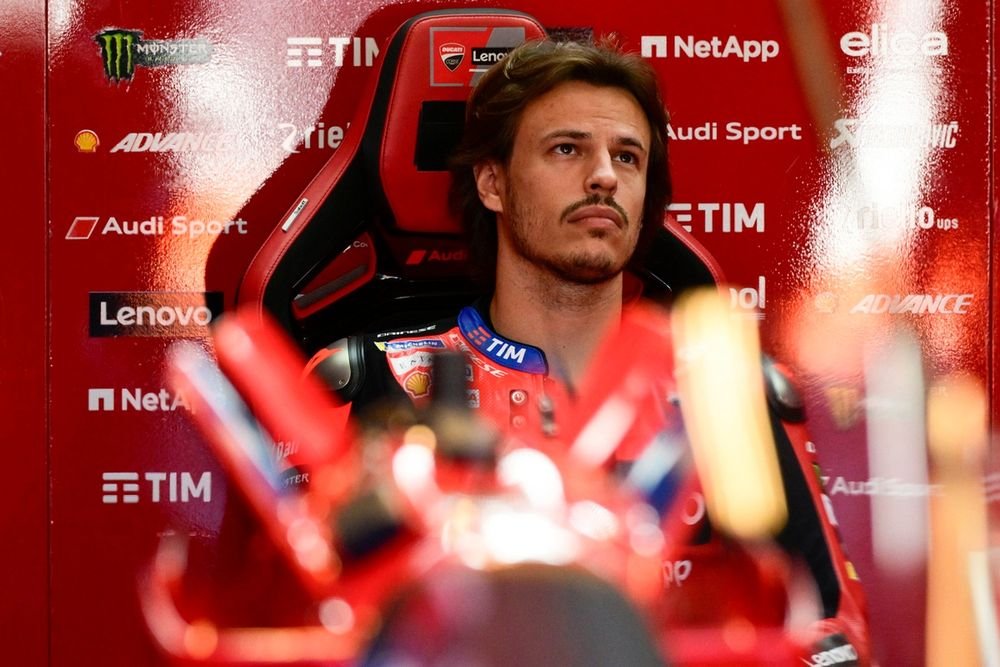
Nicolo Bulega, Ducati Team
Foto de: Gold and Goose Photography / LAT Images / via Getty Images
Aldeguer’s departure has acted as a trigger for Gresini to explore alternative manufacturers. However, the options are limited. Relations with Aprilia are strained – if not worse than those with VR46 – following the fallout that ended their partnership in 2021, when Aprilia transitioned to full factory status.
Gresini also held discussions with Honda, though it remains unclear whether a genuine opportunity existed to rekindle a partnership that once delivered runner-up finishes with Sete Gibernau (2004) and Marco Melandri (2005), or whether the talks were primarily a negotiating tactic to strengthen its position with Ducati.
Either way, the Honda route did not materialise. With Yamaha currently lacking competitiveness, continuing with Ducati has emerged as the most viable option.
On the rider front, Dani Holgado is set to be the first addition to Gresini’s future line-up. The Spaniard, currently third in the Moto2 standings, had been in talks with Yamaha but is understood to have informed the Iwata manufacturer of his decision in recent days.
For the second seat, several candidates are under consideration. The leading option is Enea Bastianini, who is keen to return to the team where he secured his first MotoGP victories in 2022. However, the Italian remains tied to KTM, which holds an option on his contract for a third season – a clause that would need to be waived for the move to happen.
We want to hear from you!
Let us know what you would like to see from us in the future.
Take our survey
– The Autosport.com Team
Read the full article here