


To reach Formula 1’s feted paddocks, it takes a considerable dose of dedication. To not only stay there, but to leave a legacy of success across different generations, more than a modicum of something special is required. It requires unparalleled determination. It requires ingenuity. Furthermore, it requires bravery to make difficult decisions amid the pressure-cooker environment of F1.
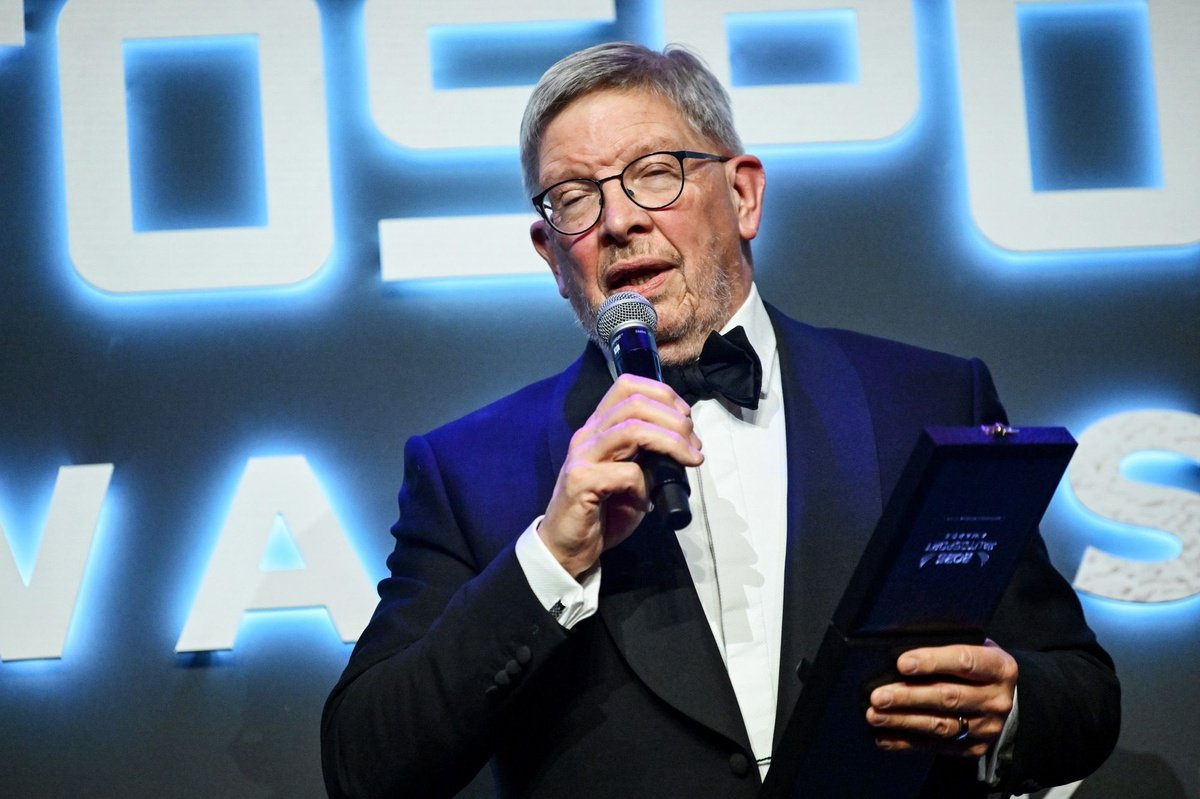
Ross Brawn, who received the Gold Medal at the 38th annual Autosport Awards in recognition of his vast achievements, demonstrated all of the above qualities and more across his time in F1. As an engineer, a designer, a strategist and, latterly, as a team owner, he went through the gamut of F1’s myriad challenges – and played an indispensable role in eight constructors’ and eight drivers’ championships. He enjoyed even more success in a short spell outside of F1 with Jaguar’s World Sportscar Championship team.
At Benetton, Brawn’s input – alongside the efforts of the likes of Michael Schumacher, Rory Byrne, and Pat Symonds – resulted in the team’s rise from occasional race winners at the turn of the 1990s to clinch two drivers’ titles in 1994 and 1995, paired with the teams’ crown in the last-named season. While Benetton’s 1994 car, the B194, courted controversy – suspicions of the use of driver aids could never be proved, but never truly went away – the B195 was a runaway success in Schumacher’s hands. The switch from Ford to Renault imbued the Benetton team with, arguably, the missing piece.
Small wonder, then, that Ferrari transplanted the Schumacher-Byrne-Brawn triad into its own operation. Then-principal Jean Todt wanted to find the quickest route to success; with Schumacher’s unparalleled status among the drivers, Byrne’s design flair, and Brawn’s ability to not only dictate the technical tempo, but also call the shots from the pitwall, Ferrari had what it needed to end a lengthy run without a title to its name.
After years of blowing hot and cold, with occasional race-winning cars interspersed with flawed designs, Ferrari became a force once more. Brawn, having quickly become accustomed to the scrutiny involved in the Ferrari job, was not shy of making the requisite changes needed to improve morale. Under the aegis of previous designers and managers, Ferrari’s forces were scattered; those in charge of the chassis were located in one building at Maranello, while the engine department was in another. This had created years of enmity between the two; the chassis team would blame the engine team in the event of poor results, and vice versa.
Brawn countered that putting both under one roof would be the sensible solution, ensuring that both operations were no longer siloed and could work together more effectively. Next, he banned newspapers from the office. While Italy is a state unified by the fortunes of Ferrari, its press can be scathing towards the team – and Brawn felt that reducing the pressure applied by the national media would liberate the engineers. He wanted the engineers to experiment, without the fear of failure.
Brawn was transplanted into the heart of Ferrari to oversee the transformation into the dominant F1 force of the early 2000s
Photo by: Charles Coates / Motorsport Images
Ferrari endured a series of near misses across the next three years, yet it was every bit the equal of Williams and, later, McLaren at the time. While the technical department was not quite yet in its pomp, Brawn and Schumacher were able to outfox their rivals with a series of daring strategies to stay in the championship hunt; perhaps the most memorable in the pre-championship era was Schumacher’s three-stop run at the Hungaroring in 1998, where his pace on the shorter stints ensured that he could return to the circuit ahead of the front-running McLarens after his extra visit to the pits.
Although 1997 was derailed by Schumacher’s antics and 1999 by his Silverstone leg break, Brawn’s reforms and continued galvanising influence helped ensure that Schumacher clinched Ferrari’s first drivers’ title in 21 years at the turn of the millennium. What followed was a half-decade of continued dominance: Ferrari racked up consecutive titles across 2001, 2002, 2003 and, with a dominant final flourish, 2004. In working group meetings between the teams and the FIA, Brawn had fought hard against the one-tyre-rule implemented for 2005 – considered to be a thinly veiled attempt to curb Ferrari’s hot streak.
When the rule was lifted for 2006, Ferrari was back in the title fight and Schumacher made one final play for an eighth F1 championship versus Fernando Alonso. Yet, it was not to be; Schumacher’s engine gave up the ghost in Suzuka while leading the race, all but ensuring Alonso’s second consecutive crown.
By this time, Brawn harboured ambitions of becoming a team principal. He’d enjoyed success at every level; having cut his teeth as a mechanic and a machinist at March Engineering, Brawn stepped up into a similar role with Williams. After working his way into a wind tunnel role at Sir Frank’s eponymous outfit, a more senior role followed at Carl Haas’ Beatrice Foods-backed effort – working under Neil Oatley.
Team Haas (unrelated to today’s Haas team) lasted just two seasons in F1, and Brawn subsequently joined Arrows as its chief designer for 1987. He penned the Megatron-powered Arrows A10, and the transformative work on the car done for 1988 lifted Jackie Oliver’s team to fifth in the constructors’ championship – its highest ever placing. After penning 1989’s A11, Brawn stepped out of F1 to join Tom Walkinshaw Racing, which was running Jaguar’s sportscar effort at the time.
Looking to recapture the vast success that it enjoyed with its XJR-9 back in 1988, Jaguar gave Brawn the keys to the design department to produce the new XJR-14 for 1991 – and he drew on his knowledge of F1 design to pen a car for the new 3.5-litre engine regulations. He based the design around Ford’s HB F1 engine, which took Jaguar to the constructors’ title and Teo Fabi to the drivers’ crown.

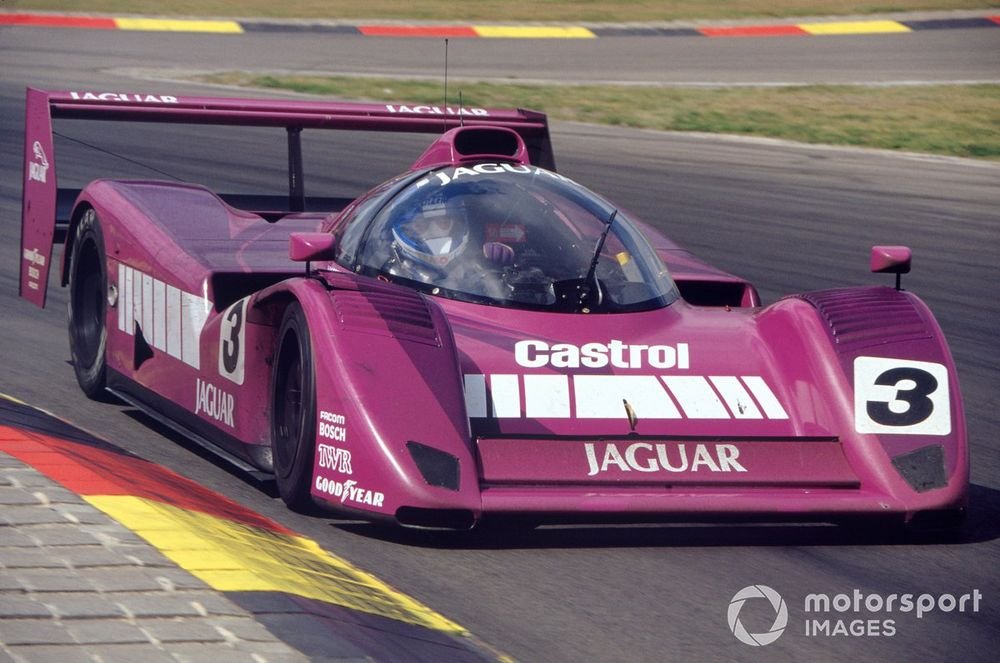
A short but successful foray into sportscars punctuated Brawn’s early career path
Photo by: Motorsport Images
Brawn left to jump back into F1 with Benetton at the end of 1991, then moved Ferrari in 1996 as Todt sought success. After a decade at the Scuderia, Brawn took another year out of F1 – this time on sabbatical – as he pondered his next steps.
His wish to lead a team was realised when Honda made Brawn an offer to become team principal. The Japanese marque had endured a dismal 2007 with a car completely devoid of downforce, garishly painted with an Earth livery – a startling choice, given F1’s nature as a fuel-guzzling, globe-trotting entity. Brawn’s arrival was too late to affect its fortunes in 2008, which were similarly bleak, but the Briton had long had his gaze on making a colossal splash in 2009.
New regulations for that season were designed to improve the racing spectacle, with drastic changes to the front and rear wings – plus a cutback on additional aero geometry. Downforce would be slashed as a result, but one of Honda’s Japan-based aerodynamics engineers chanced upon a potential loophole: there was provision to expand the rear part of the diffuser and feed it with an additional inlet within the floor. This was the birth of the double-diffuser, something which Brawn encouraged his engineers to pursue.
In technical working group meetings, Brawn hinted that the downforce reduction projections might not be as large as intended. To his relief, none of the other technical directors picked him up on that, stating that their own predictions were in line with the regulations’ intent. Thus, he kept quiet; although the double diffuser was also picked up on by Toyota and Williams, this was due to a cross-pollination of ideas from former Honda engineers.
Despite the confidence in the 2009 project, Honda pulled the plug – largely a function of the global financial crisis. With few buyers in the offing, Brawn went to Honda with a proposal: he would buy the team if it could provide enough budget to keep the team going for another year. After settling for a peppercorn fee of £1, Brawn had made an unexpected step – he was now a team owner, not just a figurehead.
Of course, the Brawn story is well documented; the BGP001 was every bit the manifestation of Brawn’s hopes, and proved dominant in the early stages. A failed protest against the double diffuser prompted other teams to develop their own; Brawn GP, with only the running budget from Honda, was unable to develop anywhere near as much into the season versus the free-spending Red Bull team. Regardless, Jenson Button held on to secure the title despite a wobble in the second half of the year – “very special”, Brawn uttered on receipt of the title, visibly lost for words.
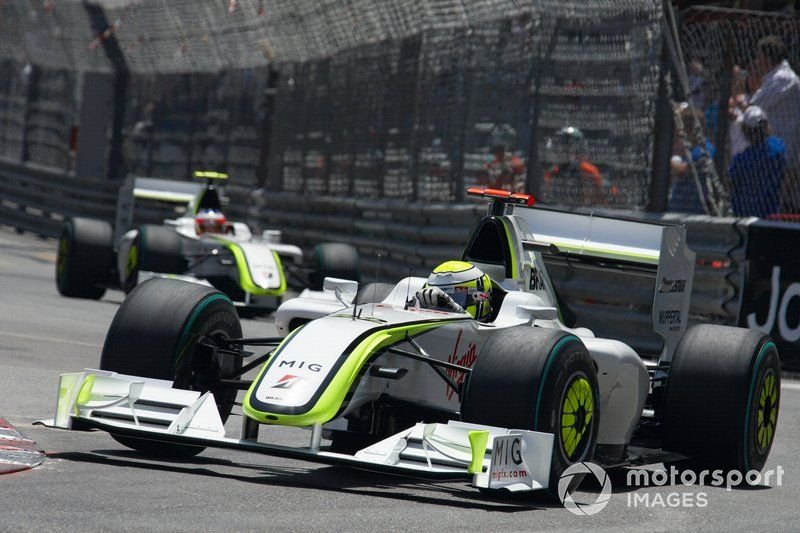
The Brawn story reached legendary status in 2009 with its double title success
Photo by: Rainer W. Schlegelmilch / Motorsport Images
“For me in my career, I’ve worked with some absolute great team owners, team principals, people that are so passionate about what they do,” Button enthused in a video message, in recognition of Brawn’s Gold Award. “Ross is definitely no exception. A very skilled individual. His management technique is off the charts. But I think a lot of why we love Ross is because he understands what he’s talking about in terms of the technical side of a race car. He understands what it needs to be fast.
“It’s his calm demeanour. You know, Ross is calm and I think that’s what you need in a frantic environment, which is what Formula 1 is. You’re trying to control and wrangle thousand odd personnel within the team. And you need someone that’s in charge to be calm, relaxed. He’s very good at not blaming individuals for mistakes and what have you.
“There’s that real no-blame culture that I think he, he really pushes, which is great because it means that it gives people within the team the opportunity to do great things, to achieve greatness, and not be fearful of being talked down to or fired. And that was a big part of why he’s achieved so much in motorsport in general.”
Following Brawn’s first-time success as a team owner, Mercedes purchased a majority shareholding in Brawn GP – transforming it into a works team just a year after it was almost shuttered. Brawn remained in charge for those opening years, reuniting with Schumacher from 2010 to 2012, before Mercedes elected to change its management structure ahead of the 2014 season. Arguably the architect of Mercedes’ later spell of dominance across the next six years, Brawn left before he could bask in further success, having felt that there was no room left for him at the team.
After leaving Mercedes, Brawn elected to retire – presumably to indulge in his love of fly-fishing. After co-writing the book Total Competition with ex-Williams CEO Adam Parr, Brawn found his way back into F1 once more – as the championship’s managing director of motorsport. There, he became a key factor in reversing some of the changes implemented in the 2017 technical regulations – a ruleset generally considered to have been detrimental to the overall racing spectacle – and subsequently led the team responsible for developing the 2022-era return of ground effect cars. After the first year of that ruleset, Brawn retired again – this time, for good.
Few manage to reach such stratospheric heights in their career – even fewer manage to stay there. And, in receiving the Gold Award in recognition of that, one hopes that Ross Brawn can look upon his years in racing and indulge in his successes. But, given his willingness to champion those who achieved greatness alongside him, he might prefer to laud those who joined him on his journey.
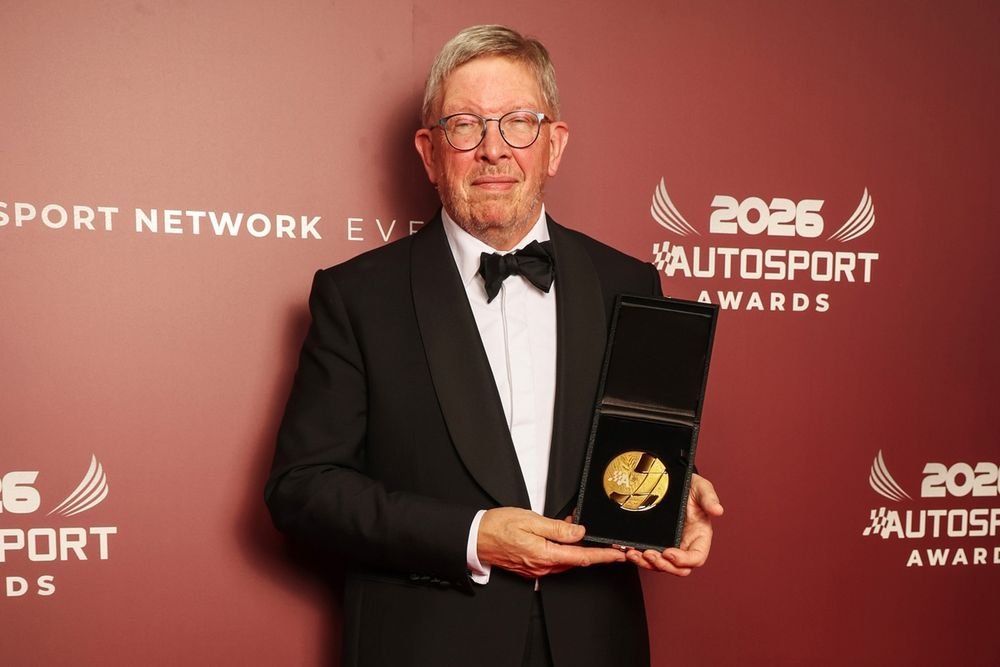
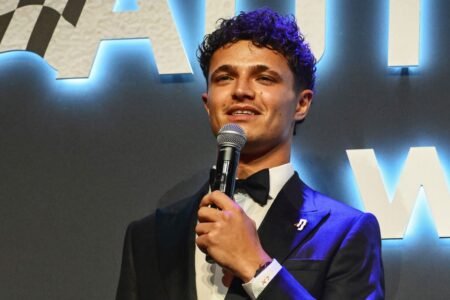
Brawn receives his Autosport Gold Medal Award
Photo by: Tristan Fewings / LAT Images via Getty Images
We want to hear from you!
Let us know what you would like to see from us in the future.
Take our survey
– The Autosport.com Team
Read the full article here