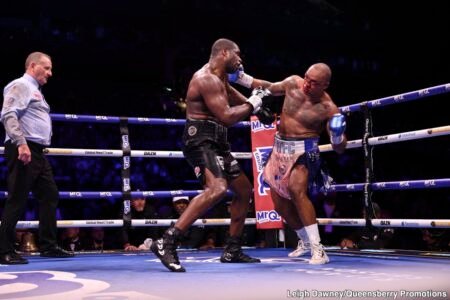








The dispute now includes money owed from Joshua’s July knockout of Kristian Prenga. BoxingScene learned that his purse was due on fight night, but Joshua has yet to receive the full amount.
That detail is significant because delayed payment can sometimes be permitted under a fighter’s contract. Pugmire referenced another boxer whose representative complained about an unpaid purse before accepting that the agreement allowed payment within 45 days. Joshua’s contract did not contain that same waiting period.
Silence Weakens the New York Plan
“No change,” Hearn said when asked about the response to his addendum.
Leaving the document unanswered creates pressure without formally rejecting Joshua’s terms. The closer the event moves toward its promotional deadline, the harder it becomes for Hearn to insist on Britain without being accused of costing Joshua the Fury payday. Alalshikh’s side can gain negotiating leverage simply by waiting, although that tactic also makes Madison Square Garden harder to deliver.
Frank Warren and Fury have publicly urged the parties to finish the deal, but those appeals do not resolve the contractual issues. Joshua signed for a UK fight and is being asked to accept a different country, reduced earnings after taxes and added obligations.
The unpaid Prenga money changes the character of Hearn’s demands. Ticketing, security and compensation might otherwise look like routine bargaining over a venue switch. Asking Joshua to accept new obligations before the previous purse has been completed gives Matchroom a practical reason to demand everything in writing. The issue is no longer only how much Joshua receives for New York, but how much trust remains between the parties.
Claims that Hearn is delaying the event over unrelated payments involving snooker and darts have also circulated. Pugmire’s report gives his position considerably more weight. The dispute concerns money contractually due from Joshua’s own bout, not another sport’s unpaid bill being used to extract a larger purse.
Joshua’s sporting position and contractual position are not the same. He no longer holds three heavyweight belts or commands the leverage he carried when 90,000 spectators watched him defeat Wladimir Klitschko at Wembley in 2017. Losses to Oleksandr Usyk and Daniel Dubois, followed by two knockdowns against Kristian Prenga, have weakened Hearn’s ability to demand premium treatment. None of that erases the UK clause or Joshua’s right to receive money already due.
Madison Square Garden supplies prestige, and a US prime-time window for Netflix, but the location serves the broadcaster more clearly than it serves the rivalry. Fury and Joshua built their drawing power in Britain, and their shared history carries greater emotional value at Wembley than in New York. Moving the event across the Atlantic trades domestic atmosphere and gate certainty for American visibility, making financial protection for both fighters a reasonable part of the negotiation.
Time is working against the organizers. A November 20 event requires venue confirmation, travel arrangements, media dates and a full Netflix promotional campaign. Each week without an answer reduces the time available to sell a fight whose commercial value depends heavily on the names and history involved.
Hearn still risks overplaying the protection supplied by the contract. Alalshikh and Sela control the financing, and Joshua has no alternative event approaching the commercial value of Fury. If the backers decide that New York cannot be delivered under Joshua’s revised terms, enforcing the UK clause may leave him legally justified but without the largest payday remaining in his career.
That is the pressure created by the unanswered addendum. Joshua has enough contractual leverage to resist the venue change, but not enough current value to assume the organizers will keep increasing their offer. Hearn must protect him without turning a favorable clause into the reason the event disappears.
Read the full article here