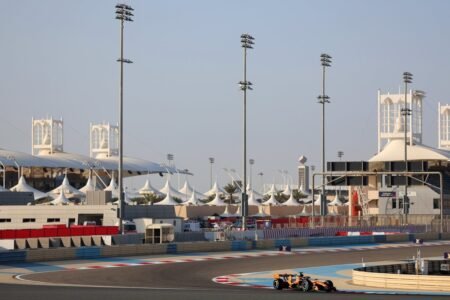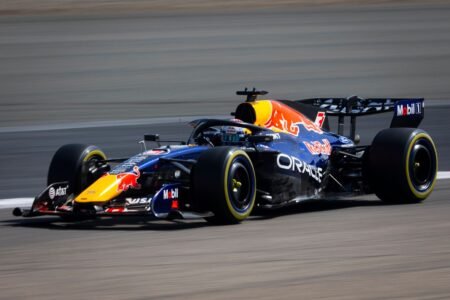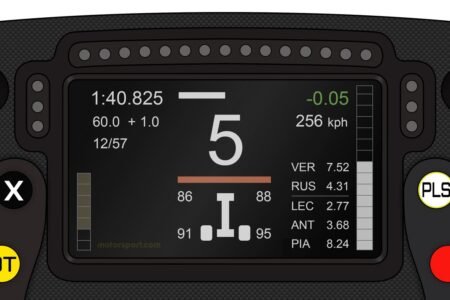





During Formula 1 winter testing in Bahrain, the focus – apart from the ongoing compression ratio discussion – has mainly been on energy management during the races. Achieving consistent deployment over longer runs remains a key challenge for teams.
Sergio Perez revealed that in his case, there were still fluctuations of up to eight tenths from one lap to another. Understanding those fluctuations and stabilising deployment is one of Cadillac’s key objectives ahead of the second test week, the Mexican explained.
That said, energy management over a single lap is also challenging as drivers have to deal tactically with both deployment and harvesting. George Russell previously explained that the fastest way through a corner is not necessarily the best for the overall lap time.
“You have instances where when you go around the corners faster, you’re spending more energy and you’re harvesting less,” said the Mercedes driver. “So you end up over the course of the lap having less energy to spend. You may gain a few tenths into corners, but you may lose a couple of tenths on the straight.”
Contradictory requirements for tyres and battery
Drivers must optimise this during a flying lap, but according to Pirelli there is more at play. The Italian tyre supplier has learned from the initial running that preparing a qualifying lap is more complex under the 2026 regulations as well.
For overall performance, it is crucial to get the tyres into their operating window, but that can clash with what teams want in terms of energy deployment in qualifying.
“To have the tyres ready for the push lap in qualifying, or a qualifying simulation, they have to run the out-lap at a certain speed,” said Pirelli motorsport chief Mario Isola. “On circuits that are low severity, in cold conditions, or with a tarmac with low roughness, they have to push a little bit in order to generate heat into the front tyres.
Mario Isola, Pirelli F1 Director with Pirelli 2026 F1 tyres
Photo by: Pirelli
“But with the new cars, they don’t want to use the electric part of the power because they need this for the push lap. So it was a little bit tricky for them to understand how much they could push to have the front tyres ready, and at the same time all the power available.”
In practice, this can lead to double preparation laps. Last year that was already necessary at some circuits, but back then only to get the tyres into the right window. This year it is more about finding a balance between two factors that can be contradictory at times.
“It means that [in testing] some teams were using the outlap plus a preparation lap, and after that preparation lap the tyres were ready for the push lap,” added Isola.
“If in some races this year we see this kind of approach during qualifying, it’s probably because they have to balance, and to find the right compromise between the warm-up of the front tyre and the use of the energy that is available.”
For Pirelli, this was somewhat unexpected, Isola admitted at the end of the first test week in Bahrain. “This is something that, I don’t want to say we didn’t plan, but obviously when they run with real cars, we discover a lot more compared to the mule cars,” he said.
Nevertheless, it is more complex for the teams than for the tyre supplier. According to Isola, the findings still align with the development direction Pirelli had already chosen for the 2026 cars.

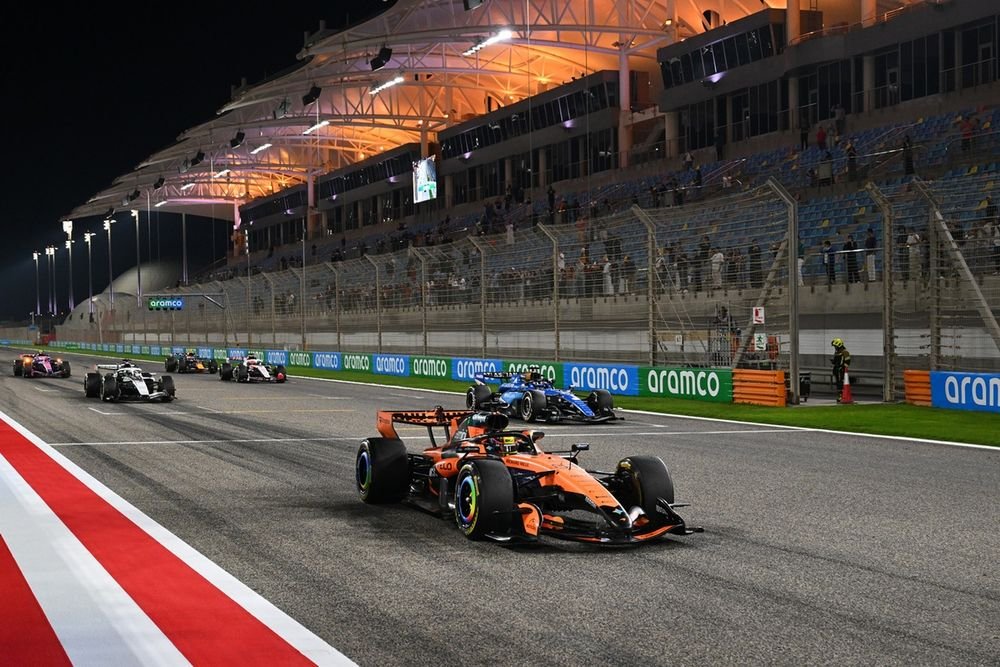
Oscar Piastri, McLaren, Alexander Albon, Williams
Photo by: Mark Sutton / Formula 1 via Getty Images
“We were looking for compounds with a higher working range in order to minimise the overheating,” added the Italian.
That wider operating window is important, as it can make things slightly easier for teams – especially when it has to be balanced with the optimal energy management preparation.
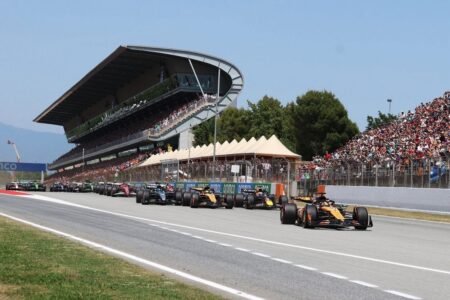
That will, however, depend heavily on the circuit. Isola saw double preparation laps more often during the Barcelona shakedown than in Bahrain, as the latter features particularly rough tarmac and is demanding on tyres. That makes it easier to generate tyre temperature without using too much of the battery compared to many other venues.
At tracks such as Las Vegas – where the tarmac, layout and cold conditions all play a role – the puzzle becomes more complex. In theory, the battery can be recharged relatively quickly in just a few corners, but that requires a rather aggressive approach and can cause tyre temperatures to drop. To avoid these unintended consequences, a more gradual build-up over two laps may be seen more often.
“I believe that they start with full power, then they need to keep the full power [available] and in a gradual way put the tyres into the right working range,” said Isola.
Which F1 tracks will be the most challenging?
Haas team principal Ayao Komatsu underlined this challenge and pointed to several circuits where the required tyre and battery preparation could clash.
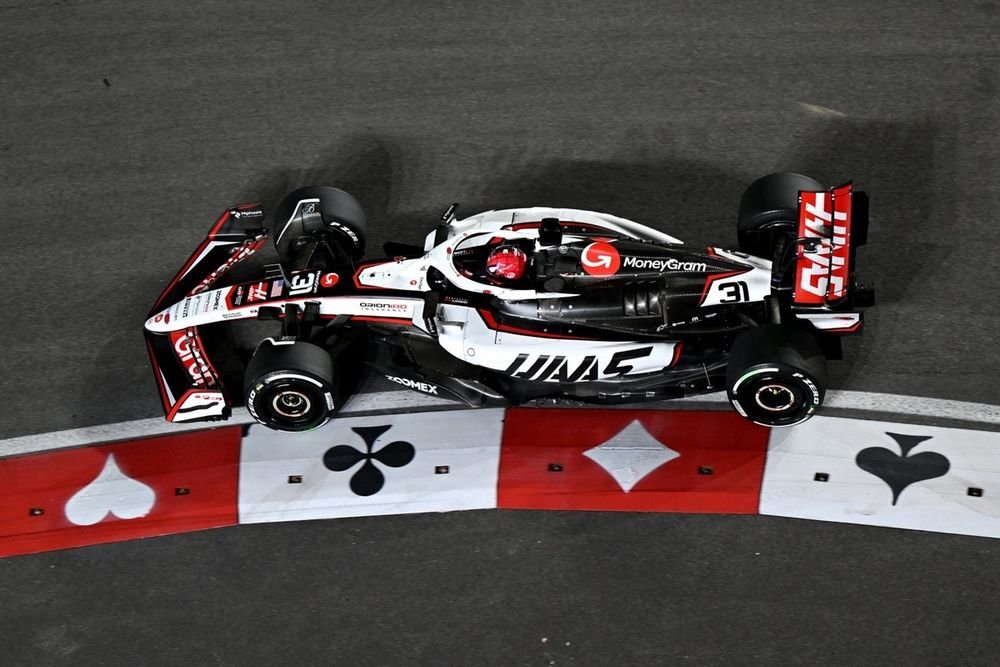
Esteban Ocon, Haas F1 Team
Photo by: Sam Bagnall / Sutton Images via Getty Images
“It’s a long way away, but the circuits that come to my mind straight away, it’s places like Baku or Vegas,” he said. “On those circuits it’s very difficult to get the tyres to work as well, and then the outlap. The requirements of getting the battery prepared very, very well, versus [how] to prepare the tyres, it’s somewhat conflicting.
“You have this multi-dimensional optimisation issue. You’ve got to find the right compromise, so that will be challenging, I think.”
Teams will need all available practice time to refine the optimal approach each weekend. During sprint weekends, they have far less opportunity to do so, which is why Komatsu explains that they will become considerably more difficult.
“That’s going to be a huge challenge,” he added. “Shanghai, I’m not looking forward to that. I can’t say I’m looking forward to that. One hour of practice to get ready for sprint qualifying, that’s going to be a huge challenge.
“It’s the same for everyone, but it’s step by step. I think we’ve had a decent preparation so far, learning things, but now we’ve got to compress everything, refine the procedures, [and look at the] accuracy of everything to get prepared for the normal race weekend.
“We’ll do one normal race weekend in Melbourne, hopefully it’s dry, and then going to Shanghai. That’s a sprint weekend, so it’s a steep learning curve, but it’s the same for everyone.”
We want to hear from you!
Let us know what you would like to see from us in the future.
Take our survey
– The Autosport.com Team
Read the full article here