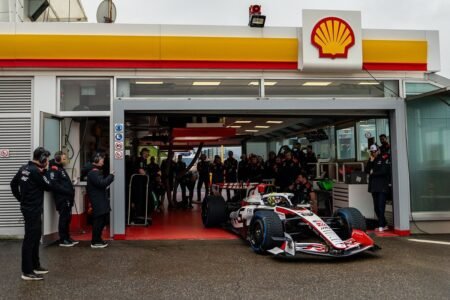





Caution is always required when analysing Formula 1 launches – especially with the introduction of new regulations. A few years ago, Red Bull played games with its sidepod inlets by showing different designs at the launch in Milton Keynes and on renders. During the subsequent test days in Bahrain, the design was different again, which illustrates the steps teams take to stop rivals gaining more insight than necessary during the pre-season.
Having said that, the first runs with 2026 machinery have shown some interesting lines of thinking from teams. The higher rake philosophy – familiar from the period until 2021 – has returned to some extent, most teams have so far reverted to a pushrod front suspension, and Ferrari has shown the on-track working of active aerodynamics for the first time.
Different diffuser philosophy due to simpler floors?
Another aspect that attracted attention after Mercedes’ shakedown concerns the diffuser. Under the 2026 regulations, the simpler floors generate significantly less downforce than during the ground-effect era, meaning that extracting the maximum from the diffuser has become an interesting task.
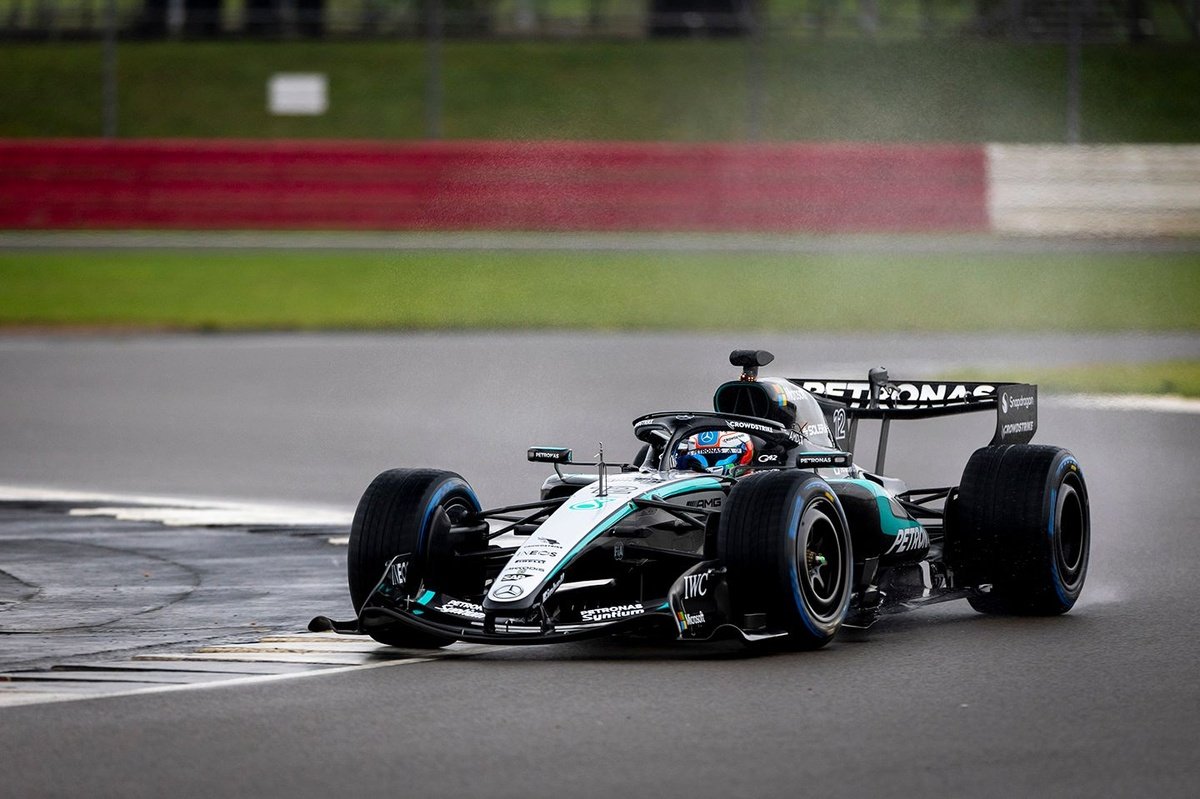
In the first images of the Mercedes W17 running on track, an opening can be seen in the diffuser. It somewhat resembles the ‘mouse holes’ that some cars featured up to 2022, although the opening appears to be larger this time. A day after Mercedes’ shakedown, a similar opening could be seen in the diffuser of the new Ferrari at Fiorano.
The diffuser hole works in conjunction with the undercut sidepods, which guide airflow underneath the sidepods and over the floor edges. Through this opening, teams are trying to use that airflow to improve the diffuser flow. The faster the airflow is directed towards the diffuser, the more downforce can be generated. In order to do so, teams need to prevent the airflow from detaching, in a way similar to the working of a steep wing element.
The diffuser hole differs from concepts under the previous set of regulations. Back then, it was crucial to seal the diffuser, which closely related to the floor designs. In the 2022–2025 era, most downforce was generated by Venturi tunnels underneath the floor, meaning teams could use that airflow for the diffuser. Sealing the diffuser was crucially important to create the largest possible pressure difference and make optimal use of the airflow underneath the floor.
This year is different, because the FIA has simplified floor concepts with flatter floors, which means airflow is no longer strong enough to achieve the same effect. It explains why teams are looking for external ways to strengthen the airflow towards the diffuser. By means of a slotted diffuser, the flow from the sidepods can be used to help the acceleration towards the diffuser ramp, albeit in a different way from recent years.
Inwash further affects floor performance
Another factor that plays a role in the reduced floor performance is the return of something that resembles the barge boards of the past. The key difference, however, is that their function is different this time.
Whereas teams previously used barge boards to direct wake from the front tyres outwards – creating outwash – the FIA now primarily intends these elements as ‘inwash devices’. The main element must point inwards, as it should reduce the effect of dirty air for the car behind.
George Russell, Mercedes W17
Photo by: Mercedes AMG
Teams naturally try to prevent as much of this disturbed airflow from being drawn inwards – and several solutions are already visible – but it is inevitable that it will happen to some extent. This does not only affect the floor, but also the performance of the diffuser. And to compensate for the latter, teams have to find alternatives, as Mercedes and Ferrari seem to have done by using the airflow from the undercut sidepods towards the diffuser hole.
A stronger airflow in that area can theoretically also help to counter the effects of ‘tyre squirt’ to some extent. This refers to the disturbed air that comes off the rear tyres and moves sideways, which can affect the diffuser performance. With a stronger airflow in that area, teams try to manage it more effectively, meaning the solution could ideally work in two ways.
“An interesting interpretation, but not a total surprise”
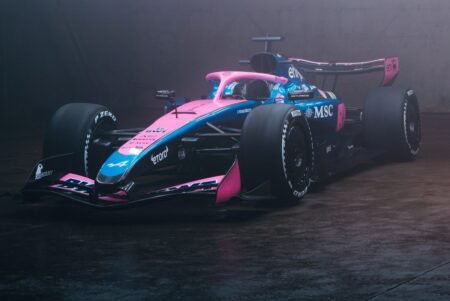
Other teams have described Mercedes’ approach as ‘interesting, but not a total surprise’. Alpine technical director David Sanchez responded during his team’s launch in Barcelona:
“It’s a bit unusual, it’s an interesting interpretation, but not a total surprise.”
He did acknowledge the importance of the diffuser and indicated that significant development is to be expected in this area.
“For sure, the interaction between the bodywork, the diffuser, the rear corner is going to be very much a work in progress,” he explained. “There’s been a few ideas around. You would say from the distance that it doesn’t look too far off. But for sure, as much as there is no more ground effect, I think people will still be keen to see a picture from the underside to see what the diffuser looks like.”
We want to hear from you!
Let us know what you would like to see from us in the future.
Take our survey
– The Autosport.com Team
Read the full article here