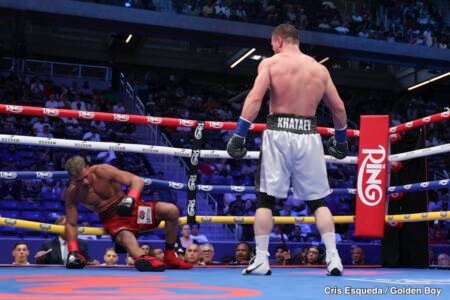








“It’s not the fights that really beat us up. It’s the training camps that beat us up,” Berto said on the InsideRingShow. “We’re sparring three days a week against good fighters that are coming to take your head off. They’re trying to make a name for themselves.”
That damage is invisible. It does not show up on a fighter’s record, and it is not measured in the official rounds on fight night. By the time the bell rings, some of that work has already taken its toll.
That dynamic stays the same across most camps. Sparring partners arrive with pressure of their own. Some are chasing attention. Others are trying to stay in rotation. No one wants to be the one who gets embarrassed and not asked back to camp. The rounds stay hard, even when they are not supposed to be.
By the time fight night comes, a fighter can already be carrying rounds of unseen punishment. The sharpness people expect is sometimes gone before the opening bell, replaced by a version that looks a step slower or reacts a fraction late.
Max Kellerman pointed to the same issue from a different angle, noting that the type of sparring a fighter gets can influence how much damage they take. In his comparison, fighters who appear more vulnerable tend to absorb harder rounds in the gym, while others are handled more carefully.
“The damage fighters take, a lot of that comes in preparation for the fight,” Kellerman said.
That helps explain why some performances feel off without an obvious reason. The opponent gets the credit, but the erosion may have started earlier, in closed gyms where there are no cameras and no official records.
It is not always decline. Sometimes it is accumulated rounds that never show up on a ledger. Once it shows up in the ring, it feels sudden, even if it has been building for weeks.
Read the full article here