Modern GT racing faces a dilemma: Originally a playground for gentleman drivers, it is increasingly dominated by full-time professionals. The new “GT Summer Series,” set to launch in April 2026, aims to counter this trend with a radical technical measure. Instead of balancing vehicle models against each other, the Balance of Performance (BoP) will be linked directly to the driver’s status. Robin Selbach (Managing Director, Gedlich Racing) and Jann Jöge (Sales) explain the mechanics behind this new handicap system.
Question: Robin, the GT market is booming, but amateurs often struggle to compete. What is your assessment of the current landscape for gentleman drivers?
Robin Selbach: It is a real blessing for motorsport enthusiasts that GT cars have become accessible to a wide range of drivers. GT vehicles across all classes are extremely safe and remarkably manageable, even for amateur and gentleman drivers—many of whom started racing later in life and did not have the privilege of entering karting at the age of eight. That said, late starters simply do not have the same developmental foundations as young, full-time racers. In most cases, these are highly successful individuals who can only dedicate a limited portion of their time to their passion. It is entirely clear that they will never reach the same driving level as a young athlete whose primary focus in life is racing.
Question: The GT Summer Series intends to correct this imbalance. What is the strategy?
Jann Jöge: The GT Summer Series is primarily aimed at amateurs and gentleman drivers. Drawing on six years of experience with the Winter Series, we have a very clear understanding of what amateur drivers want. With the Summer Series, we are taking this concept a step further by introducing a Balance of Performance that takes the driver’s status into account. Our objective is clearly defined: by granting greater technical freedoms, amateur drivers should have improved opportunities to fight for top positions.
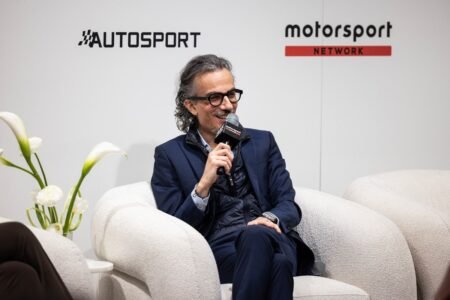
Robin Selbach, Managing Director of Gedlich Racing
Photo: Gedlich Racing
Question: Does this imply that professional drivers are effectively unwelcome?
Selbach: Not at all. It is entirely conceivable that professional teams may use selected GTSS events to prepare for other championships, or that young drivers may gain valuable race experience in a competitive environment. They are, of course, welcome to participate – but they must expect technical restrictions designed to ensure equal opportunity. What matters most to us is respectful and fair conduct on track, and that our amateur drivers have a genuine chance to compete on equal terms.
Question: How will this “Driver BoP” work from a technical standpoint?
Selbach: Each driver line-up will receive an individual BoP setting for every circuit. For example, if a gentleman driver competes alone in all races of a weekend, he will receive the greatest technical allowances. These may include increased boost pressure, a larger air intake restrictor, or potentially a reduced ballast weight. Cars fielded by professionals or young top-level drivers, on the other hand, will compete with reduced power and/or additional weight. Mixed line-ups will run different settings during sprint races, depending on which driver is in the car at the time. In endurance races shared by two drivers of different classifications, the technical rating will be set at a balanced mid-level.


Jann Jöge, Sales and Organisation Premium Motorsport Events at Gedlich Racing
Photo: Gedlich Racing
Question: How do you ensure that these measures are consistently enforced?
Selbach: Through the GT Winter Series, we have gained extensive experience in vehicle monitoring. Our partner equips the cars with data loggers and has a precise understanding of what is happening on track at all times. In addition, we apply a scrutineering process in line with international standards. Technical scrutineers are on duty at all times to verify that each car is running with the correct settings according to its technical classification. Any infringements will be penalized in accordance with international motorsport regulations. It is in our interest – just as much as in the interest of all participants – that technical parity is maintained. The consistent and correct implementation of our equal-opportunity concept is a cornerstone of the series’ success.
Question: Will this philosophy extend to the points system as well?
Jöge: Our classification system is also an integral part of the equal-opportunity framework we are putting in place. There will be a dedicated classification for cars driven by amateurs and gentleman drivers, complete with separate podium ceremonies and trophies. The same applies to the Pro/Am category, which combines amateur and professional drivers. In addition, our points system takes into account the number of starters in each class. Following the principle of “the greater the competition, the greater the achievement,” it is naturally more difficult to win a class with a large number of competitors. This directly influences the championship standings and ensures an especially fair outcome.
Calendar for the 2026 GT Summer Series
17-19 April 2026: Hockenheimring (Germany)
29 May-31 May 2026: Oschersleben (Germany)
25-28 June 2026: Nürburgring (Germany)
27-30 August 2026: Spa-Francorchamps (Belgium)
2-4 October 2026: Hockenheimring (Germany)
Gedlich Racing Test Days 2026
17 April 2026: Hockenheimring
28 May 2026: Oschersleben
14 July 2026: Nürburgring Sprint Circuit
15 July 2026: Red Bull Ring
16 July 2026: Oschersleben
18 August 2026: Nürburgring Grand Prix circuit
29–30 September 2026: Portimao
1 October 2026: Hockenheimring
We want to hear from you!
Let us know what you would like to see from us in the future.
Take our survey
– The Autosport.com Team
Read the full article here