



When brand-new entrant Cadillac started its search for a race team manager, still a full year removed from joining the 2026 Formula 1 grid, it didn’t have to look very long, or far, to identify the right target.
Over at Haas, F1’s previous start-up team in 2016, long serving team manager Peter Crolla had been looking for a new challenge, and the prospect of another chance to build a team from the ground up was ticking all the right boxes.
Following early conversations with Graeme Lowdon, who was recently replaced by Marcin Budkowski as team principal but had been the driving force behind Cadillac’s respectable F1 debut, Crolla embarked on another fresh start building up a trackside team from scratch over a nine-month period.
“I’d been at Haas for over nine years at that point, and I was definitely ready for a change and a new challenge, and I needed something to get my excitement back for the sport,” Crolla old Autosport at the recent Belgian Grand Prix, before the team’s leadership change.
“I love the element of setting up a team. There’s a great deal of pride in that, and everything just aligned at the right time. It’s my second new team start, sort of 10 years apart, and it was absolutely brilliant. The momentum, the autonomy and the excitement of doing that is unparalleled.
“That nine-month period was probably the most enjoyable of my career, from starting with an empty building and a plan, and being given that authority to create your vision.”
Cadillac race team manager Peter Crolla (right) with former team principal Graeme Lowdon, technical consultant Pat Symonds and Valtteri Bottas
Photo by: Cadillac
Being a race team manager in a job with an extremely wide and diverse scope, starts with being responsible for the overall organisation of the race team. Once the pre-event logistics are out of the way, the job then shifts into a more sporting oriented role when the on-track action starts, which includes liaising with governing body the FIA and F1 management.
But starting a new team from zero adds a huge foundational layer to that, with Crolla drawing from his experience at Haas to have another go at Cadillac, which is a very rare opportunity in F1 given the scarcity of new entrants.
“The sport was a very different place back then,” Crolla said, looking back on helping bring Haas to life. “We were still in the Bernie Ecclestone era. Scale was a big thing, and it was also my first time doing it. It was exciting. I worked with some great people there during that period, and learnt a lot. And I think that set me up well for doing it the second time round.”
When asked what his key lessons were from Haas, Crolla replied: “I think the calendar and the requirements on a team have grown over the course of that period, and I wanted to ensure that we approached this as a big team and had everything we needed to accomplish the task well.
“It was, in my opinion, never a case of starting small and then growing. There isn’t time for that because once you’re out racing, the time you’ve got to spend on your projects is greatly decreased. So for me, it was about doing everything to the best of our abilities, maximising the budget we had available for it, and just creating a team that was ready to go racing and do a good job of it.
“For me, there were three pillars of how this first year needed to be. It was respectable participation. So, we show up on time, and we do all the right things, keep our heads down. I think we accomplished that. The next pillar was reliability, and for sure we’re still working our way through that. And then the third is performance, and we’re into that phase as well. So, it’s happening as I thought it would. So far so good.”
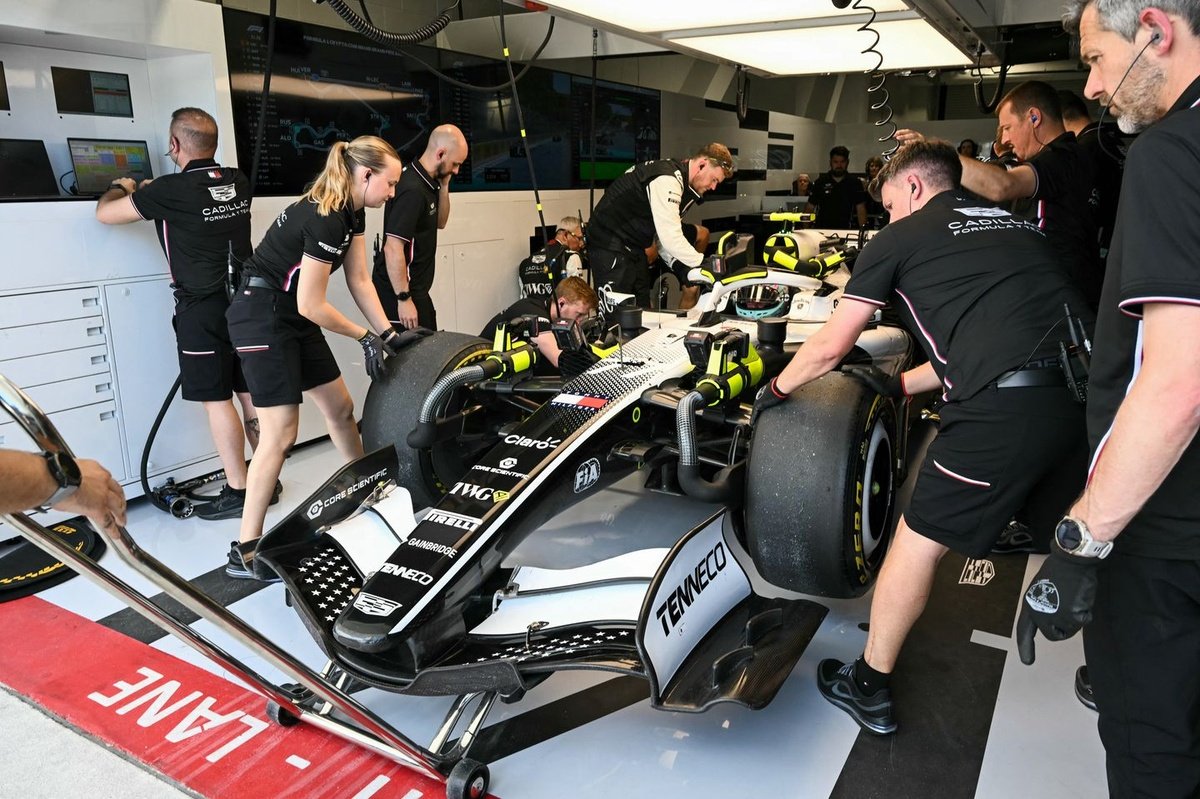
While the factory-based operation in Silverstone was already in place when Crolla joined in April, the trackside team that would travel the world was still a blank sheet of paper. Crolla subsequently sat down with fellow new hires, team logistics manager Pete Simmons and chief mechanic Nathan Divey, to map out the road to Melbourne. That ranged from acquiring the hardware the team needed to setting up procedures and best practices for trackside operations, car builds, pitstops – an endless list of challenges for any outfit, never mind a team of people that had never worked together before.

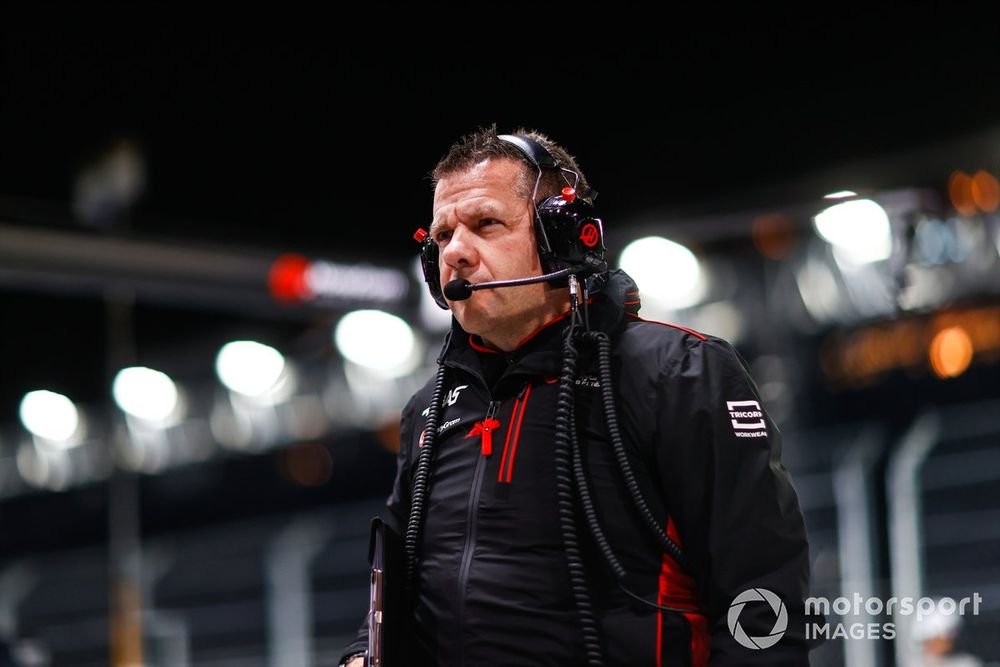
Crolla previously spent a decade at Haas in a similar role
Photo by: Andy Hone / Motorsport Images
“We had a collaborative approach and a collective vision of what a good race team in 2026 needed to look like,” Crolla explained. “There’s no book. There are no guidelines on how to do this, but we worked very hard and there were very few, if any, disagreements on what we wanted to do.
“We just knew that it had to be the best, but most of all, it had to be there. There were no excuses for anything not being there because I think everything is achievable in those nine months, and especially given the autonomy and the budget we had. We had to put a lot of pressure on suppliers, but we worked with good suppliers that we’d worked with before. People that we trusted, and that was really important. Knowing who you can lean on and who you can really push to the limit.”
Ultimately, any organisation comes down to the quality of its people, and F1 is no different as Cadillac assembled a team ready to take on the establishment. Given the long gardening leave times involved, that was no easy feat, especially for a team that had no track record yet.
“Recruitment was something that we had to be quite aggressive on because people were already on long notice periods,” Crolla pointed out. “Nobody’s really available in this sport for any less than three months, and some were on six months’ notice.
“A lot of people joined in the second half of 2025, and there was no honeymoon period. They had to get stuck in right away and get on with it all. There was a huge amount of equipment coming through the door every day, and a phenomenal workload. But everybody really rose to the challenge.”
But just like how the start-up culture attracted Crolla to the Cadillac story, a lot of other hires from F1’s biggest teams appeared to feel the same way. There was certainly no mistake on the challenges the team would face, and that there would be no such thing as an easy ride.
“No, I think that would be quite misguided if you came here from an established team and thought it was just going to be like that,” Crolla nodded. “I think people understand the bigger picture that coming to a project like this, it’s not going to be a Mercedes. It’s not going to be a Ferrari where these guys have been in operation for decades. But at the same time, just recognising the opportunity of sculpting our own environment, I think people saw the attraction in that.
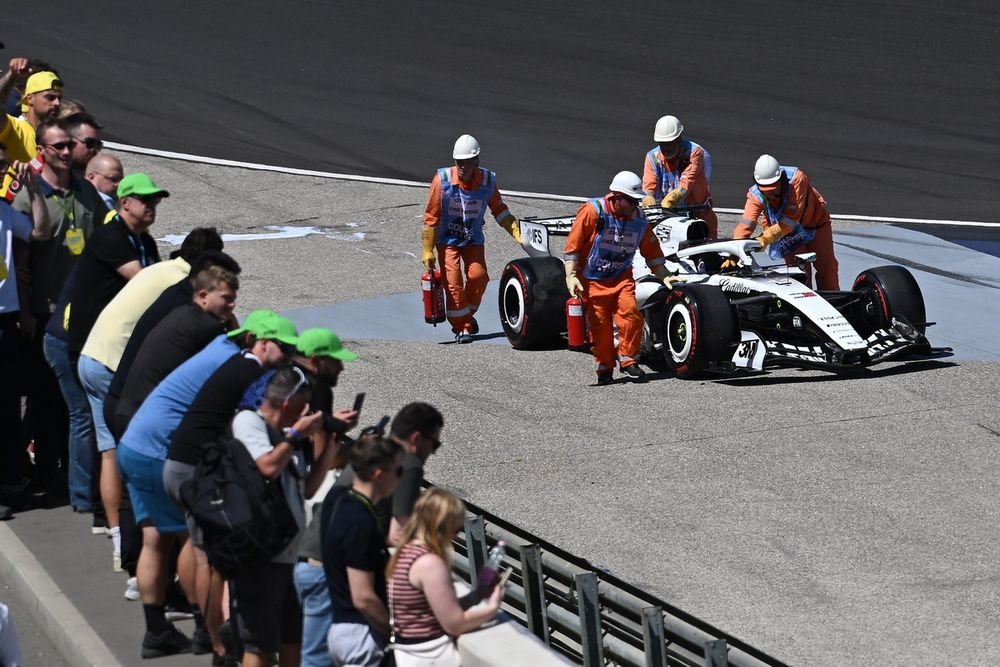
Cadillac has faced up to its reliability woes, which is its current major task to solve
Photo by: Sam Bagnall / Sutton Images via Getty Images
“The important part of bringing people in from other organisations is recognising their strengths, recognising their experience, and drawing that out of them to create our combined processes. The quality and quantity of applicants that came into the race team and the wider business from other teams has been really positive. But it needs that mentality that can rise to the challenge. This is not going to be a nine-to-five cruise. It’s digging deep and being in it for the long run.”
Cadillac did meet every internal and external deadline along the way, making the start of winter testing and finishing its first race in Australia with one of its cars. But subsequent gremlins on the reliability and operational side, while being overtaken by Aston Martin at the rear of the field, have further underlined that simply showing up was just the start.
“Those were not easy milestones to reach. There was literally blood, sweat, and tears for all of them,” Crolla reflected. “It turns into your life, really. It has to, because you’re working super long days and you’re asking everybody else to do the same. I think there’s no greater sport where you’re able to see the fruits of your labour when you actually build a car that then goes around the track for the first time. It might have been on a rainy cold afternoon in January in Silverstone, but it was mega. It gave everybody a great feeling of achievement.
“For sure, we’ve come across reliability matters. I don’t think that was a surprise to anybody, but it’s about how you approach them, how you tackle them, and how you recover from them. For me, nothing that we’ve done is out of sync with how I expected it to be. I probably expected it to be a little bit harder, and probably expected it to be a little bit more disappointing at times. Austria was probably a bit of a low point for us, but it’s just part of the journey. If people were surprised by it, then I think it’s probably a useful experience for us to go through.”
As Cadillac transitions into its next phase, with former Renault man Budkowski now at the helm, the team will start using a brand-new US headquarters in Indiana next year that Crolla insists will be an “amazing place to operate from”, while also expanding its UK base in Silverstone in the coming months.
“Starting to go racing is not the end point of building and developing the business. It’s really just another stage in that journey, and I think it won’t be until all these discrete areas are fully operational that we actually see the scale of what we’re doing here,” he added.
“There’s some really talented people here, and without being overly congratulatory on ourselves, we’re doing a good job with it, but we’re only just getting started.”
We want to hear from you!
Let us know what you would like to see from us in the future.
Take our survey
– The Autosport.com Team
Read the full article here