




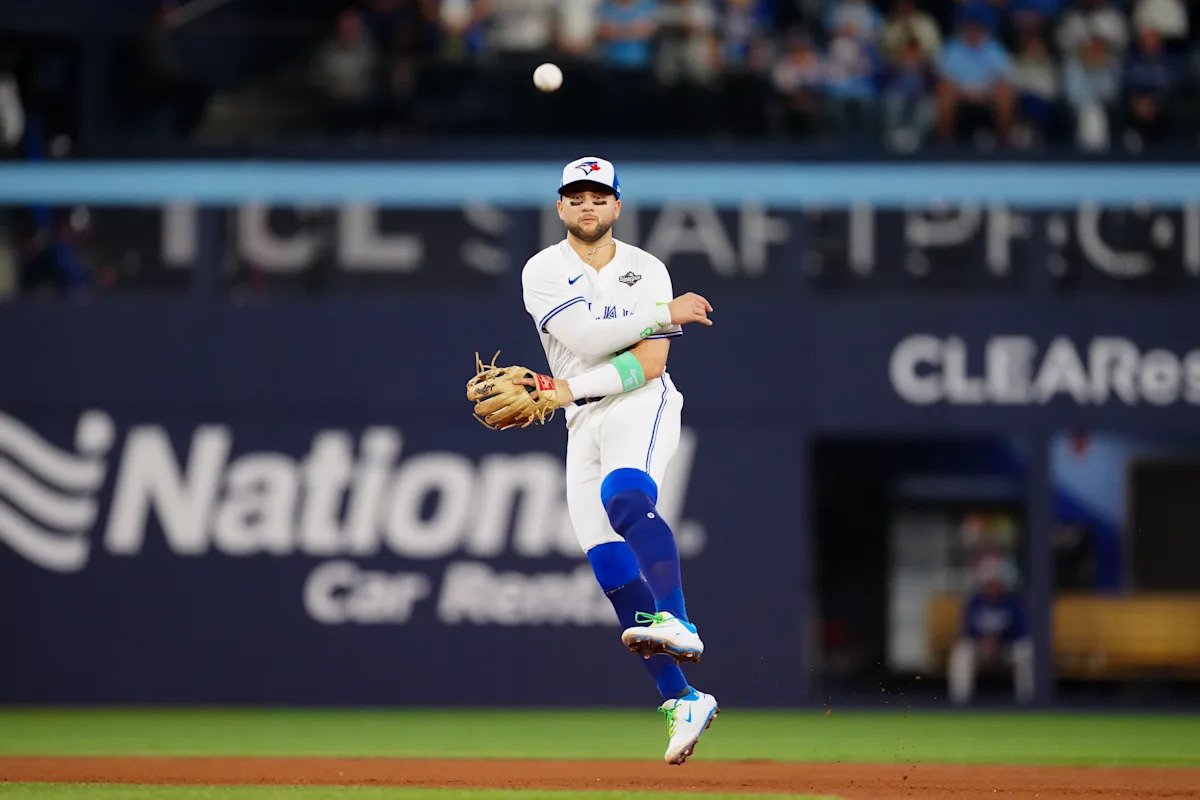
If you watched the Kansas City Royals last year, you knew that second base was a problem. Sure, the outfield–held together last year by duck tape, Elmer’s glue, and some gumption–was the biggest problem, but the free agent class of outfielders was rather thin. Acquiring an impact player who played the infield would be easier.
Kansas City was of course connected to (and ended up acquiring) several outfielders, but they were also reported to have been interested in infielders such as CJ Abrams and Brendan Donovan. The pie in the sky perfect fit for the Royals, though, was Bo Bichette. Bichette had hit free agency and had alerted teams that he was comfortable moving to second base. He would cost a lot of money, but a combination of injury history and a lower ceiling limited the average annual value (AAV) that he’d command to some extent.
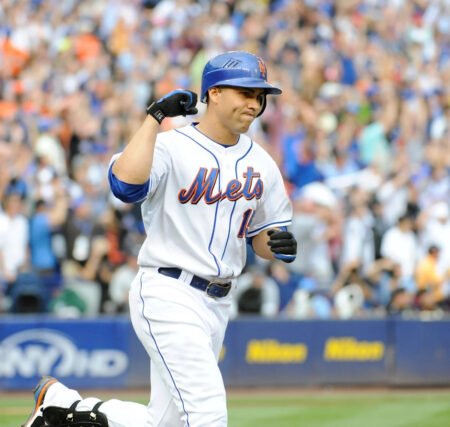
Or so we all thought, because Bichette signed three years and $126 million, a whopping $42 million a year, from the New York Mets.
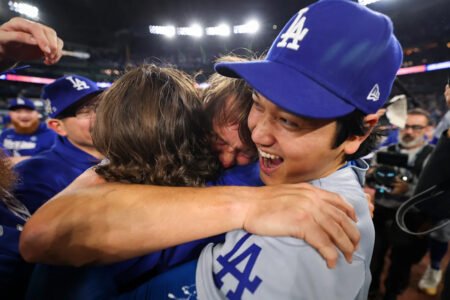
This happened just days after the Los Angeles Dodgers punched the hornet’s nest again by signing Kyle Tucker to a four-year, $240 million contract. There’s some deferred money because of course there is, but it comes out to a present-day AAV of an eye-watering $57.1 million. That’s not all, folks, because the Dodgers’ luxury tax situation means that they’ll end up paying–sit down if you’re not already–$119.9 million annually for the privilege of having Tucker roam the outfield.
While the Tucker deal is absurd, there’s usually one of those every year. Last year it was Juan Soto. The year before that it was Shohei Ohtani. The year before that it was Aaron Judge. Small market teams simply cannot devote the average of $40 million a year (or more!) it takes to secure the biggest names on the market.
The Bichette types, on the other hand, have been a theoretically obtainable asset, because small market teams can pay $25-$30 million a year for a difference maker. We don’t even have to look to other teams; the traditionally stingy Royals did so to extend Bobby Witt Jr. And at the start of free agency, Bichette was projected to be in that $25-$30 million a year range over six to eight or so seasons. The Phillies ended up offering seven years and $200 million, which Bichette declined. But at $42 million AAV? No matter if it’s for fewer years, that functionally places guys like Bichette outside the possibility for 80% of the league.
Nobody should fault Tucker or Bichette for taking those deals. They’re interesting deals where both players can have their cake and eat it too, because both players will have the ability to test free agency again after their age-30 seasons.
Likewise, nobody should fault the Dodgers or the Mets for doing what they did either, and for the spending sprees that they have done. In fact, more teams should be more like them. The biggest reason why the Dodgers can spend so much money is that they pull in gigantic amounts of revenue. As far as the Mets, well, Steve Cohen is the richest owner in Major League Baseball by a substantial amount, and they also happen to play in, you know, New York City. Both teams spend because they have the money, in other words.
I think you can absolutely blame teams for not spending to their best ability. Some owners are notoriously cheap (cough Pittsburgh cough) and cry poor all the time, hoping that we trust them even though they refuse to open their books. But this doesn’t solve the core problem at hand: that some teams make orders of magnitude more than other teams, and even more equity between the teams does not mean full equity.
To an extent, baseball has always been somewhat like this. But I think this is all building to a head. The Dodgers’ continued dominance has brought out the flaws of a system that does not distribute wealth. Baseball relies on so many players and, unlike football or basketball or hockey, you cannot build an entire team around a star player at a key position. What should be happening is that the turnaround time for down-on-their-luck teams should be short, and that anybody can win the championship.
That is not the case. MLB has become a pay-to-play league; over the last decade of the World Series, the median participant–median, mind you–had the fifth-highest payroll of their season. A full 80% of participants ranked in the top 10 of payroll. Nobody in the bottom third of MLB payroll has won a World Series since the Florida Marlins in 2003.
Yes, an unremarkable squad can go on a cheeky little run and maybe play in a league championship series. Yes, small market or cheap teams can knock off large market, big-pocketed teams in the postseason. Yes, you can make the playoffs on a shoestring budget.
But I don’t think it’s very interesting that teams with lots of money are the ones snapping up all the best free agents and are the ones duking it out to hoist the Commissioner’s Trophy. I think it’s stunting the growth of the league when there are only so many landing spots for the big players. And if players like Bichette and Tucker are going to take shorter deals to take them even further from the realm of possibility for even middle class teams, well, it sure seems that we’re tumbling forward into a work stoppage that, while unfortunate, might just need to happen to land on a solution that’s not the status quo.
Read the full article here