




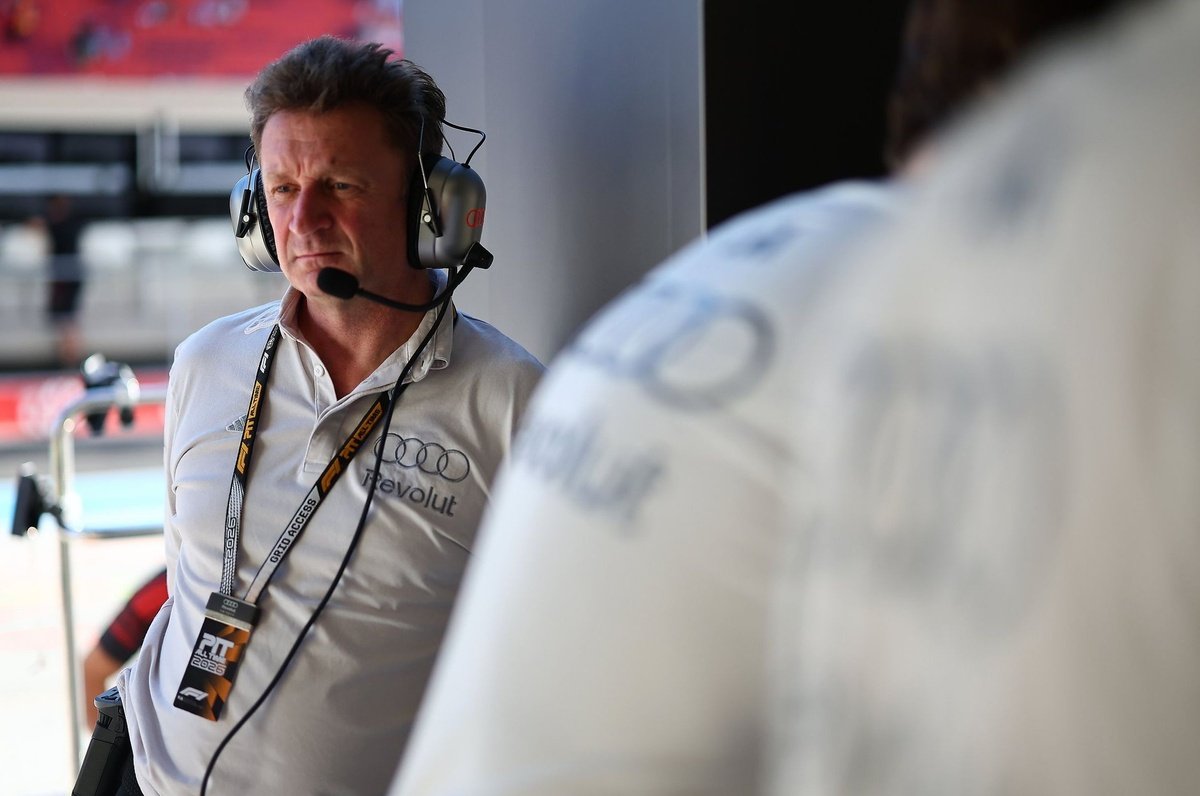
For long-time Audi stalwart and Le Mans winner Allan McNish, becoming Audi’s first racing director in Formula 1 feels like the natural progression of his storied career on both sides of the pitwall.
After climbing the UK single-seater ladder in the late ’80s and early ’90s, McNish’s road to the top took a number of strange turns, with a McLaren F1 test role that ultimately didn’t lead to an F1 seat. Instead, McNish headed to sportscar racing, becoming one of the pillars of Audi’s hyper-successful prototype programme and winning the Le Mans 24 Hours in 1999.
The Scot ultimately made it to the F1 grid in 2002 at the age of 32 for newcomer Toyota, only to return to Audi the following year and claim two more Le Mans wins in 2008 and 2013, his last season as a driver. McNish stayed a part of the Audi family and became its team principal in Formula E, before being tapped up by the manufacturer to get involved in its nascent F1 programme.
Sitting down with Autosport, McNish talks about the invaluable lessons he learned along the way, from rubbing shoulders with Ayrton Senna as a teenage McLaren test driver to working with Audi’s legendary racing boss Dr. Wolfgang Ullrich.
Autosport: If you look at you career, becoming Audi’s racing director in F1 feels like the culmination of everything you’ve done so far. You won Le Mans three times as a driver with Audi, you raced in F1 with Toyota, and then you became a driver manager and liaison, and a team principal in Formula E.
Allan McNish: “It’s true. As a driver you’re exposed to every area, whether it be engineering, whether it be strategy, tyres, communications, because you have to be involved in your press releases or working with partners and things like that. What you have got as a driver, though, is a very narrow view over what success looks like, because success only looks like your personal success. Then when you’re involved with the team, then you’ve obviously got to look a little bit more wide and holistically at it as well. Clearly, we are still defined by the same success ratio at the end of every race. But you do have a very good width of experience if you come out of a high-level driving career.
“However, just like good football players don’t always enjoy successful management careers, I don’t think that always translates as well. But I had a very good run through Formula E, as you said, and also through other different things that I’ve been doing with Audi over the course of time. At the same time, I had very good people that I could learn from, in terms of Dr Wolfgang Ullrich or Dieter Gass at Audi, and then Mattia Binotto here from the F1 point of view. In that respect, I would say I was the pupil of very good professors.”
AS: F1 obviously operates at a massively different scale compared to Formula E. Just how different is the team principal role? Has anything surprised you?
AM: “I think there’s just a natural progression. If I think back to when I was a little kid in karting, racing at Larkhall or Rowrah or somewhere when I was 12, the fundamentals of proper preparation are exactly the same. Make sure that you get things right on circuit, make sure you make the right decisions at the right time, and you’re defined by the end result. But the numbers, the technology and the sophistication of it is significantly more.”
Allan McNish, McLaren
Photo by: Pascal Rondeau – ALLSPORT – Getty Images
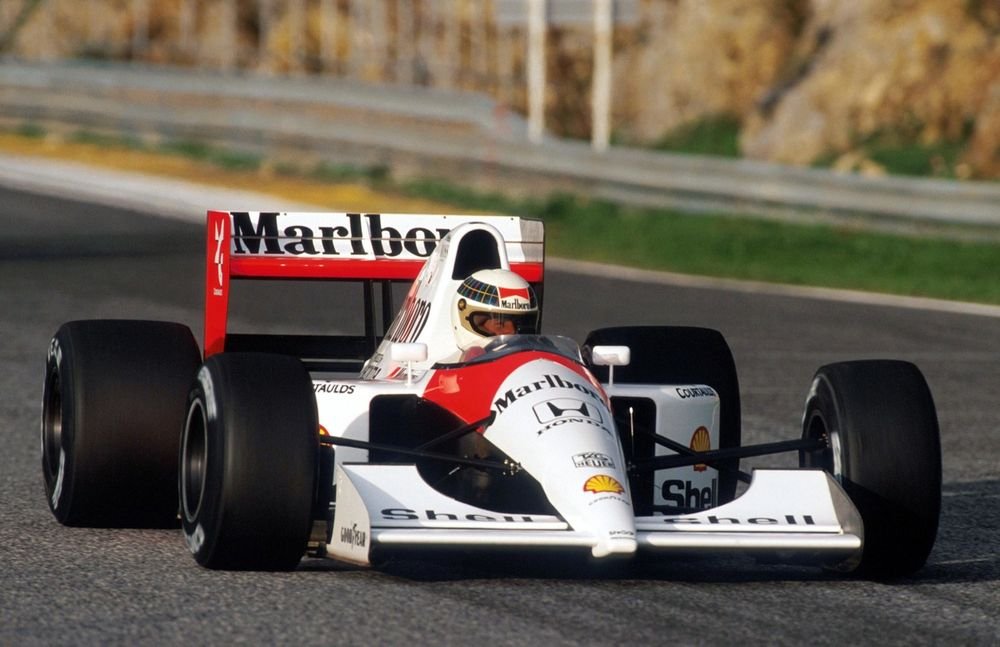
AS: Speaking of the early days, in 1989 you finished second in British F3 and became a test driver for McLaren, making your F1 testing debut at Estoril alongside none other than Ayrton Senna. For a 19-year-old kid from Dumfries, to go test a McLaren F1 car with Senna, that must have been quite an eye-opening experience.
AM: “That was just before I went to the Macau Grand Prix, actually. I never actually thought about it at the time, because I was just ‘doing things’. You know, he was world champion Ayrton Senna, McLaren were the world champions at the time, but you just went and did it. What I do remember about it was I got out of the car thinking : ‘Bloody hell, this is fast!’
“Ayrton was talking about engine friction and various other things, and that was a benchmark. It made me realise very, very quickly, that if you want to be successful in the game, you’ve got to step up at every level. Talent only gets you so far. There is a work ethic and a focus on detail that you have to put in. And that was as a driver, but I don’t think it is different in any other way of life.
“That was an education for me. I’ve still got the old data printout of that first test in Estoril, but it was two pieces of paper you put together and held up to the light because there weren’t data comparisons like today. You still had a clutch pedal, for goodness sake! And two buttons on a steering wheel. They’re dinosaurs in comparison to today’s cars.”

Allan McNish, McLaren
Photo by: Sutton Images via Getty Images
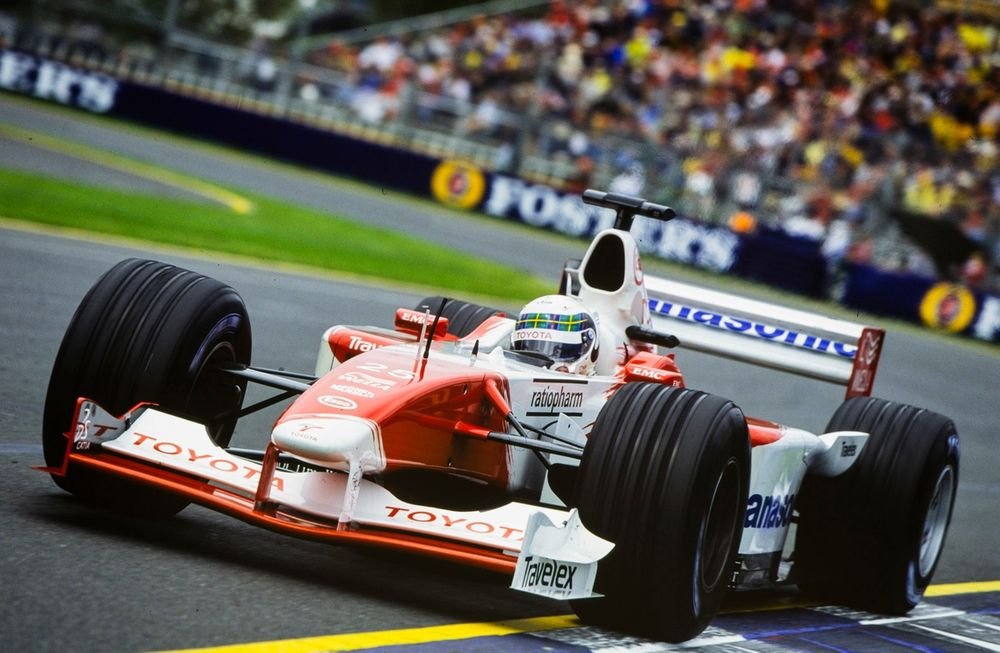
AS: You certainly had an unconventional route up the motorsport ladder, making your F1 debut with Toyota at the age of 32 in 2002, three years after your first Le Mans win.
AM: “Oh no, it was definitely not a straight route. It was straight route for a little while, and then it turned left and right a little bit… But funnily enough, I think that actually gives you a different level of experience, because it gives you a certain resilience when you’ve got bad days or bad years. And drivers have them. Not every year is a winning year. It’s how you bounce back from it.
“I’ve had to lean into that resilience at different points in my career. But it’s also something that’s stood me in quite good stead when the opportunities came, to take a hold of them and use them. And you’re right, from that test at 19 in October 1989 till sitting on the grid in March 2002, there was a good 13 years in between…”
Allan McNish, Toyota Racing Team
Photo by: Rainer Schlegelmilch / Getty Images
AS: In that time you logged more miles in an F1 car than many regular drivers will ever get these days.
AM: “Without a doubt. I probably had about 20,000 or 30,000 kilometres of testing in an F1 car with different teams, including Benetton. But looking back, it was probably 10 years too late. I’d won a lot of things in between, but starting your first grand prix in 2002 at the age of 32 was not ideal.”
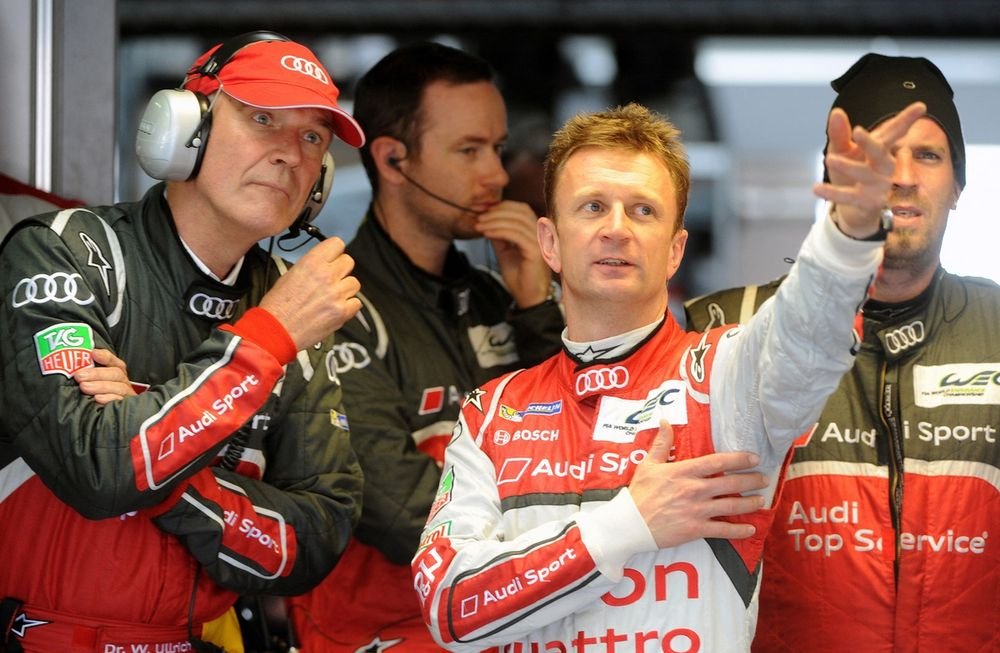
AS: What was it like being part of the Audi Le Mans programme? You already mentioned Dr. Ullrich’s influence. What did you pick up from working with him?
AM: “I was contracted to Porsche when it stopped its racing programs. They built a car which we tested that was going to go up against the Audi R8, but ultimately that didn’t happen. And I met Dr. Ullrich, we agreed in principle on a handshake. And that handshake stood the test of time until I could sign the contract. So, I would say it goes back to an old principle of ‘a handshake is an agreement’. And that’s something that I still hold very strongly today.
Dr Wolfgang Ullrich and Allan McNish, Audi
Photo by: Jean-Francois Monier / AFP via Getty Images
“Dr. Ullrich was very much aware that racing was about people as much as technology. He was into building teams of people, realising that certain characteristics and personalities fitted together. That was definitely a draw for me. It was quite clear that after my time in Formula 1, I was coming back to Audi. Nothing was written down, but it functioned. And it was quite clear, black or white, whether you won or lost. If you lost, you came home, didn’t point a finger, you just got on working to find the solutions to make sure you won the next time.
“That has been a thread through most of the good people that I’ve worked with in my career, actually. You need to have a long-term vision and you don’t get short-term success without a lot of hard work. The Audi Le Mans program was a perfect example of that and that was probably the biggest lesson that is translating to what I’m doing now. Especially in F1, where the competition is hyper tough. There are no shortcuts.”
AS: You did various bits and bobs on the side towards the end of your driving career, like managing Harry Tincknell and doing some commentary. Were you always going to transition to a career outside the cockpit?
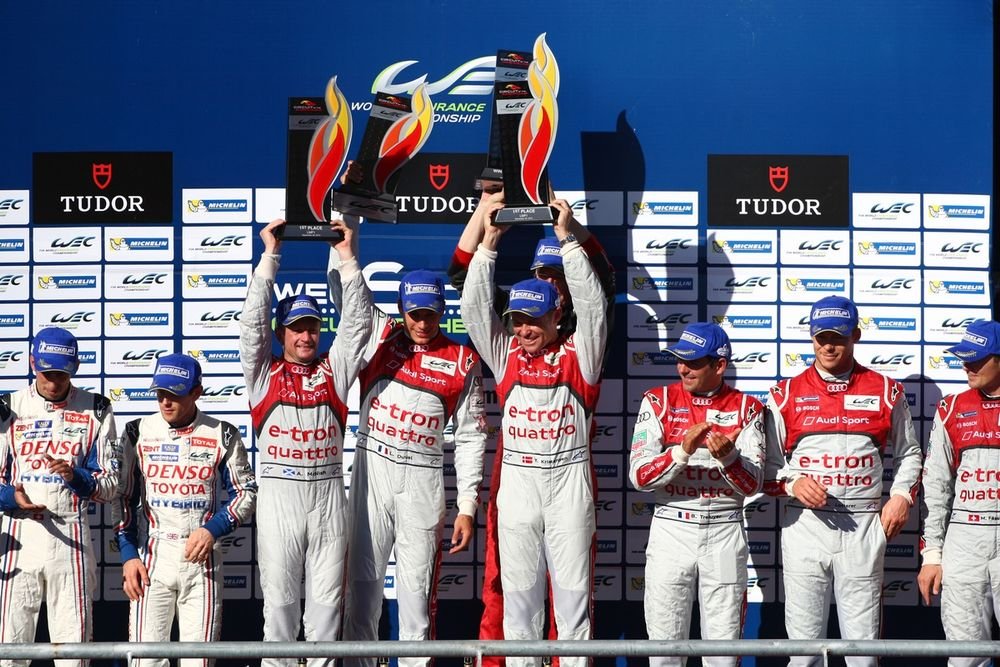
AM: “Bits and bobs on the side, I like that! (laughs) There’s two things really. I was always very aware that you’ve got a lifespan as a racing driver, and I never wanted to be the weak link that was hanging on. I won the World Endurance Championship in my final year with Tom [Kristensen] and Loic [Duval]. We won Le Mans and we won the Silverstone [6 Hours]. And the day after I [took my final victory] at COTA I decided to retire, because I wanted to ensure that I’d tick my boxes, if you like.
Audi’s Allan McNish, Loic Duval and Tom Kristensen win the COTA 6 Hours
Photo by: Jakob Ebrey / LAT Images via Getty Images
“At the same time, I have always been involved in other businesses one way or another around the car industry and motorsport. It’s an environment that I’ve grown up with since day zero and one that I love. So it’s actually a passion, not necessarily a job or a sport. It’s a way of life, I suppose, for me and most people in this situation.”
AS: If I remember correctly, you initially said you weren’t interested in becoming a team principal because you didn’t want to deal with those selfish bastards in the cockpit…
AM: “People like me, to be honest with you! (laughs) And it’s true, because running a team is quite an investment of time and energy. I know how difficult I was as a driver in terms of the demands I put on a team. And I thought: ‘Crikey, I’ve just lived as a driver. Do I really want to put myself through the other side of it?’ But it was also a lesson in never say never.
“When the team principal role in Formula E came up, it was actually a surprise because I’d done the analysis for Dr Ullrich and Dieter Gass looking into Formula E, how you could do it and what the opportunities are. I sat in the room presenting it and there was a chart on the wall and it had several empty boxes, including team principal. Then they said: ‘And that’s Allan.’ That was the first time the thought even entered into my head. It wasn’t necessarily me knocking on the door. It was actually the other way around.
“It was quite nice that they recognised something in me that I probably didn’t in myself.”
AS: With all the data and technology we have available now in F1, I suppose the old book of racing driver excuses doesn’t really exist anymore, does it?
AM: “It’s definitely more difficult. If I go back to when I first drove Formula 1 car, there was very limited data and it was a stopwatch. And you listen to the engine as it drove around, so it was screaming away. But now everything is covered by data. We’re governed by it. We live by it. And it defines us to some extent. But data is only a snapshot in time, it’s how you read the data as well.
“But from all the data we have, at the end of the day the stopwatch is the critical one. That one tells the truth…”
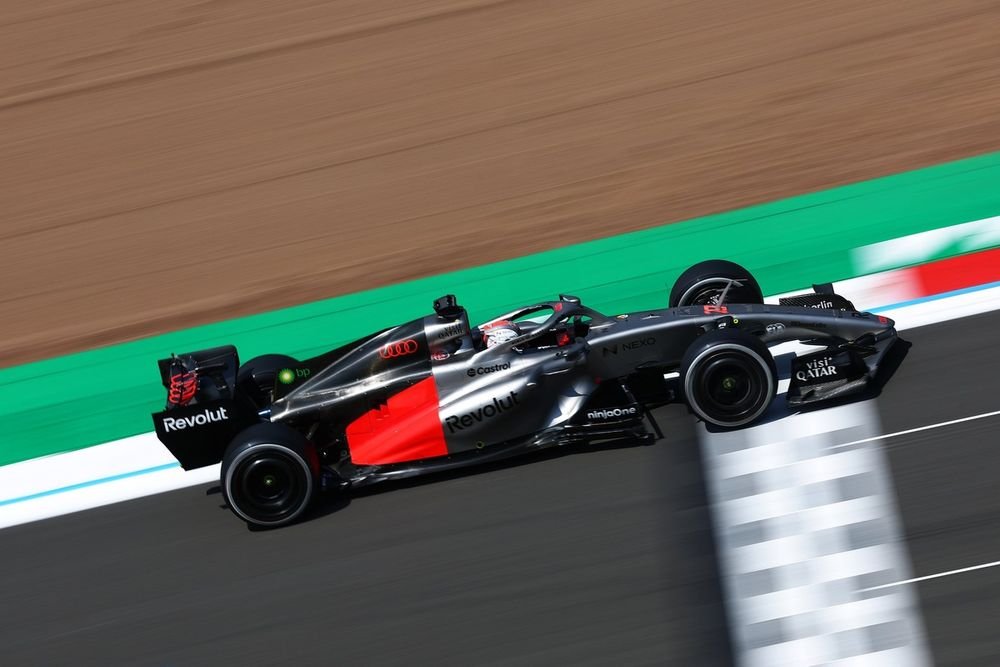
Nico Hulkenberg, Audi F1 Team
Photo by: Andy Hone/ LAT Images via Getty Images
We want to hear from you!
Let us know what you would like to see from us in the future.
Take our survey
– The Autosport.com Team
Read the full article here