





Uncertainty is once again clouding the future of LIV Golf after reports emerged that its Saudi-backed funding may only be guaranteed through the remainder of the current season, raising fresh questions about the long-term sustainability of the controversial circuit.
According to multiple reports, players and staff were informed internally that financial backing from Saudi Arabia’s Public Investment Fund (PIF) — the driving force behind LIV’s creation in 2022 — is secured only for the final events of this year. This marks a notable shift from previous assurances that funding was locked in for the long term, with earlier projections suggesting support could extend into the next decade.
The development has sparked concern within LIV’s ranks, particularly given the scale of investment that has already been poured into the league. Since its launch, PIF is estimated to have committed more than $5 billion to the venture, underwriting lavish player contracts, high-production events, and a global expansion strategy designed to disrupt traditional professional golf structures.
NEW YORK MEETING
The issue came to a head earlier this week when senior LIV executives were summoned to an emergency meeting in New York, an unusual move given that a $30 million tournament was simultaneously taking place in Mexico City. The absence of top leadership at the event only intensified speculation about the seriousness of the situation.
In a subsequent memo to staff and conversations with players, LIV Gollf chief executive Scott O’Neil attempted to reassure stakeholders, insisting that the current season would proceed “at full throttle.” However, notably absent from his message was any clear commitment regarding funding beyond 2026.
Privately, it is understood that LIV’s leadership acknowledged the need to explore alternative sources of capital. That could include external investors, team ownership models, or further commercial partnerships — all of which signal a potential pivot from a model almost entirely reliant on sovereign wealth backing.
Adding to the uncertainty were recent comments from Yasir Al-Rumayyan, the governor of PIF and chairman of LIV Golf. Speaking publicly, Al-Rumayyan indicated that geopolitical factors – including war in Iran – were prompting a broader reassessment of investment priorities.
While he stopped short of confirming any withdrawal from LIV, his remarks underscored the fluid nature of the fund’s strategy. “It is a dynamic situation,” he said, suggesting that all major investments remain under review depending on global and economic conditions.
MAJOR LOSSES & MAJOR PLAYER DEPARTURES
Such ambiguity has inevitably fuelled speculation about LIV’s long-term viability, particularly in light of its financial performance to date. Despite securing high-profile sponsorships and global media deals, the league has yet to demonstrate a clear path to profitability. Its UK-based entity reported losses of more than £460 million in 2024, highlighting the ongoing gap between expenditure and revenue generation.
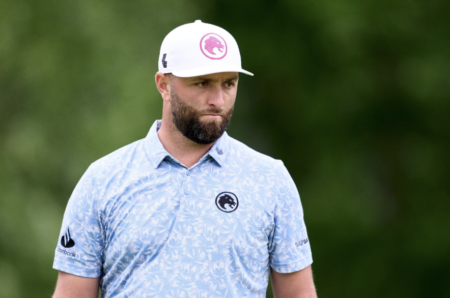
Central to LIV’s strategy has been the recruitment of elite players through lucrative contracts. Major champions such as Jon Rahm, Bryson DeChambeau, Dustin Johnson and Cameron Smith were all lured with substantial signing bonuses, fundamentally reshaping the professional golf landscape.
However, recent reports of player departures — including figures like Brooks Koepka and Patrick Reed potentially returning to established tours — have raised further doubts about the circuit’s stability and appeal.
Broadcast performance has also been a concern. While LIV has secured multi-year agreements with major networks, including FOX in the United States and TNT Sports in the UK, television audiences have consistently fallen short of expectations. This has made it more difficult to attract sustained commercial investment at the levels required to offset its operating costs.
SURVIVAL IN THE BALANCE
Nevertheless, O’Neil remains outwardly optimistic. In recent interviews, he pointed to growing sponsorship revenues – reportedly approaching half a billion dollars annually – and strong attendance figures in markets such as Australia and South Africa as evidence of positive momentum.
He also hinted at forthcoming “structural changes”, including the possibility of introducing team ownership opportunities and integrating LIV events more closely with established national opens. Such moves could be aimed at increasing both revenue streams and the league’s legitimacy within the broader golf ecosystem.
For now, LIV Golf continues to operate as planned, with its remaining events set to proceed as scheduled. But behind the scenes, the focus appears to be shifting from disruption to survival – and the coming months may prove decisive in determining whether the league can secure a future beyond its Saudi origins.
Read the full article here