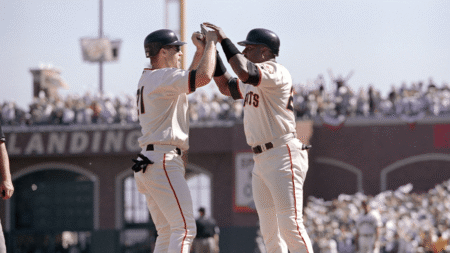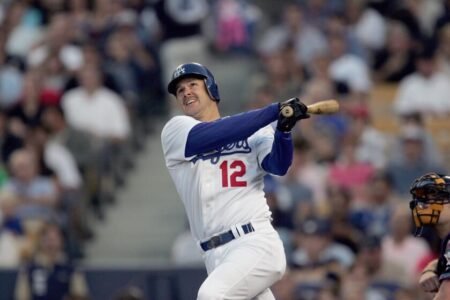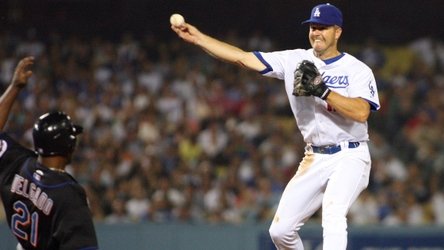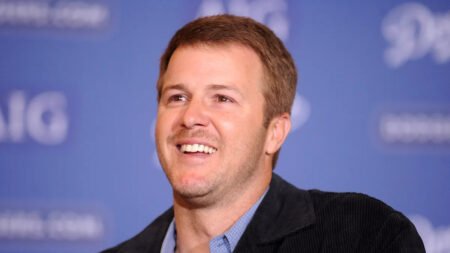





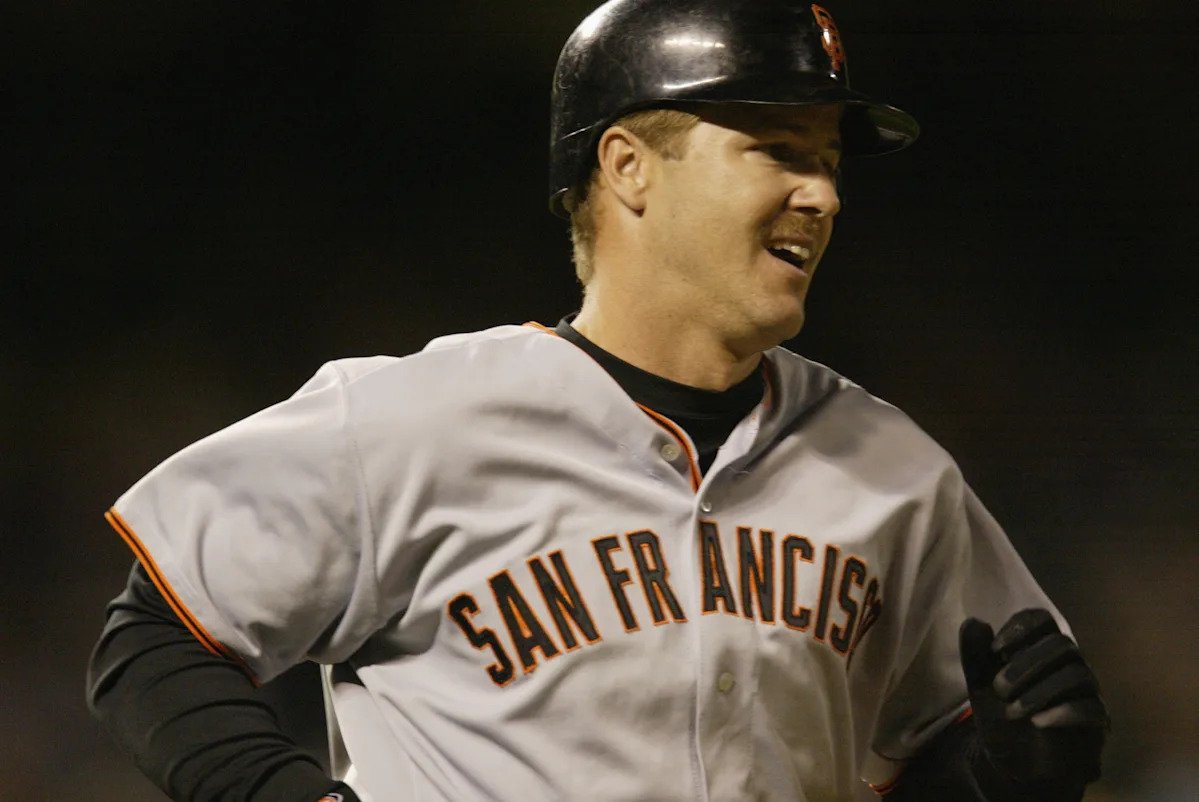
Jeff Kent is headed to the National Baseball Hall of Fame, while Barry Bonds and Roger Clemens were once again left out in the cold by voters. The five-time All-Star second baseman was granted enshrinement on Sunday by committee vote, with Bonds and Clemens again falling short after 10 failed BBWAA elections and their first failed committee vote. For election, candidates needed 12 votes from this year’s 16-member Contemporary Era Committee.
The newest Hall of Fame member will be formally inducted on July 26 in Cooperstown, alongside whichever players make it through this winter’s BBWAA voting. Carlos Beltran is the only player above the needed 75% among the few votes that have so far been revealed.
New rule means Barry Bonds and Roger Clemens can’t reach Cooperstown until at least 2031
This year’s committee had eight players up for a vote: Bonds, Clemens, Kent, Carlos Delgado, Don Mattingly, Dale Murphy, Gary Sheffield and Fernando Valenzuela.
Kent got 14 votes, and Delgado was next with nine. Mattingly and Murphy each got six, while Bonds, Clemens, Sheffield and Valenzuela all got fewer than five. Due to a 2025 rule change, failing to get five or more votes in this cycle means Bonds, Clemens, Sheffield and Valenzuela will be ineligible for the next Contemporary Era ballot in 2028.
That means the earliest that Bonds and Clemens could make the Hall is 2031.
This year’s voting body consisted of seven Hall of Fame players (Fergie Jenkins, Jim Kaat, Juan Marichal, Tony Pérez, Ozzie Smith, Alan Trammell and Robin Yount), two owners (Mark Attanasio of the Milwaukee Brewers and Arte Moreno of the Los Angeles Angels), four former general managers (Doug Melvin, Kim Ng, Tony Reagins and Terry Ryan) and three media members (Steve Hirdt, Tyler Kepner and Jayson Stark).
Jeff Kent is the all-time HR leader among second basemen
Kent played in MLB for 17 seasons with the Toronto Blue Jays, New York Mets, Cleveland Indians, San Francisco Giants, Houston Astros and Los Angeles Dodgers. He was a late bloomer, accruing all of his five All-Star nods, four Silver Sluggers and 2000 NL MVP award in his 30s.
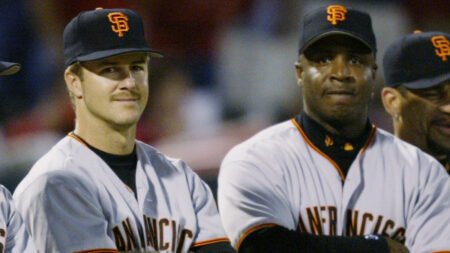
He won that MVP while playing alongside Bonds with the Giants, slashing .334/.424/.596 with 33 homers and 125 RBI at the keystone position. By the time he retired, Kent was the all-time leader in homers among second basemen, with 354 of his 377 career homers at the position.
He finished with a career slash line of .290/.356/.500 and 55.4 WAR. Going off the WAR-based JAWS metric used to measure Hall of Fame cases, Kent rates as the 22nd-best second baseman ever.
After retiring in 2008, Kent was first up for Hall of Fame election in 2014 and received 15.2% of the BBWAA vote. As often happens, his vote share steadily climbed over his 10 years of eligibility, but it peaked at just 46.5% on his final ballot in 2023.
This was his first go-around in the committee process, and it will be his last.
Barry Bonds and Roger Clemens are the 2 most controversial Hall of Fame candidates ever
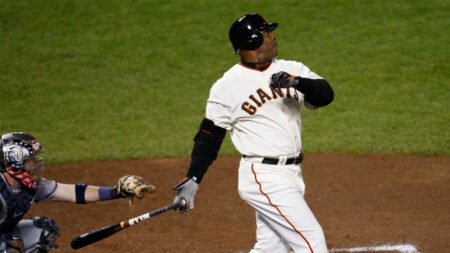
Both Bonds and Clemens are among the most accomplished players in the history of baseball and would be automatic first-ballot additions under normal circumstances, but every sports fan is well aware that their circumstances aren’t normal. Due to allegations of performance-enhancing drug use, the candidacies of Bonds and Clemens have hung over the Hall of Fame since their final MLB seasons in 2007.
Bonds has admitted to unknowingly using the anabolic steroid tetrahydrogestrinone, while Clemens has persistently denied any steroid use, but significant evidence exists that both men knowingly took PEDs — so much so that their claims of innocence under oath before Congress led to perjury trials. Clemens was acquitted in his case, while Bonds was found guilty but had his conviction overturned on appeal.
Meanwhile, Kent was one of the public crusaders against steroid users among players. He once urged Bonds to “own up” to his steroid use and advocated for blood testing in addition to urine, with one of his lines even making it into the introduction of the Mitchell Report.
Significant allegations in Bonds’ and Clemens’ personal lives also became an issue as their candidacies dragged on. Bonds’ ex-wife accused him of physical abuse on several occasions during their marriage, and a former mistress accused him of verbal abuse and death threats.
In 2008, the New York Daily News reported that Clemens had been engaged in an affair with country singer Mindy McCready since she was 15 years old. McCready confirmed she had a relationship but denied it began when she was 15, while Clemens apologized for unspecified “mistakes in my personal life” but denied the claim that he had an improper relationship with a 15-year-old girl. McCready committed suicide in 2013.
Despite the differences in their respective list of scandals, Bonds and Clemens always walked a similar path in the Hall of Fame voting. They first joined the BBWAA ballot in 2013, with Bonds receiving 36.2% of the vote and Clemens getting 37.6%.
Over the next nine years, they never finished more than 2% away from each other. They were an easy yes for any voter who thought their respective allegations shouldn’t override the Hall’s character clause. They were an easy no for voters who couldn’t get past the scandals. The Hall itself certainly didn’t want them to make it in, as it opted to cut the number of years a player can stay on the BBWAA ballot from 15 years to 10 just so it wouldn’t have to deal with their candidacies for so long.
That BBWAA candidacy ran out for the pair in 2022, with Bonds topping out at 66% and Clemens at 65.2%, dozens of votes short of the 75% needed to get in. That sent their candidacies to the committee process, in which they got fewer than four votes out of 16 the first time around.
This year’s committee wound up voting similarly.
Read the full article here