




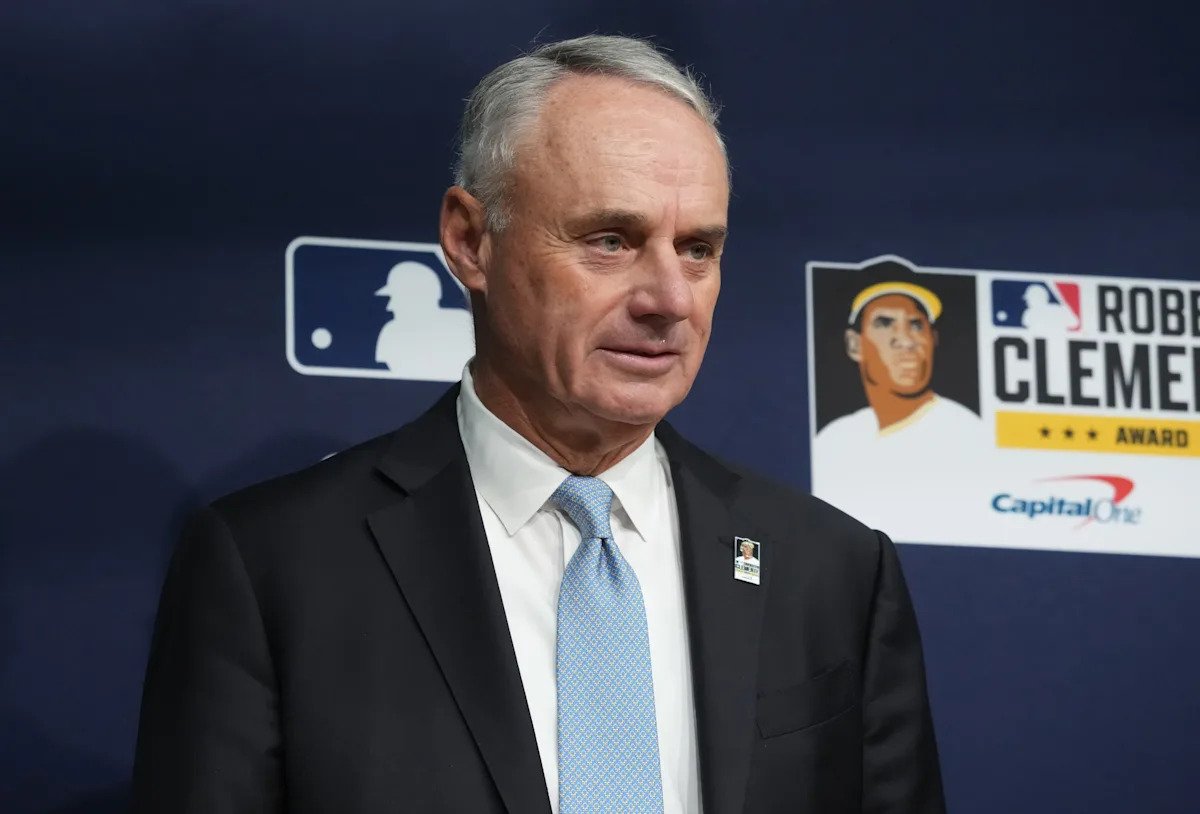
The Los Angeles Dodgers’ signing of Kyle Tucker for four years, $240 million caused an uproar in baseball last week. The outrageous overpay triggered many around the game to say enough is enough. With the coming end to the current Collective Bargaining Agreement between MLB and the MLBPA, negotiations for a new agreement will probably begin this spring. It has already been a volatile and public debate between all the parties with MLB Commissioner Rob Manfred and MLBPA head Tony Clark both dropping test balloons in the media.
The outrage regarding the Dodgers’ ability to spend unlimited amounts of money on payroll has been on the rise since the Shohei Ohtani deal. But the Tucker contract appears to have been the final straw for many. Although almost all quarters of the game agree that a lockout is inevitable on Dec. 1 of this year, how long that lasts and what the new contract looks like almost no one agrees on.
With the offseason winding down and Spring Training around the corner, baseball execs and players will start meeting soon to lay the groundwork for what their demands and strategies will entail. With baseball enjoying a huge uptick in popularity over the past few years, it remains to be seen if the two sides can look past their differences and find common ground in order to keep their game on the field.
Sports journalist Joon Lee took this opportunity to once again address a common theme being discussed in the lead up to the negotiations. Are the Dodgers responsible for breaking baseball?
Here is the video of his report regarding the unique advantage he believes the Dodgers have in just their media revenue and how that has taken them from being bankrupt and sold in 2012 to being the organization that can have whatever payroll they want in present day.
When this story first broke in 2012, Bill Shaikin of the Los Angeles Times posted an article (taken from a Bloomberg piece) outlining the deal as he understood it (requires subscription). There were multiple other outlets that reported on the story with the synopsis being that the bankruptcy settlement negotiated with team for sale allowed the organization to pay less in revenue-sharing for their media deal than the 29 other teams. The goal was to allow them more money to be able to recover from the bankruptcy. It was negotiated before the media deal and went for the length of whatever deal they signed.
According to an article just published in EssentiallySports by Disita Sikdar, the deal meant that the team would never have to report more than $84 million in media revenue, with a four percent yearly escalator. With the deal the team eventually signed with Spectrum, the Dodgers deal is worth $8.35 billion over the 25 years of the contract. It works out to $334 million per year.
The Vice President of MLB at the time was Manfred. He stated that the information was incorrect and the Dodgers would be paying the same amount in revenue-sharing as all the other teams. The direct contradiction was partially addressed by Maury Brown in his article for Baseball Prospectus in October of 2012.
Focus on this out of the Bloomberg piece: the Dodgers are going to pay revenue-sharing on every penny that comes into their coffers through media rights. They wouldn’t, however, have to pay revenue-sharing on any equity should they start an RSN with a partner such as FOX or TWC. Consider this “proliferation” — another big-market, storied franchise being able to move money from one hand to the other. After all, the Yankees and Red Sox have been doing it for years.
The Dodgers formed a partnership with Spectrum and are co-owners of their regional sports network. This makes the situation more complicated than I can figure out with my limited understanding of partnerships and finance. Brown acknowledges that the Dodgers likely have an unfair advantage. This article was written before the media deal was set.
If any of Lee’s report is true, it just adds more flame to the fire that many in baseball already have raging. The system is definitely broken, with the Dodgers having more resources than any other team, and flaunting it. Can the league and the players find common ground to begin fixing what needs to be addressed?
Will there be a salary cap and a salary floor? Does revenue-sharing need to be revamped to reflect the disparity in media rights and revenue from the media contracts or lack thereof?
The future of the Padres rests not just with these issues but also with the sale of the team. It seems reasonable that we might not have a new owner until some of these questions are answered.
The big brother to the north doesn’t seem to care about the penalties they have to pay for breaking the rules regarding their spending and payroll. They forfeit money, draft picks and international signing bonus pool cash because of their payroll. The current estimate for 2026 sits at $413-$429 million. No one else even comes close.
The bigger picture is about the health of the sport. Something has to be done.
Read the full article here