




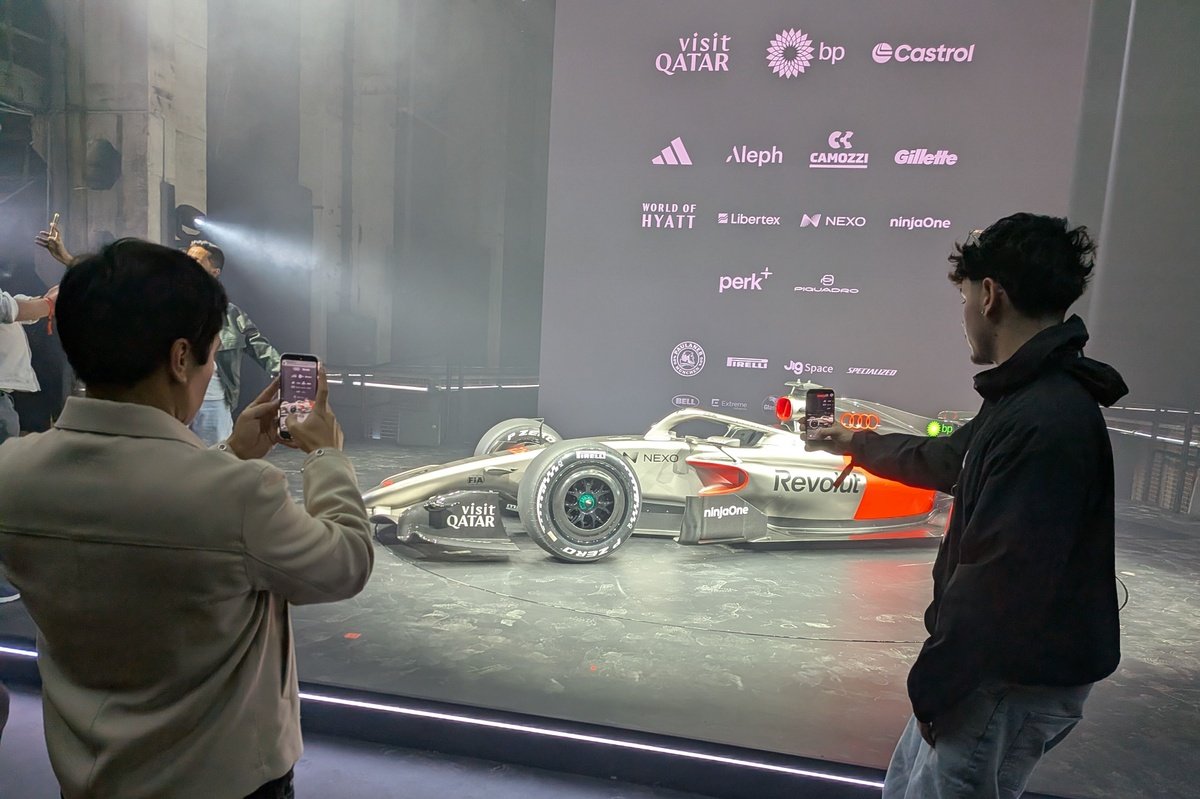
Humble. But firm and confident.
There was never really a chance Audi would enter Formula 1 in 2026 without a proper statement. Not because it needed fireworks, but because this is one of the most long-awaited and most speculated-about arrivals the series has seen in decades. For years Audi insisted it wasn’t interested in climbing to the pinnacle of motorsport. And then, eventually, it did. You could sense that long road – from denial to inevitability – in almost every detail of how it chose to present itself in Berlin.
You couldn’t accuse Audi of thinking small. It flew in dozens of media representatives from all over the world – from China to Brazil – and, of course, a healthy number of influencers too. It put them up in one of Berlin’s best hotels and made sure the world would be watching.
Audi F1 Team launch
Photo by: Christopher Otto
Yet it also felt like this could have been turned into something far bigger and louder, had the marketing department really been let off the leash.
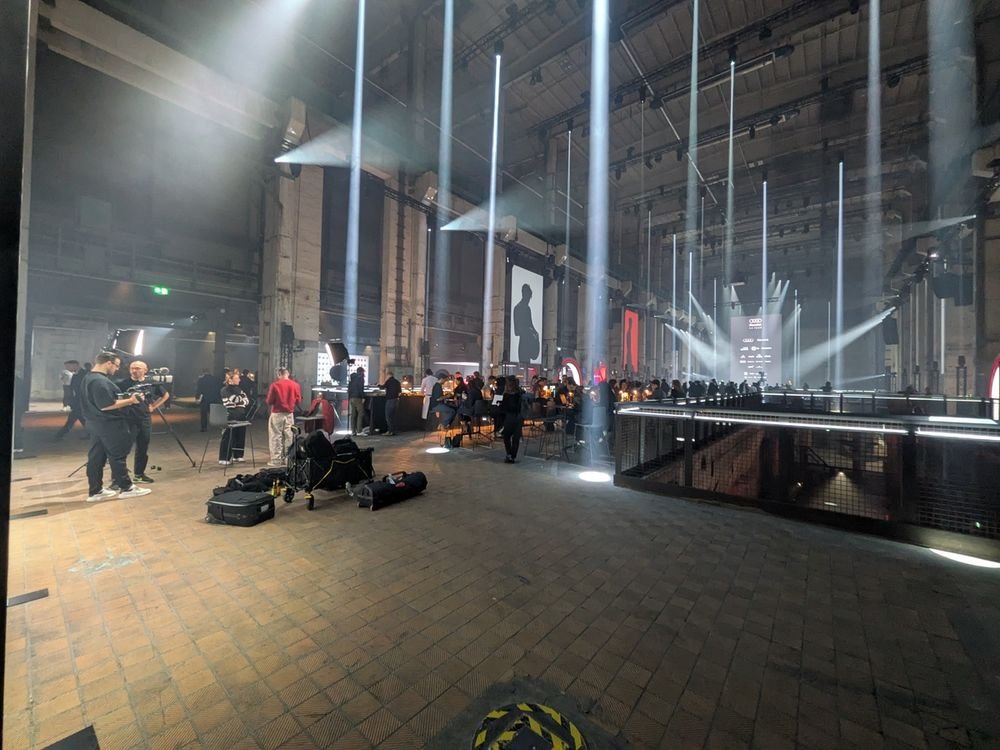
Instead, Audi chose Kraftwerk as the venue – an almost perfect symbol of modern Berlin’s cultural identity. Built in the early 1960s as a combined heat and power plant to keep East Berlin’s homes warm, it was transformed decades later into a cultural space.
From the outside, if not for the fence separating it from Kopenicker Strasse, it could still easily be mistaken for a logistics hub or a warehouse, the kind of place where you’d expect trucks to line up in front of a stern Soviet-looking facade. Inside, it is now an ideal setting for techno parties, art exhibitions – and, apparently, F1 team launches.
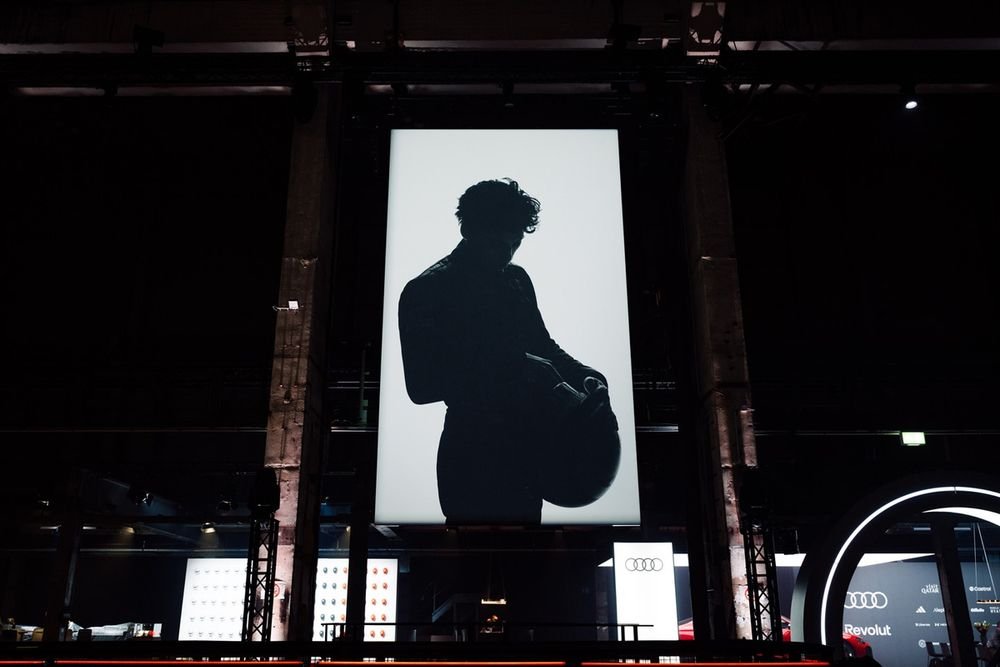
Audi made good use of the space, placing four of its most iconic racing cars – from an Auto Union Type C to a Le Mans-winning prototype – in the entrance area, and setting up a clean, elegant stage for the presentation of its 2026 livery. But it was not designed – perhaps very deliberately – as a spectacle. There was no dance show. No overload of lasers. No deafening music. The car did not descend from the ceiling or appear through clouds of smoke, even though Kraftwerk’s cavernous interior would easily allow for that kind of theatre.

Audi launch
Photo by: Oleg Karpov
Almost three decades earlier, Audi had launched its sportscar programme in Berlin too – rolling its first prototype in front of the world’s media on the wooden track of the city’s velodrome, and turning that moment into a very deliberate statement.
There was nothing even remotely comparable this time around.
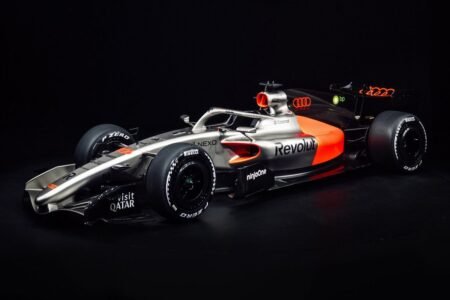
Instead, after a short speech by Gernot Doellner from the steps leading to the upper level, it took nothing more than a simple cover drop to reveal the 2026 show car in its new colours. Then Mattia Binotto and Jonathan Wheatley joined the event host Naomi Schiff on stage for a brief Q&A. No drama. No excess. Just a calm, controlled way of saying: we are here now. But this was not presented as a beginning, and not as some great milestone either – just another step on a journey whose destination has now been clearly defined.
“Mission 2030” is no longer a vague internal slogan. It is now Audi’s formal declaration of intent in F1, announced as part of the company’s overall strategy and immortalised in the neatly prepared PDF press kits handed out to the media in Berlin.
“Formula 1 is the most complex team sport in the world,” the document says. “It is the combination of people and a diverse skill set that makes the difference. We are building a new organisation with a mindset founded on resilience, precision, and a relentless curiosity to find performance everywhere.
“Our goal is to win championships by 2030. We have a structured plan for a deliberate ascent. Our journey begins as a challenger, where we will establish our processes and fight for points. We will evolve into a competitor, consolidating our strengths to consistently compete for podiums. The next phase is to become a champion, a unified, winning force.”
Gabriel Bortoleto, Audi F1
Photo by: Oleg Karpov
The media part of the event was just as carefully choreographed. Journalists – and yes, influencers too – were allowed into Kraftwerk hours before the official livery reveal. Everything was tightly scheduled, almost obsessively organised, with timed slots – some of which were three-minutes long – for every imaginable media activity.
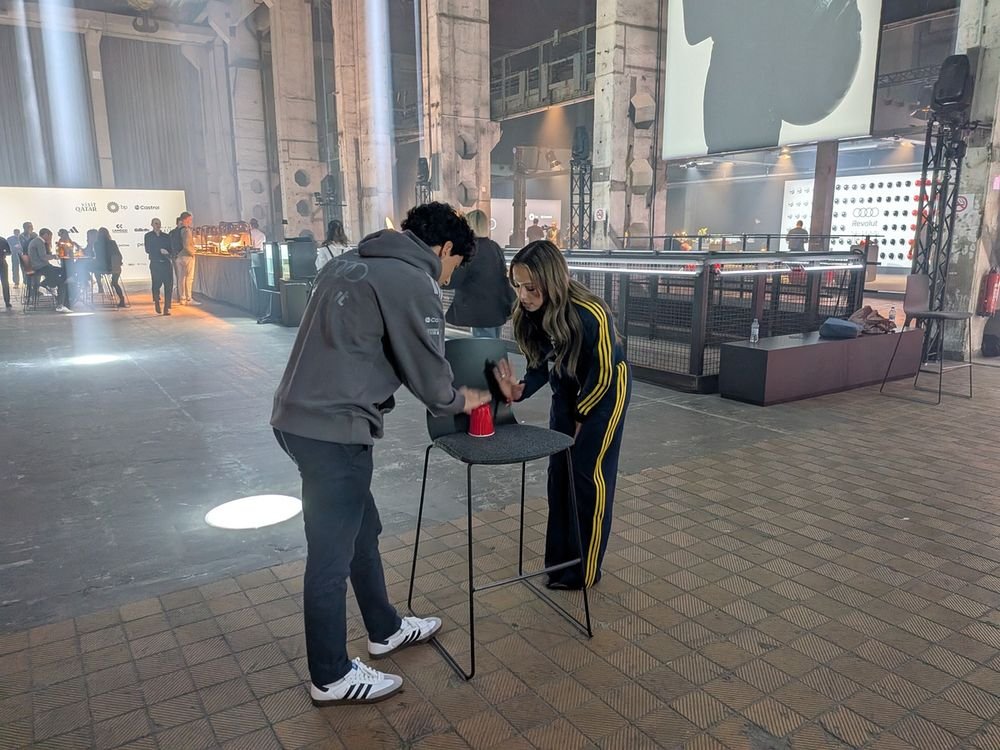
Walking through the sprawling second level of Kraftwerk, you’d see Gabriel Bortoleto playing some silly cup game with an influencer – perfect short-form content in the making – while Nico Hulkenberg was doing something similar nearby. James Key, Wheatley and Binotto were rotating through the same stations. At regular intervals, they would all end up at a large table with the world’s media to deliver their talking points – including, inevitably, that 2030 target.
There was also already a shakedown behind the team. The R26 had run in Barcelona a week and a half earlier, becoming the first 2026 car to hit the track. The operation, as confirmed by Key, had been planned 18 months in advance and was primarily intended to give Audi’s first-ever F1 power unit a proper check.
“I’m not expecting our powertrain to be the best from the very start,” Binotto said calmly, when it was his turn to sit down with journalists. “That would be impossible. That would be unrealistic. But I think we are on our journey and we need to stay focused on ourselves.
Audi launch atmosphere
Photo by: Audi
“What’s our task? Our task, as we said, is to become successful by 2030. It may be perceived as a long way, but it’s not. It’s tomorrow or the day after. And we are really focused on ourselves, staying humble. We know that we may face problems during the season. We may face reliability issues or failures. But what will count the most for me is how the team reacts. Leaving no stone unturned, learning from the problems, showing the capacity to progress.
“And if we are capable of progressing race by race, then, with all the means we’ve got and with the commitment of Audi as a brand, we may become as strong as the others – if not better.”
A lot was said in Berlin about confidence and ambition, but also about that very deliberate humility with which Audi is approaching its F1 programme – and about a patience that feels almost unthinkable for a brand with the four rings.
Audi knows it is not going to win straight away. But if that is not the eventual target, then is that even Audi?
We want to hear from you!
Let us know what you would like to see from us in the future.
Take our survey
– The Autosport.com Team
Read the full article here