




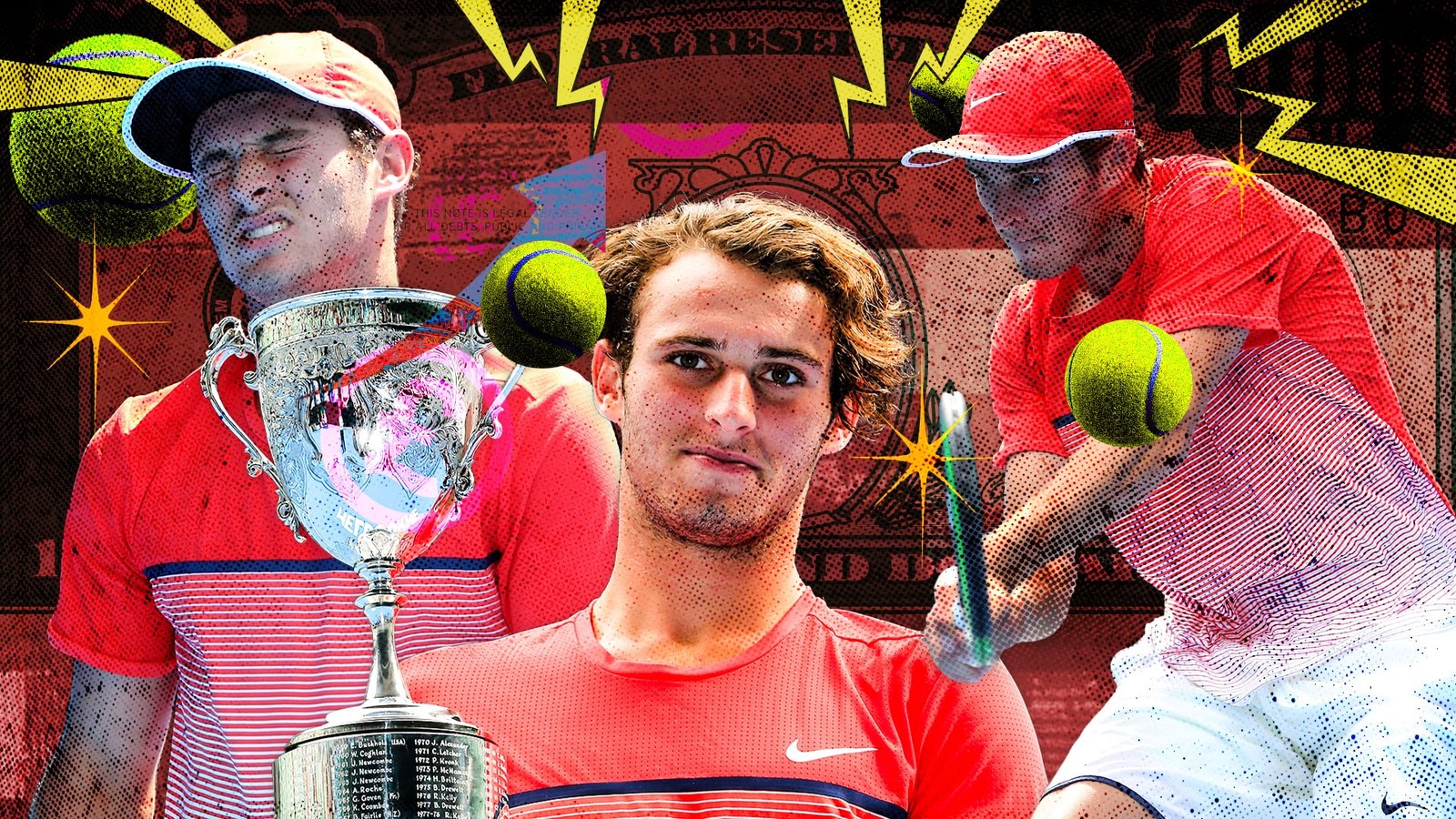
TO SAY 2016 was a rollercoaster year for Oliver Anderson would be a disservice.
It was far more up-down, forwards-backwards, side-to-side, upside down and topsy-turvy than anything Alton Towers or Thorpe Park can conjure up.
And things haven’t exactly been plain sailing ever since, either.
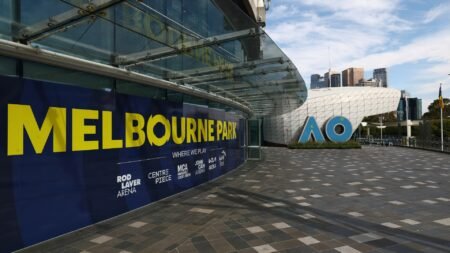
Anderson started 2016 by winning the Australian Open boys’ title to land his maiden junior Grand Slam.
He ended it staring at a lengthy ban from tennis for match fixing.
Anderson followed in the footsteps of Alexander Zverev two years earlier and Nick Kyrgios 12 months before that by claiming the Under-18s crown Down Under.
WIMBO AWAY
BBC ‘given one last chance to get better presenters or lose Wimbledon rights’


Shock scenes
Aussie Open match suspended as ballkid collapses as tennis ace sprints to help
A junior Major can often be a barometer of a career at the highest echelons of the sport – Roger Federer and Andy Murray both won one but neither Novak Djokovic nor Rafael Nadal did.
And Australian Anderson, who made his pro debut aged 14, looked on course to kick on from his early success in his homeland.
But things took several turns for the worse either side of his 18th birthday in the April.
Firstly, he was sidelined for much of the year through injury and needed hip surgery.
It saw his progress stunted and, crucially, saw his prize money dry up.
And his life changed after accepting a wildcard for the now-infamous Latrobe City Traralgon ATP Challenger in Victoria.
Anderson reached the second round, where he lost to John-Patrick Smith 6-2 6-1 and was met by undercover police officers soon after his defeat.
But it was actually his win in round one that was key.
The teenager beat Harrison Lombe 4-6 6-0 6-2.
However, the authorities were alerted by a betting company after a series of suspicious bets for Lombe to win the first set – including one attempt for a massive £5,000 wager.
And the evidence was damning with double faults and unforced errors at the crux end of the opening set.
Anderson was charged with match fixing in January 2017 and pleaded guilty, receiving a $500 AUD (£248) fine and a 19-month ban by the anti-courruption International Tennis Integrity Agency.
He had been identified as a vulnerable target by a match-fixing syndicate due to the financial implications of his injury lay-off.
And deep down, he thinks he viewed the illegal proposal as a way out of tennis.
Speaking to BBC Sport, Anderson – who co-operated with the police and did not receive the money for fixing the match – said: “Anyone who was watching that match would have instantly thought something was up.
I knew I’d made an absolute blunder… it was completely wrong
Oliver Anderson
“It all happened very quickly. I was approached, decided it was doable, I’m doing it, then I’m walking off the court and I’m in serious trouble.
“All I could think is, ‘This is absolutely nuts and there’s only me who knows what going on.’
“Then I was met by undercover police. I knew I’d made an absolute blunder.
“I suppose I was a disgruntled mid-to-late teenager who was not really sure what he wanted to do in life.
“In my mind [agreeing to match fix] was just a perfect, seamless exit, even though it was completely the wrong thing to do.
“It felt wrong being in that situation and it was obviously hard being young and immature. It was pretty confronting. Looking back, it made me mature very quickly.”
Anderson decided to retire while still under his ban aged just 20 in 2018 and pursue his true love, playing guitar in a rock’n’roll band.
But that did not pay the bills so he dabbled in another career: fashion.
The Brisbane native’s family had heritage in the textile industry.
And he opted to continue the trend by designing and manufacturing resortwear for independent retailers.
Now, though, after a “quarter-life crisis”, at the age of 27, Anderson is giving tennis another go.
After barely picking up a racquet for seven years from the ban, a friendly hit with his brother at Christmas 2023 meant he caught the bug again.
He quickly rediscovered the talent was still there and impressed enough to get back in with the Tennis Australia National Academy to train before climbing back on to the bottom rung of the professional tennis ladder.
Anderson’s first entry-level ITF M25 tournament back was in Mexico in May 2024.
Since then, he has played all over the world, from the Dominican Republic to Mozambique to Angola – the site of his first pro title – to Romania to Thailand, taking his career prize money total to £22,600.
Anderson is not the only one to return – his injury struggles have as well – and he is currently ranked No1,235 in the world.
A decade on from his peak of No639 and winning his only match in men’s Grand Slam qualifying days before his junior Australian Open glory, he is still a long, long way from competing at a senior Major.
By comparison, Canadian duo Denis Shapovalov and Felix Auger-Aliassime, two of the other junior Major winners in 2016, are 23rd and seventh respectively.
And rather than Anderson, it is his compatriot, Alex De Minaur, seeded sixth in the boys’ Aussie Open ten years ago, who has proudly flown the flag in gold and green in recent years, going into this month’s home Major at a career-high world No6.
Read the full article here