



The late afternoon light is falling in greens and oranges and reds on the cathedral’s terracotta floor. People clutter the pews as the music starts up, complex, layered sound echoing around the cathedral’s great interior.
And then in comes Jonathan Mayes.
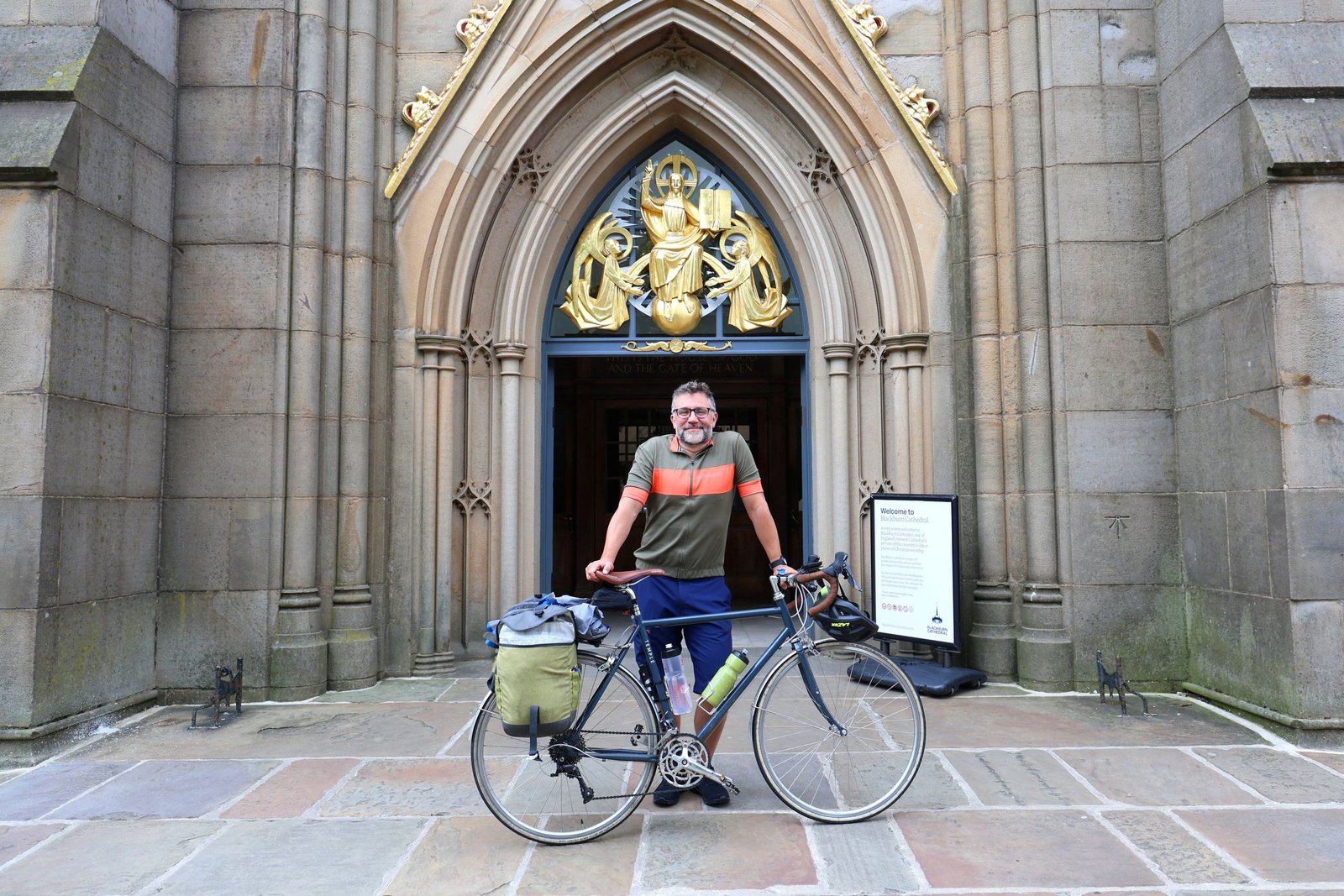
He wheels in a bike, wearing a helmet and top emblazoned with the name of the charity he’s raising money to support: the ‘Cathedral Music Trust’.
Article continues below
“I was cycling from Central Wales, from Brecon down to St Davids, which is about 80 miles, but also about 5000 feet of climbing hard,” Mayes remembered. “I was behind schedule, and so I had to really push it to get to St Davids Cathedral in time, which was a six o’clock service. I was 10 minutes late, and thought that I’d have to sneak in at the back. But basically, the Dean of the Cathedral was waiting by the door for me to welcome me to the service. That was brilliant.”
Mayes spoke to me at the tail end of his 50-day bike tour, in which he’s visiting 100 choirs in England and Wales over 3,000 miles on a journey to celebrate – and fundraise for – choral music. He’s currently three quarters of the way into the bike trip that has so far involved accidentally joining the Isle of Man motorbike TT – and a few last minute arrivals into cathedral services.
“It’s not quite Greg James territory,” Mayes joked. “I’m very, very envious of the huge crowds he’s getting!”
Most of us get exposure to choral music at big national events, like a royal wedding or a Christmas events, Mayes explained. “You see a coronation – isn’t that wonderful – but it makes it seem like this music is somehow so woven with the establishment that it must be fully funded.”
Mayes said that the funding instead comes directly from the congregation, from trusts and foundations like the Cathedral Music Trust, of which Mayes is the CEO.
“It’s one of the best cultural exports we have in this country,” Mayes said. “It’s 500 years old, so it’s also one of the oldest cultural exports. But almost everywhere really struggles. And the struggle is partly because music is only one part of what these places are doing.”
The development of cathedral music in the UK came about during the English Reformation, when the Church of England broke away from the Roman Catholic Church during the reign of King Henry VIII. The hymns in the cathedrals became, for the first time, sung in the language spoken by the congregation.
“If you go back to the mid 18th century to the mid 19th century, it is fair to say that the tradition wasn’t in particularly good health,” Mayes continued. “It had a restorative moment towards the end of the Victorian era, and since then has been really flourishing. I would make a strong argument to say it’s perhaps in stronger health now than it ever has been, despite the financial challenge it faces today.”
(Image credit: Jonathan Mayes)
It’s not totally surprising that Mayes ended up the one cycling between cathedrals. His 77-year-old dad has taken his son out on bike rides for his birthday every year – each ride as long as the age he’s turning.
“I would encourage everybody on their bike to cycle to their local cathedral when there’s a chorus on and just go and listen,” Mayes said. “I think these places can feel a bit like you’re not allowed in, because there’s a lot of tradition there. But actually they all want people to come in. So if nothing else, I’d love for people to just go and hear something cool.”
Mayes’ journey will finish in Durham Cathedral on 29 April. If you want to donate, you can do so here.
Read the full article here