




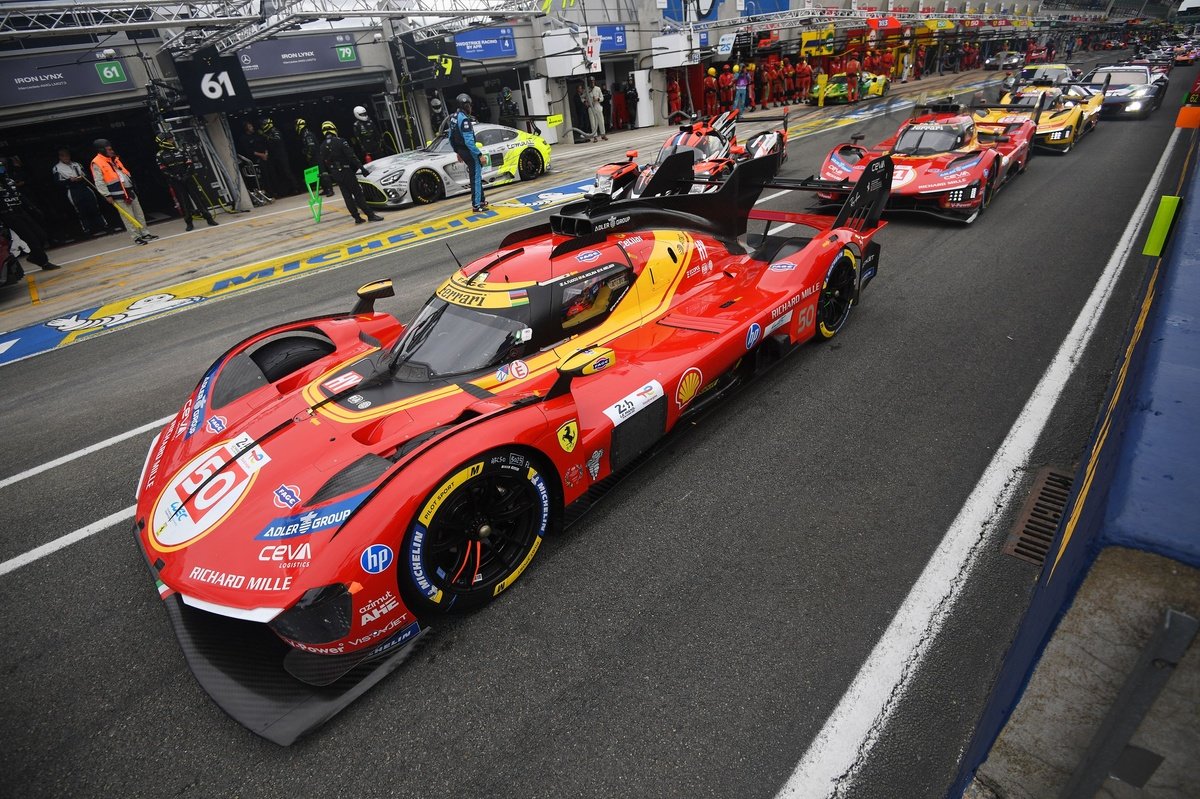
Manufacturers will remain free to develop their own chassis and hybrid systems when the World Endurance Championship’s Hypercar category moves towards the LMDh rulebook for 2030.
New regulations being put in place for after the end of the homologation period of the current cars will outlaw the four-wheel-drive currently allowed under the Le Mans Hypercar rules and mandate that hybrid power can only be retrieved and returned to the track via the rear axle as per LMDh.
But the FIA and the Automobile Club de l’Ouest, which co-run the WEC, have revealed that entrants in Hypercar will not be forced to develop a car around a chassis spine provided by one of the four licensed LMDh constructors.
Nor will they have to use the spec hybrid system developed by Bosch, Fortescue Zero [formerly WAE Technologies] and Xtrac.
FIA chief technology officer Xavier Mestelan Pinon said: “This is very important for some of our manufacturers who want to promote their own technology for the battery or the hybrid system.
“There will be one platform, but two paths to get there: one way it is to do what is done already in LMDh with common parts and the other track is a fully bespoke design.
“But this would be with the same technological regulatory constraints – the technical specifications would be the same.”
Manufacturers will be free to develop their own hybrid powertrains or use off-the-shelf components
Photo by: Marc Fleury
Mestelen Pinon also revealed that a manufacturer using an off-the-shelf chassis would be allowed to develop its own hybrid system.
But he explained that a manufacturer wouldn’t be able to build its own chassis and use the spec hybrid system.
Mestelan Pinon and ACO technical director Thierry Bouvet hinted that further freedoms could be allowed to Hypercar participants using an off-the-shelf spine.
Further changes to the Hypercar rulebook for 2030 will give more scope to the manufacturers to incorporate styling cues into their cars.
But there will be further aerodynamic constraints on the underside of the cars: the plan is to introduce a common underbody and rear diffuser.
“The most important thing is to offer more flexibility for the external design, the upper body – this is the spirit,” said Mestelan Pinon.
There will also be a 20kW (26bhp) increase in power from the current 520kW (697bhp) maximum. The increase will come via the internal combustion element of the powertrain.

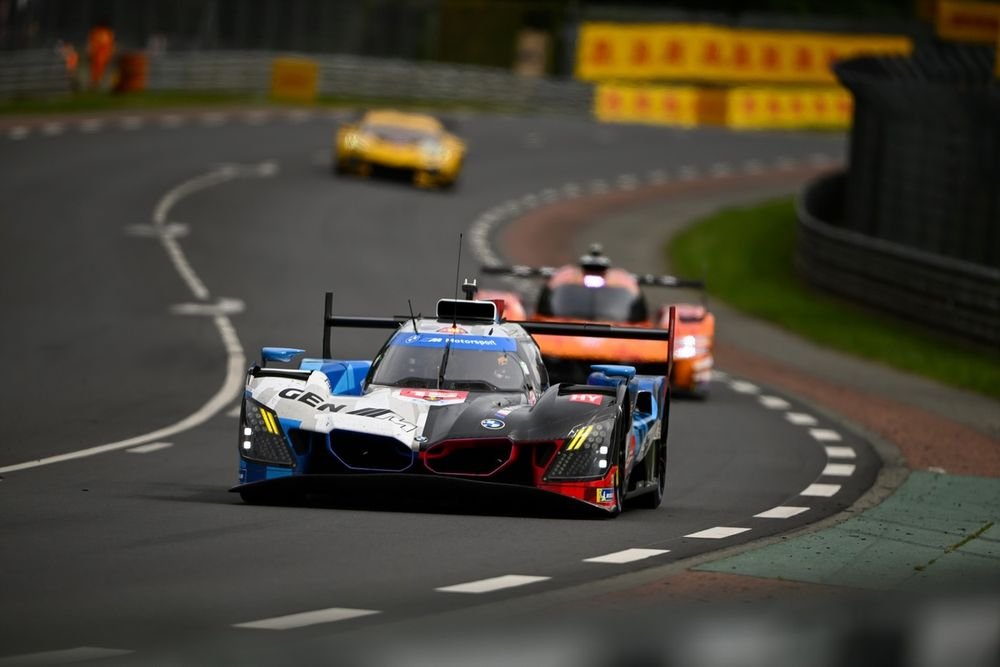
Minimum weight will increase under the new rules
Photo by: Marc Fleury
Minimum weight will be increased from 1030 to 1040kg.
The new Hypercar rules will be in force for five years and no performance evolutions will be allowed in that period except where a significant deficit in speed is demonstrated.
Mestelan Pinon and Bouvet stressed that the new regulations announced on Friday at the tradition pre-Le Mans 24 Hours ACO press conference still have to be worked out in detail.
Bouvet stated that the announcement only represented “guidelines” and that the definitive regulations will be formulated over the second half of the season in technical working groups involving the manufacturers.
The FIA and the ACO have firmed up an intention to have hydrogen-fuelled cars on the grid in Hypercar and challenging for overall victory from 2030 when the new rules come into force.
Liquid hydrogen will be allowed to power both internal combustion engines and fuel cells driving electric motors.
The minimum weight for hydrogen machinery will be 1200kg and an Equivalence of Technology will be employed to equate performance with the conventionally-powered cars.
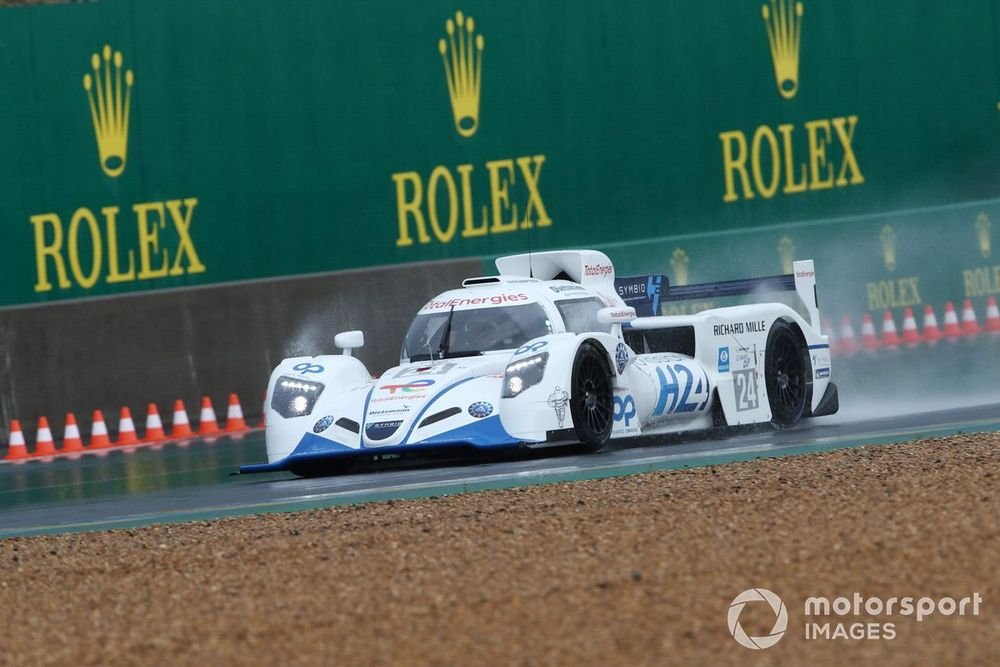
Rules for hydrogen cars in WEC have been outlined
Photo by: JEP / Motorsport Images
This was the term used when petrol and diesel-powered machinery raced against each other in the WEC under the fuel-formula regulations introduced in 2014.
The FIA and the ACO would not be drawn on whether they expect to have any hydrogen cars on the grid in 2030.
Toyota has been the biggest proponent of the alternative fuel and already has a test car based on its current TR010 HYBRID LMH up and running.
Its TR LH2 ran in public for the first time on Thursday when it took to the Circuit de la Sarthe with Toyota Racing vice-chairman and three-time Le Mans winner Kazuki Nakajima at the wheel.
A drive towards a common set of regulations in Hypercar was announced at Le Mans last year when the life of the Hypercar category was extended by two years from the end of 2029.
The announcement appeared to derail plans to have hydrogen cars racing on equal terms with petrol machinery.
An entirely new rule book had been envisaged for 2030 with hydrogen cars coming to stream running to those regulations one or two years before.
We want to hear from you!
Let us know what you would like to see from us in the future.
Take our survey
– The Autosport.com Team
Read the full article here